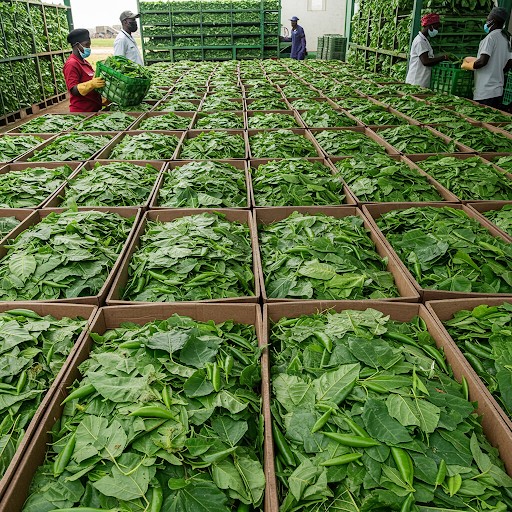
From Farm To Global Market: Mastering Processing, Packaging And Labelling of Over 50 Agricultural Commodities For Export And Local Market In Nigeria + Buyers Support + Membership of International Agro WhatsApp Groups

How To Process, Package And Label For Export And Local Market Of Over 50 Agricultural Products In Nigeria
1. How To Process, Package And Label Garri For Export In Nigeria
2. How To Process, Package And Label Palm Oil For Export In Nigeria
3. How To Process, Package And Label Cashew Nut For Export In Nigeria
4. How To Process, Package And Label Raw Sheabutter For Export In Nigeria
5. How To Process, Package And Label Plantain Flour For Export In Nigeria
6. How To Process, Package And Label Bitter Kola For Export In Nigeria
7. How To Process, Package And Label Ofada Rice For Export In Nigeria
8. How To Process, Package And Label Ugu/Pumpkin For Export In Nigeria
9. How To Process, Package And Label Yam For Export In Nigeria
10. How To Process, Package And Label Pineapple For Export In Nigeria
11. How To Process, Package And Label Smoked Catfish For Export In Nigeria
12. How To Process, Package And Label Kolanut For Export In Nigeria
13. How To Process, Package And Label Cocoa Beans For Export In Nigeria
14. How To Process, Package And Label Hibiscus Zobo For Export In Nigeria
15. How To Process, Package And Label Chilli Pepper For Export In Nigeria
16. How To Process, Package And Label Natural Raw Honey For Export In Nigeria
17. How To Process, Package And Label Moringa Seed For Export In Nigeria
18. How To Process, Package And Label Garden Egg For Export In Nigeria
19. How To Process, Package And Label Beef/Meat For Export In Nigeria
20. How To Process, Package And Label Sesame seed For Export In Nigeria
21. How To Process, Package And Label Jatropha seed For Export In Nigeria
22. How To Process, Package And Label Snail For Export In Nigeria
23. How To Process, Package And Label Avocado Pear For Export In Nigeria
24. How To Process, Package And Label Maize/Corn For Export In Nigeria
25. How To Process, Package And Label Palm Kernel Oil For Export In Nigeria
26. How To Process, Package And Label Brown Beans For Export In Nigeria
27. How To Process, Package And Label Rubber For Export In Nigeria
28. How To Process, Package And Label Dried Split Ginger For Export In Nigeria
29. How To Process, Package And Label Cotton For Export In Nigeria
30. How To Process, Package And Label Sorghum For Export In Nigeria
31. How To Process, Package And Label Mangoes For Export In Nigeria
32. How To Process, Package And Label Egg For Export In Nigeria
33. How To Process, Package And Label Hide and Skin For Export In Nigeria
34. How To Process, Package And Label Shrimp and Prawns For Export In Nigeria
35. How To Process, Package And Label Soyabean For Export In Nigeria
36. How To Process, Package And Label Tilapia For Export In Nigeria
37. How To Process, Package And Label Ground Nut Oil For Export In Nigeria
38. How To Process, Package And Label Charcoal For Export In Nigeria
39. How To Process, Package And Label Gum Arabic For Export In Nigeria
40. How To Process, Package And Label Garlic For Export In Nigeria
41. How To Process, Package And Label Soyabean Oil For Export In Nigeria
42. How To Process, Package And Label Tumeric For Export In Nigeria
43. How To Process, Package And Label Tomatoes For Export In Nigeria
44. How To Process, Package And Label Cocoyam For Export In Nigeria
45. How To Process, Package And Label Ogbono For Export In Nigeria
46. How To Process, Package And Label Jetropha Oil For Export In Nigeria
47. How To Process, Package And Label Black Pepper For Export In Nigeria
48. How To Process, Package And Label Bean Flour For Export In Nigeria
49. How To Process, Package And Label Locust Brown Beans For Export In Nigeria
50. How To Process, Package And Label Cashew Nut Oil For Export In Nigeria.
And many more Agricultural Products that will be covered.
BONUS
Addition To International Food and Agro WhatsApp group of over 450 members of buyers, suppliers and Exporters in Nigeria.
Addition To 2 major Food and Agro business Facebook groups for sourcing agro commodities at cheaper prices in Nigeria.
Comprehensive list of Foreign buyers of agro commodities who has bought in the past from Nigeria.
100 Ways To Make Fortune From Agriculture- 2025 Profitable Guide With Step by Step Implementation, Market Demand, Start up Cost And Profit Potential.
Etc
Get equipped! Get Empowered To Excel in your Business And Export Venture.
Product Sample - Mushroom
How To Process Mushroom For Export In Nigeria
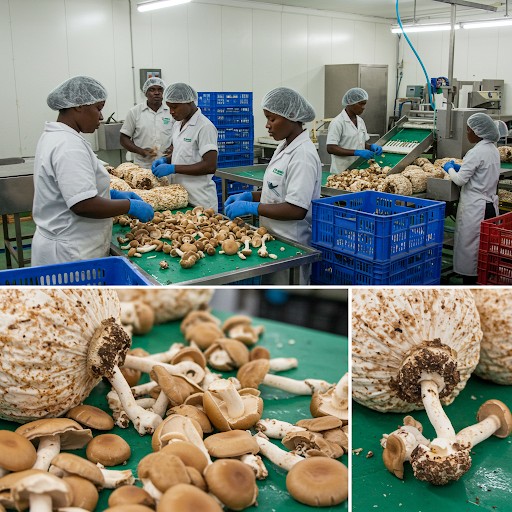
Processing mushrooms for export in Nigeria requires adherence to international quality standards, proper packaging, and compliance with export regulations. Below is a step-by-step guide to help you process mushrooms for export:
1. Sourcing Quality Mushrooms
- Grow or source fresh, high-quality mushrooms (e.g., oyster, shiitake, or button mushrooms) from reliable farms.
- Ensure they are free from pests, diseases, and chemical contamination.
2. Sorting and Cleaning
- Sorting: Remove damaged, discolored, or overripe mushrooms.
- Cleaning: Gently brush off dirt or rinse with clean water (if necessary, but avoid soaking).
- Trimming: Cut off the stems if required by the market.
3. Preservation Methods
To extend shelf life, mushrooms can be processed in different ways:
A. Drying (Most Common for Export)
- Sun Drying: Spread mushrooms in thin layers under direct sunlight (cheap but less controlled).
- Oven Drying: Use low heat (50–60°C) for 6–8 hours.
- Dehydrator: Best for quality—dry at 40–50°C until brittle (6–12 hours).
- Packaging: Store dried mushrooms in airtight, moisture-proof bags (vacuum-sealed preferred).
B. Canning (For Button Mushrooms)
- Blanch in boiling water (2–3 mins), then cool in ice water.
- Pack in sterilized cans with brine or preservatives.
- Seal and sterilize again in a pressure cooker or autoclave.
C. Freezing (For Fresh Export)
- Blanch mushrooms (2–3 mins), cool quickly, and drain.
- Pack in airtight, freezer-safe bags or containers.
- Store at -18°C or below (requires cold chain logistics).
4. Packaging for Export
- Use food-grade, airtight, and moisture-resistant packaging.
- For dried mushrooms: vacuum-sealed bags or Mylar pouches with oxygen absorbers.
- For fresh/frozen: Insulated boxes with cooling gel packs (if shipping by air).
- Label packages with:
- Product name
- Weight & batch number
- Production & expiry dates
- Export certification marks
5. Quality Control & Certification
- NAFDAC Registration: Required for all food exports in Nigeria.
- HACCP/ISO Certification: Ensures international food safety standards.
- Phytosanitary Certificate: Issued by the Nigeria Agricultural Quarantine Service (NAQS) to confirm pest-free status.
- Third-party lab testing: Check for microbial contamination, aflatoxins, and heavy metals.
6. Export Documentation
- Export License (from Nigerian Export Promotion Council, NEPC).
- Certificate of Origin (from NEPC or Chamber of Commerce).
- Bill of Lading/Airway Bill (for shipping).
- Customs Clearance (processed through the Nigeria Customs Service).
- Import Permit (check destination country’s requirements).
7. Choosing Export Markets
- Target countries with high demand:
- Europe (EU) – Strict standards (need organic certification).
- USA/Canada – Requires FDA/SFDA compliance.
- Middle East (UAE, Saudi Arabia) – Prefers halal-certified products.
- Asia (China, Japan) – High demand for dried mushrooms.
8. Shipping & Logistics
- Air Freight: Faster but expensive (best for fresh/frozen mushrooms).
- Sea Freight: Cheaper for dried/canned mushrooms (longer transit time).
- Use cold chain logistics if shipping fresh/frozen products.
9. Marketing & Distribution
- Partner with international buyers via:
- Trade fairs (e.g., ANUGA, Gulfood).
- Online platforms (Alibaba, TradeKey, Amazon).
- Local export agents in Nigeria.
10. Compliance with Destination Country Regulations
- Check maximum residue levels (MRLs) for pesticides.
- Ensure compliance with EU, USDA, or Japan’s Positive List System.
- Obtain organic certification if applicable.
Estimated Costs & Profitability
- Dried mushrooms sell for $10–$30/kg internationally.
- Fresh mushrooms (airfreighted) can fetch $5–$15/kg.
- Profit margins range from 30–60% after logistics.
Challenges & Solutions
- Short shelf life: Use drying/canning.
- Export bureaucracy: Work with export consultants.
- High logistics cost: Bulk shipments reduce costs.
Conclusion
By following these steps—proper processing, certification, and compliance—you can successfully export Nigerian mushrooms to international markets. Start with small batches, build buyer trust, and scale up gradually.
How To Package And Label Mushroom For Export In Nigeria
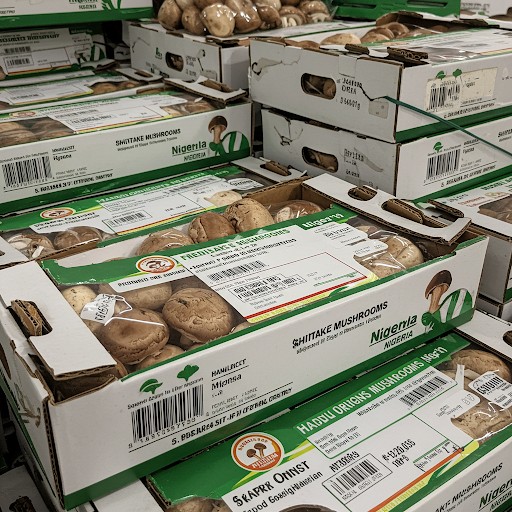
Proper packaging and labeling are crucial for exporting mushrooms from Nigeria, as they ensure product quality, compliance with international standards, and smooth customs clearance. Below is a detailed guide on how to package and label mushrooms for export:
1. Packaging Requirements for Export-Grade Mushrooms
The packaging method depends on whether the mushrooms are fresh, dried, frozen, or canned.
A. Packaging for Dried Mushrooms
- Primary Packaging:
- Use food-grade, airtight, moisture-proof bags (e.g., vacuum-sealed pouches, Mylar bags with oxygen absorbers).
- For bulk orders, use high-density polyethylene (HDPE) bags inside cartons.
- Secondary Packaging:
- Pack in corrugated cardboard boxes with inner liners to prevent moisture.
- Use desiccant packets to absorb residual moisture.
B. Packaging for Fresh Mushrooms
- Primary Packaging:
- Use perforated plastic bags or breathable cling film to allow air circulation.
- For premium markets (EU/US), use modified atmosphere packaging (MAP) to extend shelf life.
- Secondary Packaging:
- Ventilated plastic crates or sturdy cardboard boxes with cushioning (e.g., paper shreds).
- Include gel ice packs if shipping via air freight.
C. Packaging for Frozen Mushrooms
- Vacuum-sealed plastic bags (pre-blanched).
- Insulated polystyrene boxes with dry ice or gel packs.
- Outer corrugated box for added protection.
D. Packaging for Canned Mushrooms
- Sterilized glass jars or tin cans with proper sealing.
- Shrink-wrap individual cans for extra protection.
- Pack in strong carton boxes with dividers to prevent breakage.
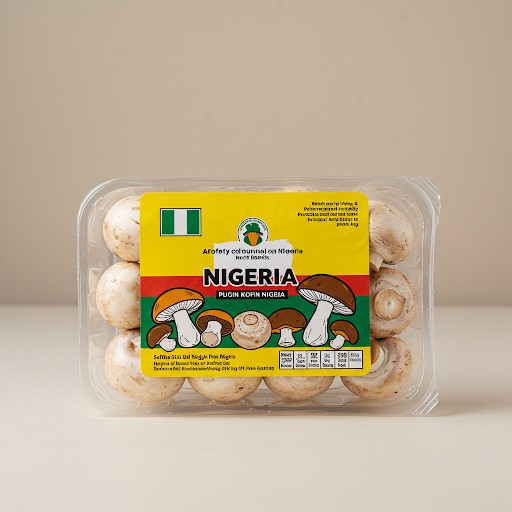
2. Labeling Requirements for Mushroom Exports
Labels must comply with Nigeria’s NAFDAC regulations and the importing country’s standards (EU, US, Asia, etc.).
A. Mandatory Label Information
1. Product Name – e.g., "Dried Oyster Mushrooms" or "Fresh Button Mushrooms."
2. Net Weight – In grams/kg (e.g., "100g" or "1kg").
3. Batch/Lot Number – For traceability.
4. Production & Expiry Date – "Best Before" or "Use By" date.
5. Country of Origin – "Product of Nigeria."
6. Ingredient List (if applicable) – e.g., "Mushrooms, Salt" (for canned).
7. Storage Instructions – e.g., "Store in a cool, dry place" or "Keep refrigerated."
8. Exporter’s Details – Company name, address, contact.
9. Importer’s Details (if required by destination country).
10. Barcode/QR Code (for tracking).
B. Additional Requirements for Specific Markets
- European Union (EU):
- Organic Certification (if applicable).
- EORI Number (Economic Operators Registration and Identification).
- CE Mark (for food safety compliance).
- USA:
- FDA Registration Number.
- Nutritional Facts Label (for retail packaging).
- Middle East (GCC Countries):
- Halal Certification (if applicable).
- Arabic Translation on labels.
C. Label Design Tips
- Use clear, waterproof, and smudge-proof printing.
- Avoid misleading claims (e.g., "100% Organic" without certification).
- Follow color codes (e.g., green for organic, red for warnings).
3. Compliance & Documentation
Before shipping, ensure:
- NAFDAC Approval (for processed foods).
- Nigeria Agricultural Quarantine Service (NAQS) Phytosanitary Certificate.
- Certificate of Origin (from NEPC or Chamber of Commerce).
- Third-Party Lab Test Report (for aflatoxin, microbial contamination).
4. Best Packaging & Labeling Practices
✔ Use high-quality, food-grade materials to prevent contamination.
✔ Ensure airtight sealing for dried mushrooms to avoid moisture.
✔ Label in English + destination country’s language (if required).
✔ Hire a professional packaging company for large-scale exports.
Final Tips for Success
- Test small shipments first before scaling up.
- Work with freight forwarders experienced in perishable goods.
- Check destination country’s latest import rules (e.g., EU’s 2025 pesticide limits).