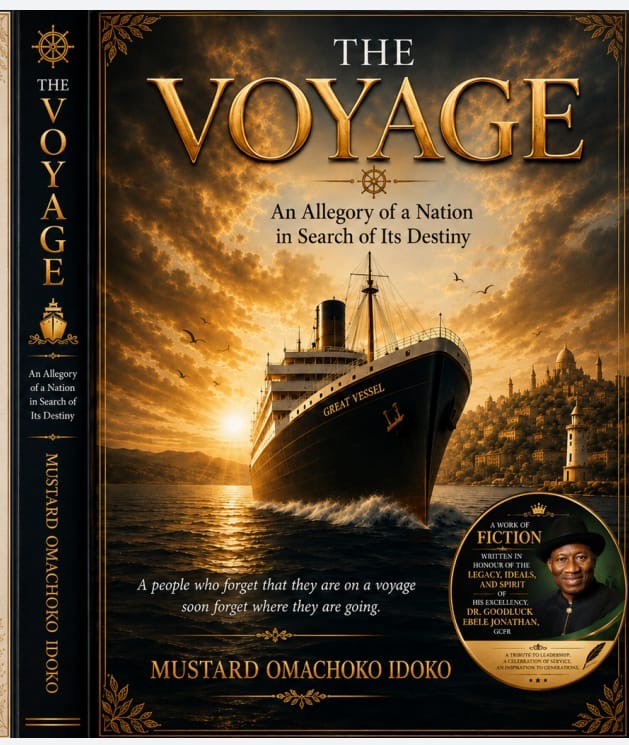
The Voyage - An Allegory of a nation in search of its destiny .

THE VOYAGE is a compelling allegorical novel that takes the reader on a symbolic journey through the soul, struggles, contradictions, and aspirations of a nation searching for its true identity and destiny.
Through a richly woven narrative, the book transforms the idea of a nation into a voyage—a journey whose destination is not merely a geographical place, but the discovery of purpose, dignity, justice, unity, responsible leadership, and the collective will to build a better society.
At the heart of the story is a profound question: What happens to a nation that possesses enormous potential but loses sight of the purpose for which it exists?
THE VOYAGE explores this question through characters, events, encounters, and symbols that mirror the realities of nations and their people. The journey exposes the consequences of poor leadership, corruption, selfish ambition, misplaced values, social inequality, political manipulation, and the failure of citizens to recognize their own responsibility in shaping the destiny of their homeland.
Yet, the book is not merely a portrait of national failure. It is ultimately a story of awakening and possibility.
As the voyage unfolds, the reader encounters the enduring power of courage, sacrifice, patriotism, truth, integrity, collective responsibility, and visionary leadership. The narrative challenges both leaders and citizens to confront uncomfortable truths and to recognize that the destiny of a nation cannot be secured by government alone. It must be pursued collectively by a people willing to rediscover their values and accept the responsibilities that accompany freedom.
Written as an allegory, THE VOYAGE deliberately transcends one particular country or generation. Although its themes resonate strongly with the African and Nigerian experience, its message is universal. Every nation, at some point in its history, must determine what kind of society it wants to become and whether its people possess the courage to undertake the journey toward that destiny.
The voyage therefore becomes a metaphor for national transformation: a journey from confusion to clarity, from dependence to responsibility, from decay to renewal, and from a forgotten identity to a rediscovered destiny.
THE VOYAGE invites the reader not simply to observe the journey, but to become part of it—to ask what role each individual plays in determining the future of a nation.
Ultimately, the book is a call to national awakening and a reminder that a nation's destiny is not discovered by waiting for history to change; it is forged by people who are willing to change the course of history.