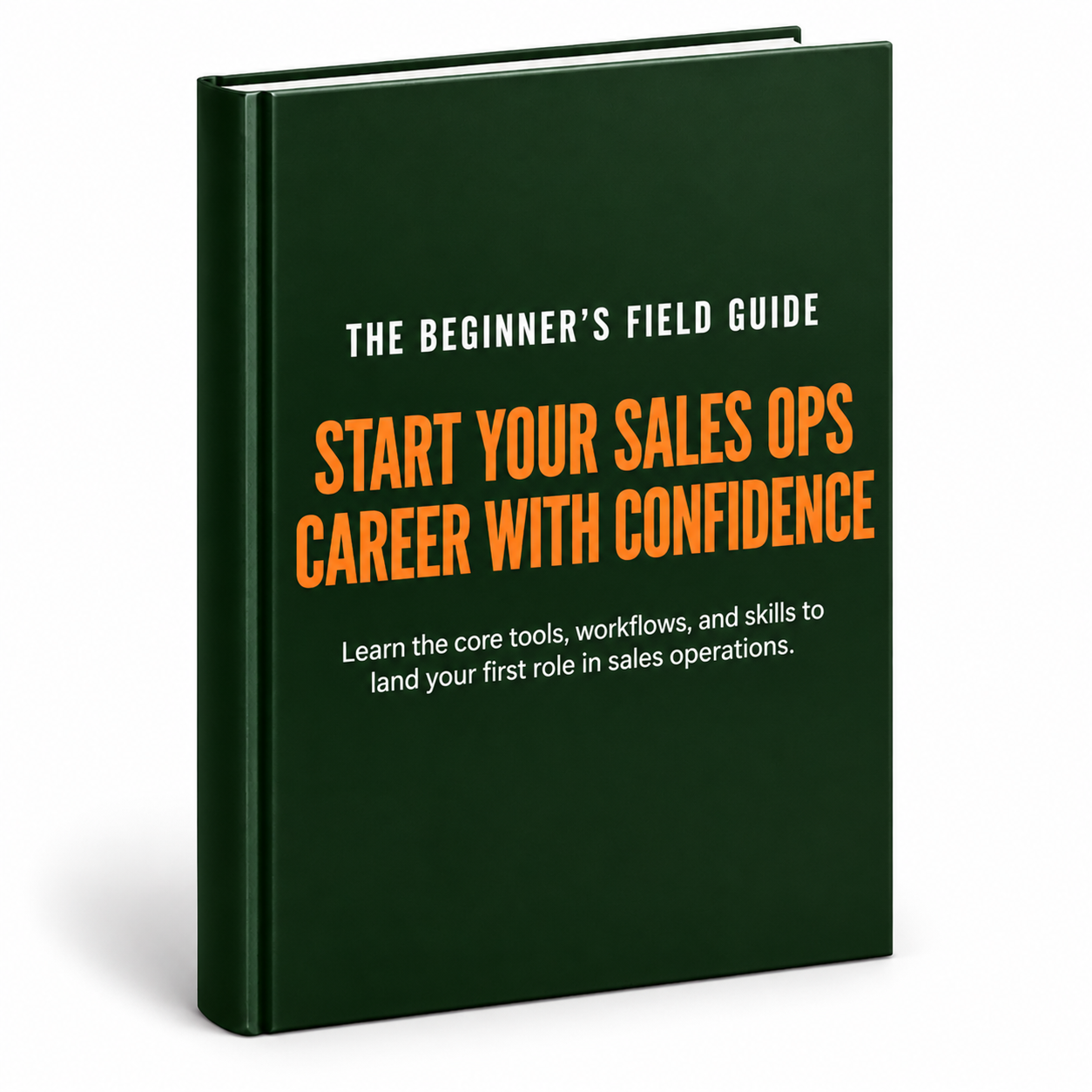
Sales Operations Guide for Beginners

Starting in sales operations can feel unclear when job descriptions mention CRM hygiene, reporting, process documentation, and tools without explaining how these pieces fit together. This practical guide gives beginners a clear path from understanding the function to building work samples that show job-ready thinking.
What's inside
- A clear explanation of what sales operations is and why it matters to sellers and sales teams
- The five main areas of sales operations work: data, process, technology, reporting, and planning
- An introduction to the beginner tool stack and the customer data you need to control
- Guidance on account ownership, contact fields, activity records, stages, close dates, and duplicate prevention
- Core sales metrics, formulas, and metric contracts that make reports easier to understand and use
- A 45-day plan for learning the funnel, building a practice CRM, and fixing one process
- A 46 to 90-day plan for turning practice into evidence and becoming more job-ready
- Project ideas that do not require real customer data or a perfect CRM build
- Checklists and controls for record ownership, report consistency, automation failures, and seller trust
- A practical approach to continuous improvement in sales operations
This PDF is for beginners exploring sales operations, including people moving from administration, customer support, sales, business analysis, or other coordination-focused work. It can also help students and career changers understand common responsibilities before applying for roles such as Sales Operations Coordinator, Sales Operations Analyst, Revenue Operations Analyst, CRM Administrator, Deal Desk Analyst, or Sales Enablement Operations Specialist.
You’ll learn how to connect clean data and documented processes to everyday sales work. The guide also explains why operations matters when sellers spend time searching for information, fixing records, repeating tasks, and building manual reports instead of selling. It uses practical examples and clear steps, so you can study the function and create evidence of your skills without claiming experience you don’t have.
By working through the guide, you can:
- Explain what sales operations supports across data, process, technology, reporting, and planning
- Identify the records, fields, stages, handoffs, and rules that need consistent control
- Use metric definitions and formulas to make sales reports easier to interpret
- Build a small practice CRM and document a process improvement project
- Follow a structured first 90 days of learning and portfolio development
- Show employers practical evidence of organization, analysis, documentation, and process thinking
The guide also includes a simple way to think about the cost of avoidable administrative work, so you can replace the example assumptions with numbers from a real team or practice scenario. It is a downloadable PDF for beginners who want a grounded introduction to sales operations and a practical plan for getting started.