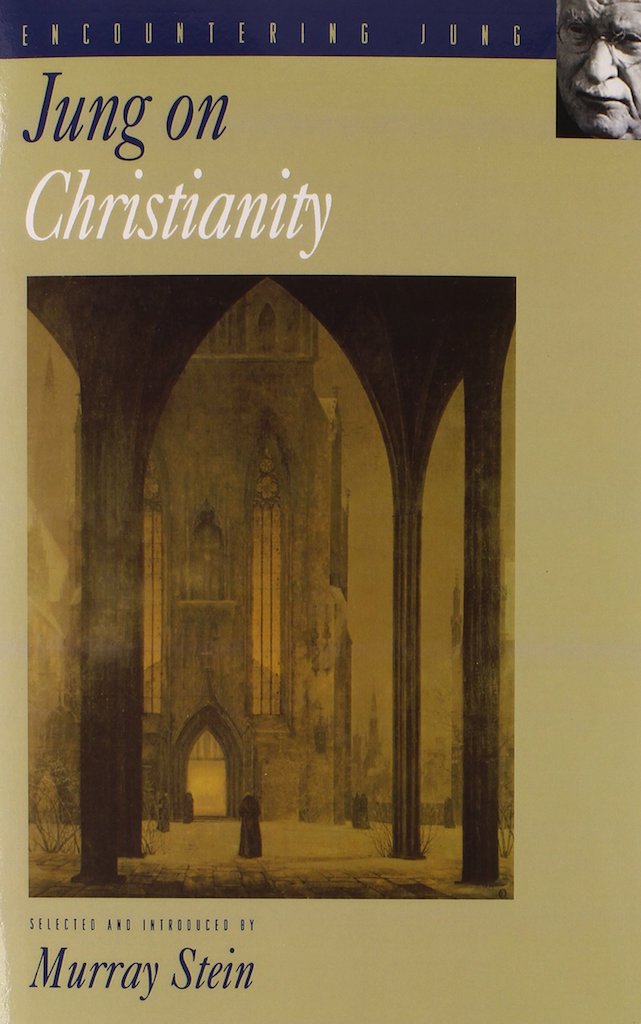
Stein, Murray (ed.) - Jung on Christianity (Princeton, 1999)
The arcane substance [of alchemy] corresponds to the Christian
dominant, which was originally alive and present in consciousness
but then sank into the unconscious and must now be
restored in renewed form.
C. G. Jung (CW 14, par. 466)
In the passage quoted above, taken from the late work Mysterium
Coniunctionis, Jung speaks as a religious man (a homo religiosus), and
also as one for whom the central images of Christianity are a psychic
reality that carries significant meaning. Often he writes about Christian
themes in this way. He cares deeply about their value and importance,
and he even proposes several important theological and practical revisions
for Christianity. He speaks, however, as a psychologist and not as a
Christian theologian or believer. This combination of factors, which
characterizes Jung’s approach to Christianity, has led to several general
misunderstandings.
One major misinterpretation is that Jung was a Christian apologist,
i.e., a defender of Christian truths within a contemporary setting using
modern concepts and language. By some he has even been looked
upon as a possible savior of Christianity in a time when its spiritual
message is going unheard for want of persuasive images and concepts.
His writings are taken at times as the words of a modern prophet. He is
seen as a kind of evangelist in the garb of a medical psychologist.
Clearly this kind of evangelical persuasion was not Jung’s intention,
even if some of his writings give this impression. When he states (as
above) that the Christian message “must now be restored in renewed
form,” one might imagine him speaking in the voice of the Protestant
Reformation but, given Jung’s overall perspective and psychological
program, this is a misreading.