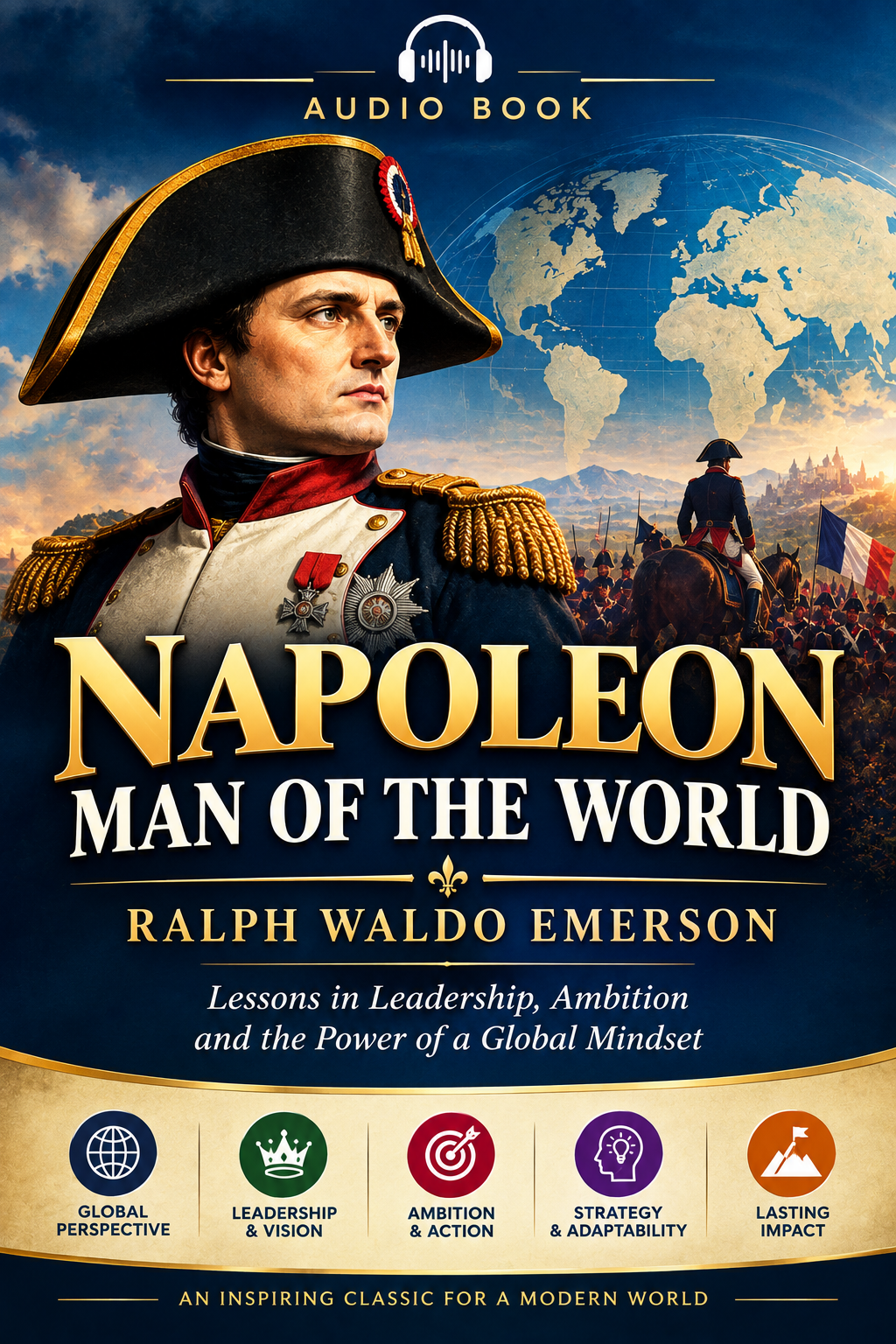
Napoleon Man Of The World

Napoleon: Man of the World — Audiobook
By Ralph Waldo Emerson
Explore the mind, ambition, leadership, and extraordinary force of one of history’s most influential figures through the eyes of Ralph Waldo Emerson.
In Napoleon; or, The Man of the World, Ralph Waldo Emerson examines Napoleon Bonaparte not simply as a military commander, but as a remarkable representative of the ambitions, energies, abilities, and contradictions of the modern world.
Originally published as part of Emerson’s Representative Men in 1850, this powerful essay explores Napoleon’s extraordinary capacity for action, strategic thinking, ambition, influence, and practical intelligence. Emerson also considers the limitations and consequences of pursuing power and material success without sufficient moral purpose.
🎧 What You’ll Discover
The power of decisive action
Explore Emerson’s observations about Napoleon’s ability to act quickly, focus on objectives, and respond to changing circumstances.
Leadership and influence
Examine how Napoleon became a figure who, in Emerson’s view, represented the aspirations and energies of large sections of society.
Ambition and achievement
Reflect on the drive for success, recognition, power, and accomplishment—and the opportunities and dangers that can accompany great ambition.
Strategic thinking
Discover Emerson’s observations about Napoleon’s ability to understand circumstances, organize resources, and pursue his objectives with remarkable determination.
The relationship between power and character
Emerson does not present Napoleon simply as a hero. His essay also considers the consequences of using exceptional abilities in pursuit of personal and political ends.
Lessons from history
Use Emerson’s reflections as an opportunity to think about leadership, enterprise, ambition, decision-making, and the responsibilities that accompany influence.
Why Listen to This Audiobook?
This audiobook is ideal for listeners interested in:
- Leadership and personal development
- History and great historical figures
- Entrepreneurship and ambition
- Strategic thinking
- Philosophy and classic literature
- Decision-making and achievement
- The study of power and influence
- Ralph Waldo Emerson's writings
Whether you are an entrepreneur, professional, student, history enthusiast, or simply curious about the minds and forces that shape history, this audiobook offers a thought-provoking journey through Emerson's interpretation of Napoleon.
🌍 A Classic Perspective on Power and Ambition
Emerson presents Napoleon as a figure whose abilities and ambitions reflected broader forces in nineteenth-century society. He examines both Napoleon's remarkable capacity for action and the moral questions surrounding the pursuit of power and material success.
This makes the work more than a historical portrait. It is also an invitation to reflect on ambition, leadership, achievement, influence, responsibility, and the human desire to accomplish great things.
🎧 Listen. Reflect. Learn.
Experience Ralph Waldo Emerson's Napoleon; or, The Man of the World in an accessible audiobook format.
Listen to the classic. Study the ideas. Reflect on the lessons.