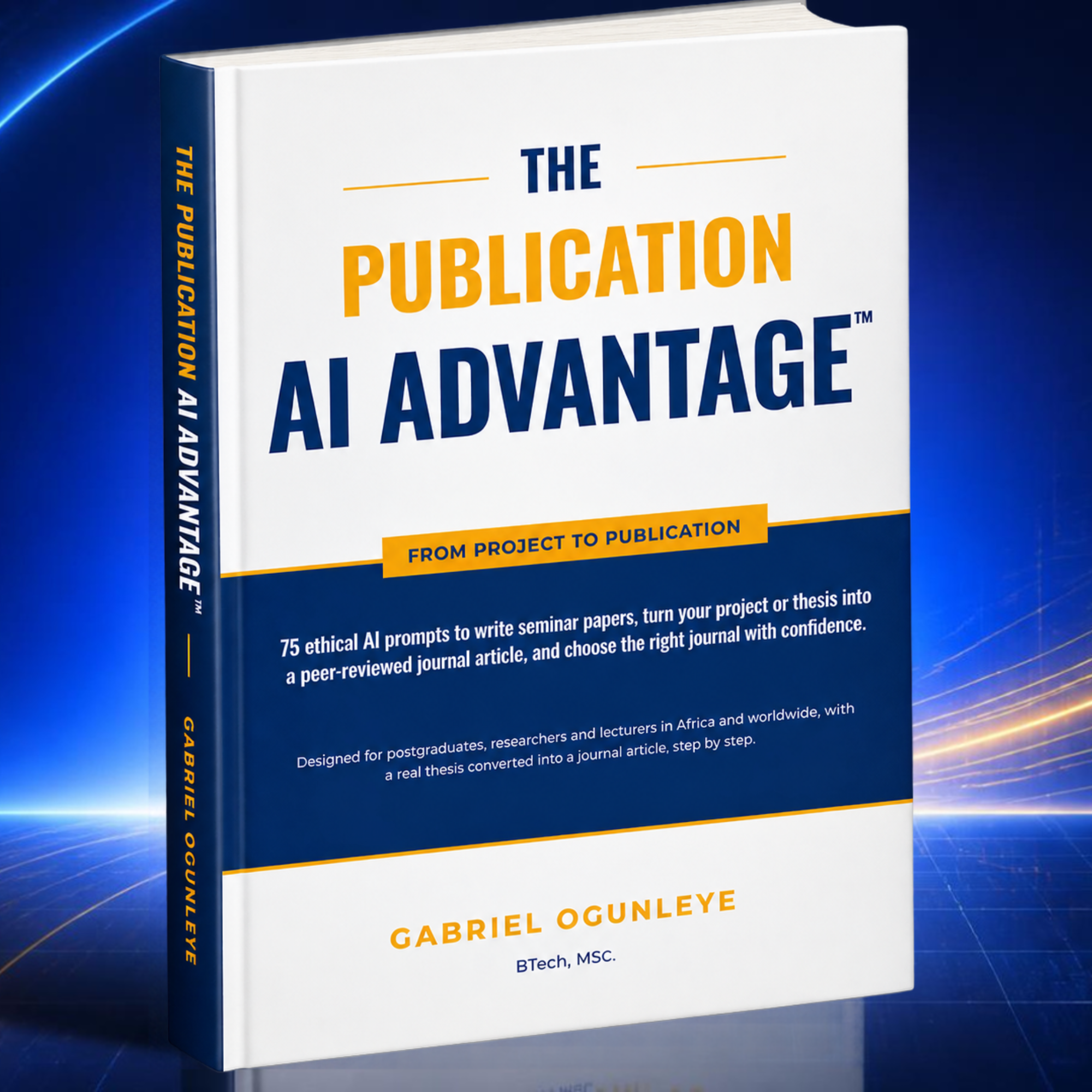
The Publication AI Advantage™ - From Project to Publication
ATTENTION: Postgraduate students, early-career lecturers and every African researcher with a project, seminar paper or thesis that has never been published.
At Last! The Step-by-Step AI System That Turns Your Seminar Paper, Project or Thesis Into a Peer-Reviewed International Journal Article, Even If You Have Never Published Before (and Even If Your Supervisor Has No Time for You)
Discover the 75 ethical AI prompts and the exact method that help African researchers write faster, avoid fake journals, survive peer review and finally get the publications their graduation and promotion depend on.
Dear Friend,
Let me tell you something a little embarrassing.
Years ago, I submitted my M.Sc. dissertation at the University of Ibadan. Eighty-two pages. Months of lab work. Tomato juice, carrot, pineapple, a sensory panel, antioxidant tests, a full storage trial. The whole thing.
My supervisor signed it. The examiners passed it. I graduated.
And then that dissertation did what most African dissertations and theses do.
It went to sleep.
Years passed. Not one journal article. Not one citation. Nobody in Accra, Nairobi or London ever read a single line of it. All that work, all that money for reagents and transport and printing, sitting quietly on a shelf.
Does this sound familiar?
Because if you are reading this, I suspect you have your own "sleeping" research. Maybe it is:
- A final-year project your supervisor once said was "publishable", and then nothing happened.
- A seminar paper you sweated over for weeks, presented, scored, and filed away forever.
- A master's dissertation or PhD thesis that took years of your life and has produced zero publications.
- Or you are a lecturer, and your promotion file is thinner than it should be, while people you started with are moving up.
If any of that hit you somewhere, keep reading. What I am about to show you could change the next twelve months of your academic life.
The Rules Have Changed, and Nobody Sent You the Memo
Here is the hard truth most departments will not say out loud.
Publication is no longer "nice to have". It decides whether you graduate on time, whether you get that lecturing job, and whether your name is called at the next promotion exercise.
You may not even get some scholarships without having a published work.
And it is not just any publication anymore. Committees now ask: Is it Scopus? Is it Web of Science? Is it outside the country?
Papers in fake journals are being thrown out of promotion files.
In Kenya, master's and PhD students must publish before they graduate.
Across Nigeria and Ghana, universities are setting targets for internationally indexed papers every single year.
So the pressure is real. Everybody says "publish".
But who actually taught you how?
Nobody sat you down and explained how to turn five thesis chapters into one tight journal article.
Nobody showed you how to find a journal that counts, or how to answer a reviewer who tears your work apart.
You were expected to just... know.
So You Are Left With Three Ugly Options
Option one: wait for your supervisor. A good man or woman, but with thirty other students, endless committee meetings and their own papers to write. You send your draft. Weeks pass. "I will look at it." Months pass. Your work keeps sleeping.
Option two: pay a "consultant". Somewhere between ₦145,000 and ₦1,800,000, depending on who you ask. And many of them will simply write it for you, which is ghostwriting. If it is ever discovered, it is your name on the misconduct case, not theirs.
Option three: the WhatsApp journal. You know the message. "Dear Esteemed Professor, publish in our Scopus-indexed journal within 72 hours. Impact Factor 6.8." You pay. Your paper appears. Then you discover the journal is predatory, or worse, a hijacked copy of a real journal on a fake website. Your money is gone. Your paper is stuck there forever. And your promotion committee will not count it.
Three options. All of them bad.
"But Gabriel, Can't I Just Use ChatGPT?"
Yes. And no.
AI has changed everything for African researchers. For the first time, you have a tireless research assistant that can organise your literature, explain your statistics and polish your English at 2am, when NEPA has finally brought light and everyone else is asleep.
But here is what is happening to people who use it the wrong way.
They type: "Write me a journal article on tomato juice."
The AI produces something that looks impressive. Smooth paragraphs. Confident claims. And references to papers that do not exist.
They submit it. A reviewer checks the references. And now an editor somewhere has your name next to the word "fabrication".
Used wrongly, AI is the fastest way to destroy an academic reputation.
Used correctly, it is the biggest advantage African researchers have ever had.
The difference is not the tool. It is the method.
Who Am I to Show You This?
My name is Gabriel Ogunleye. I hold an M.Sc. in Food Technology from the University of Ibadan, a B.Tech in Food Science and Technology from FUTA, and a Distinction certificate in Information Technology from the Computer Resources Centre, FUTA.
I am also obsessed with one thing: making AI do the heavy lifting so researchers can focus on what matters.
Earlier this year I wrote The Final Year AI Advantage, a guide that shows students and researchers how to use AI ethically to complete their research projects. It has reached readers in Nigeria, Ghana, Cameroon, Zambia, Kenya and the United States, and more than 1,000 research students have benefited from my teaching.
Here a few testimonial from The Final Year AI Advantage
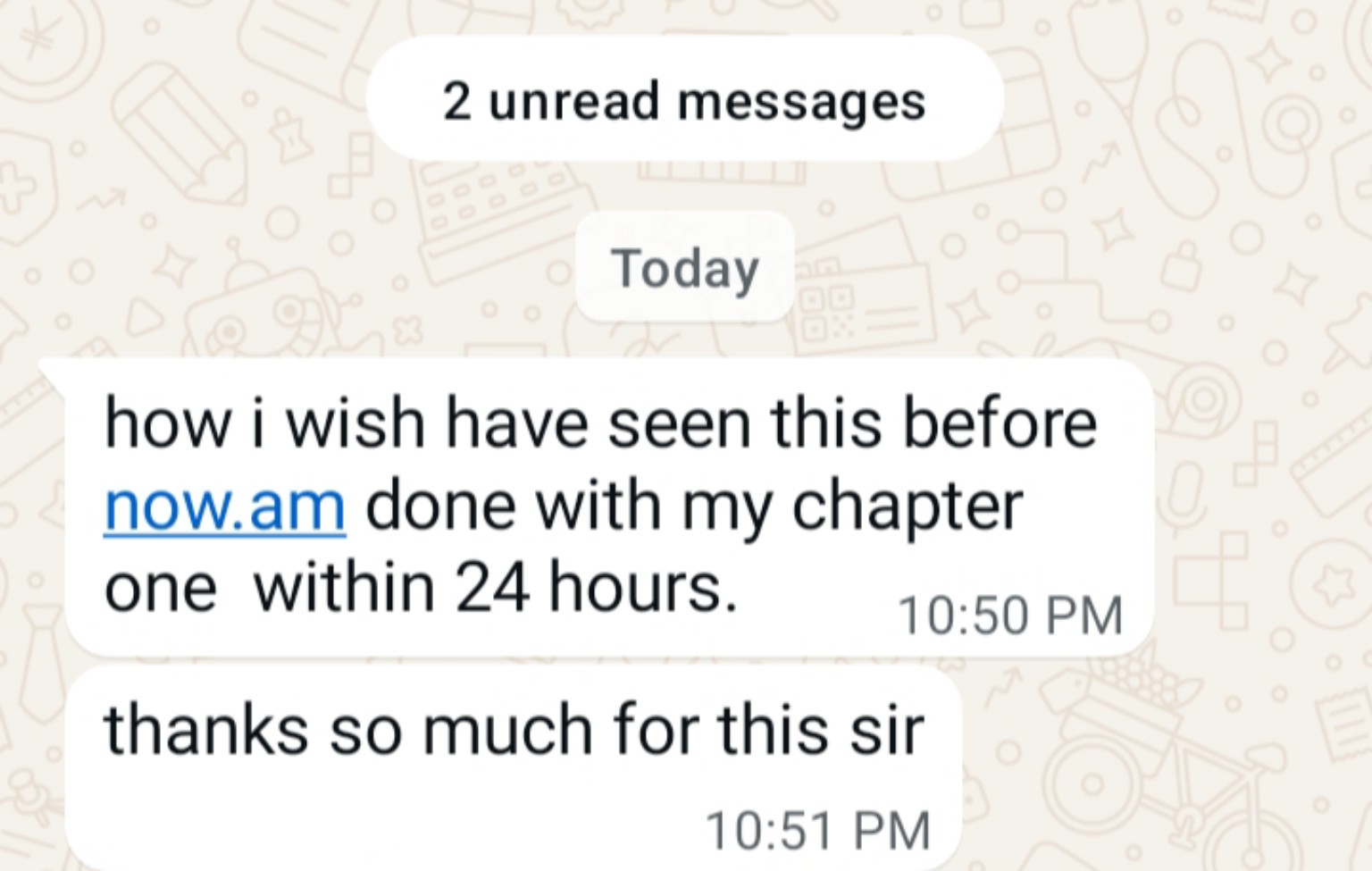
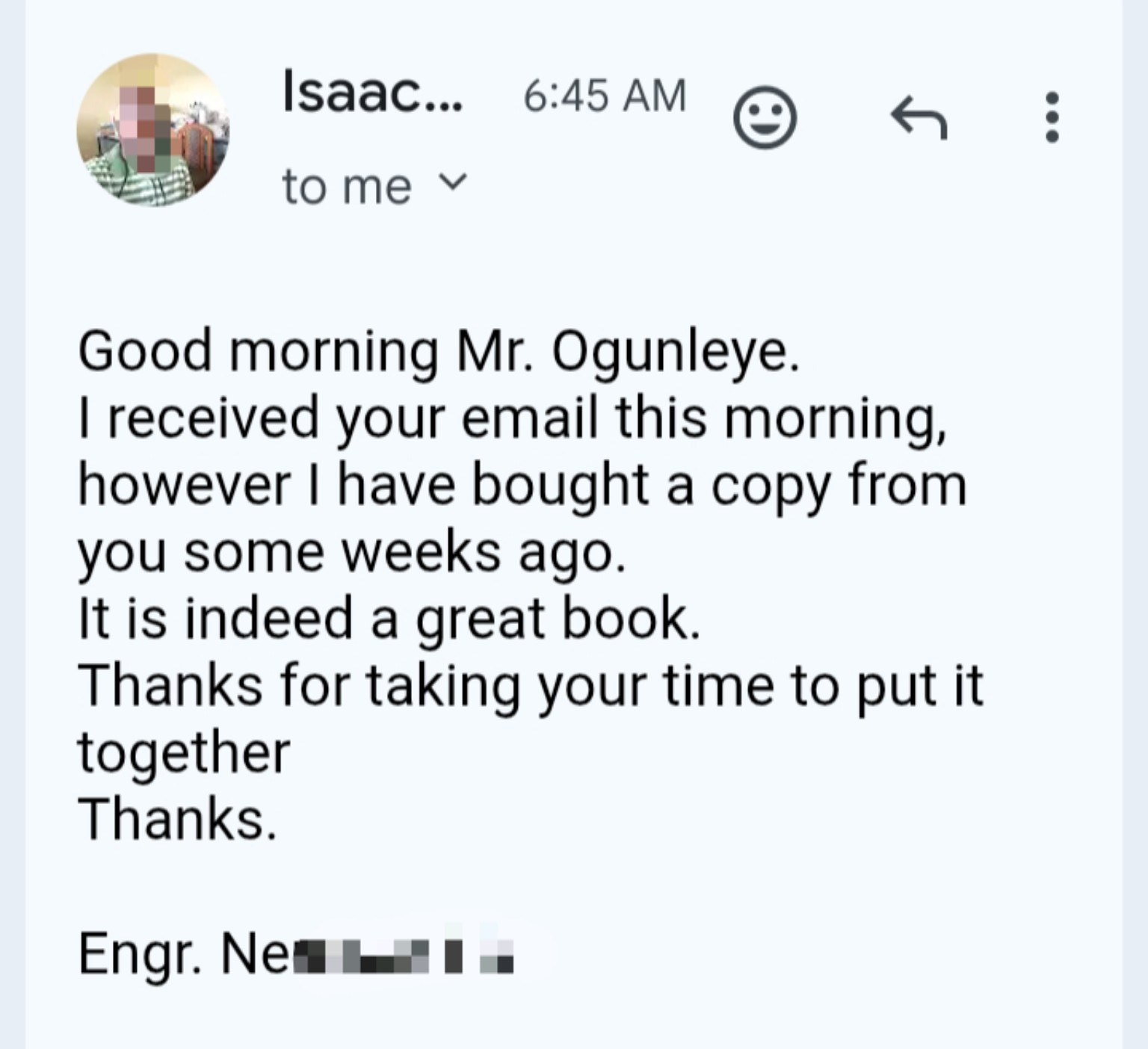
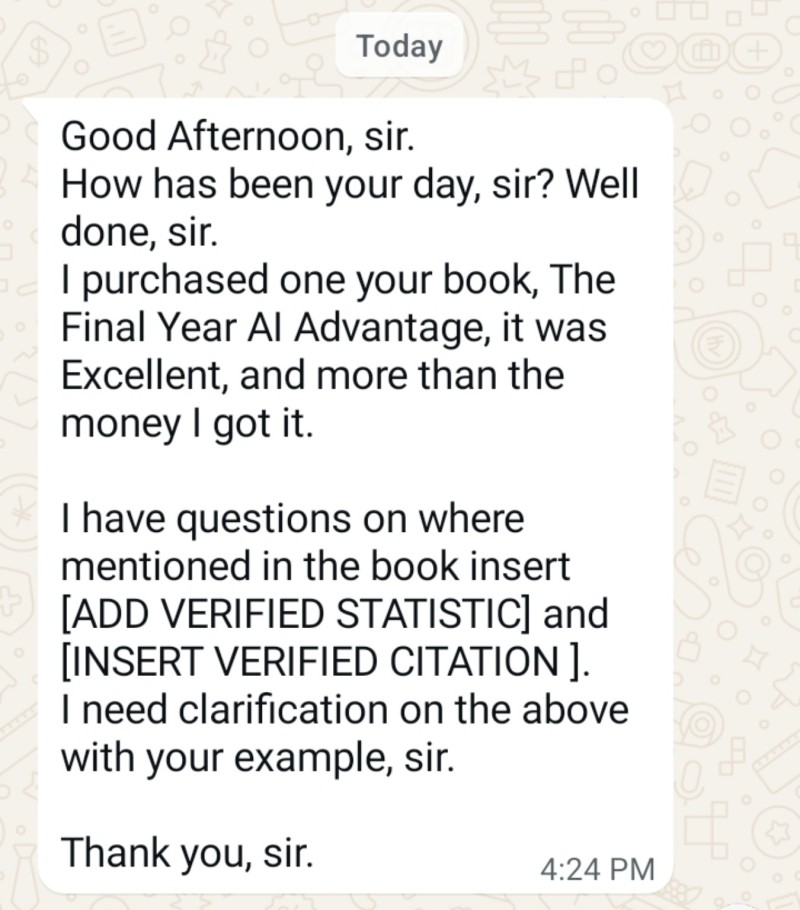
But something kept happening.
After finishing their projects, readers kept coming back to me with the same three questions:
- "How do I use AI to write my seminar paper?"
- "Which prompts can help me write a paper good enough for an international journal?"
- "How do I turn my project or thesis into a published, peer-reviewed article?"
I could not stop thinking about my own sleeping dissertation. So I did something unusual.
I used it as the guinea pig.
I took my own M.Sc. thesis and built a complete, step-by-step system for converting it into a journal article with AI, ethically, the way international publishers now allow. Every chapter. Every prompt. Every mistake I found in my own work, including a statistics error in my dissertation that a reviewer would have caught in seconds.
Then I wrote it all down for you.
Introducing The Publication AI Advantage™: From Project to Publication
This is not another ebook full of motivation. It is a 166-page, step-by-step implementation guide that takes you from "my research is sitting on a shelf" to "my paper is under review in a reputable international journal".
Here is what is waiting inside:
- 16 chapters across six stages: set up, seminar paper, journal article, choosing the journal, submission and peer review, and life after acceptance.
- 75 ready-to-use AI prompts, each one built to work on your data and your sources, so AI cannot invent facts or references.
- A real worked example on every stage: you watch me convert my own M.Sc. thesis into a journal article, step by step.
- The Implementation Toolkit (in the Complete Publication Kit): 20 worksheets, as a fillable PDF and an editable Word file, that turn every chapter into a finished deliverable.
Here Is What Changes for You
1. Your seminar stops being a burden and becomes a publication. You have to write the seminar paper anyway. Chapter 5 shows you how to choose a topic that is publishable from day one, so the same work earns your seminar credit now and becomes a journal article later. One effort. Two rewards.
2. Your sleeping thesis wakes up. You will finally know which 10% of your thesis becomes the article, and what to cut without heartbreak. In my own case, a literature review of more than 10,000 words became a focused introduction. You will see exactly how.
3. You write with AI and never fear a misconduct case. You get the CRAFTS formula for prompts that work only on your own material, the Verify Loop that catches fake references and wrong numbers, and ready-made AI disclosure statements for Elsevier, Springer Nature, Taylor & Francis, Wiley and SAGE journals. You use AI openly, the way publishers allow, and sleep well at night.
4. No fake journal will ever take your money again. A 10-minute verification routine shows you how to confirm that a journal is genuinely indexed in Scopus or Web of Science, how to spot a hijacked journal website, and exactly what to do if a journal is pressuring you to pay.
5. Your publication actually counts. You will learn how to read your university's promotion or graduation rules, choose a journal at the right level for your paper, and use fee waivers and discounts available to authors in countries like Nigeria. No more papers your committee refuses to count.
6. Editors take you seriously from the first page. A cover letter that avoids desk rejection, every required statement prepared in advance, and a step-by-step walkthrough of the online submission system, so you never get stuck halfway through uploading.
7. Reviewer comments stop scaring you. You get a response-letter template, prompts that help you answer every point respectfully, and a two-week plan for turning a rejection into a stronger submission elsewhere. Rejection becomes a step, not a full stop.
8. The statistics section stops being your weak spot. Prompts that explain your own SPSS, Excel or R output in plain English and show you how to report it correctly. My thesis had a reversed p-value statement that would have embarrassed me in front of a reviewer. The guide shows you how to catch yours.
9. Researchers around the world can find and cite you. ORCID, Google Scholar, your institutional repository and the rules for sharing your paper legally. Your work stops being invisible.
10. This will not be your last paper. A 12-month publishing pipeline shows you how to turn one thesis and your seminar papers into a steady flow of submissions, so your CV keeps growing.
This Is for You If...
- You are an M.Sc., MPhil or PhD student with seminars to write and publications to produce before you graduate.
- You have a completed project, dissertation or thesis that has never been published.
- You are an early-career lecturer who needs internationally indexed publications for promotion.
- You are tired of waiting, tired of being scammed, and ready to do the work with the right method.
This Is NOT for You If...
- You want someone, or something, to write your paper for you. This guide will not do that, and neither should anyone.
- You want a "guaranteed publication". Nobody honest can promise you that. Anyone who does is selling you a fake journal.
- You are not willing to read, check your sources and put in a few hours every week.
Why You Should Not Wait
Every month your research sleeps, three things happen.
New studies get published in your area, and your gap gets smaller.
Your data gets older and harder to defend.
And the next promotion exercise or graduation deadline gets closer, whether you are ready or not.
There is also a practical reason to act now.
This is the launch price, and it ends on the 31st October, 2026.
Everyone who buys during the launch also gets the African Research Journal Directory free when it is released: a verified, field-by-field list of journals, checked for indexing, fees and official websites.
After the launch, it will be sold separately.
What Is It Worth to Finally Get Published?
Think about what you are already spending, or losing.
A publication "consultant" can charge anywhere from ₦145,000 to over ₦1800,000, and you still risk misconduct.
One fake journal can swallow your publication fee and leave you with a paper no committee will count.
One desk rejection for a badly prepared submission can cost you three months.
And one missed promotion means years of the wrong salary and watching others move ahead of you.
If this guide helps you get just one paper into the right journal, the right way, it will have paid for itself many times over.
So how much is it?
Not ₦50,000. Not even ₦20,000.
Option 1: The Complete Publication Kit (the guide (166 pages, 75 prompts, full worked example) plus the Implementation Toolkit: 20 fillable PDF worksheets and the editable Word version) Regular price: ₦25,000 Launch price: ₦10,000 (international buyers: $10)
The worksheets turn reading into finished work.
How to Get Your Copy in the Next Five Minutes
- Click the "Buy Now" button
- Pay securely on Selar using any of these methods:
- Debit card (Verve, Mastercard or Visa)
- Bank transfer
- USSD
- Outside Nigeria: card payment, or mobile money where available in your country
Your download link arrives in your email immediately. Download the PDF to your phone or laptop and start today.
TODAY'S PRICE: ₦10,000
One payment.
Instant digital access after successful Selar payment.
One publication system you can return to throughout your academic journey.
CLICK THE BUY NOW BUTTON TO GET INSTANT ACCESS — ₦10,000
HAVING DIFFICULTY MAKING PAYMENT THROUGH SELAR?
Please try the BUY NOW button first for automatic payment confirmation and instant access.
However, if your Selar transaction keeps failing or you're unable to complete payment through the checkout, you can make a direct bank transfer instead.
DIRECT BANK TRANSFER
Bank: MONIEPOINT MFB
Account Name: GABICO INNOVATIONS LIMITED
Account Number: 9074111178
AMOUNT: ₦10,000
AFTER PAYMENT
Please send your payment receipt/evidence via WhatsApp using the number below:
08055780523
Please include the name/email you want your copy sent to.
IMPORTANT: Your payment will be verified before the ebook is sent.
For the fastest automatic delivery, payment through the Selar BUY NOW button remains the recommended option.
Direct bank transfer is provided for customers experiencing payment difficulties.
The Choice in Front of You
You can close this page and leave your research exactly where it is. On the shelf. Unread. Uncounted. Waiting for a supervisor who is too busy, or a WhatsApp journal that will take your money.
Or you can spend the price of a few plates of food on a proven, ethical, step-by-step system, and finally give your research the audience it deserves.
Your research cost you months, maybe years. It deserves better than a shelf.
[CLICK BUY NOW BUTTON]
To your first international publication,
Gabriel Ogunleye BTech, MSc
Author, The Final Year AI Advantage
P.S. Remember what you are really choosing between. On one side: a sleeping dissertation/thesis, a thin promotion file and the constant risk of fake journals. On the other: 75 ready-to-use prompts, a real thesis converted step by step in front of you, and a method you can repeat for every paper you ever write.
P.P.S. The launch price and the free African Research Journal Directory end on 31st October 2026. After that, you pay more and the Directory is sold separately. Do not let your research sleep another year.