5 CV Upgrade Courses for Health Graduates (Partial Scholarship)

Having a single certificate for professional courses gives the applicant an edge during CV sorting by HR or employment agencies, and also shows currency of knowledge by the applicant, among other benefits.
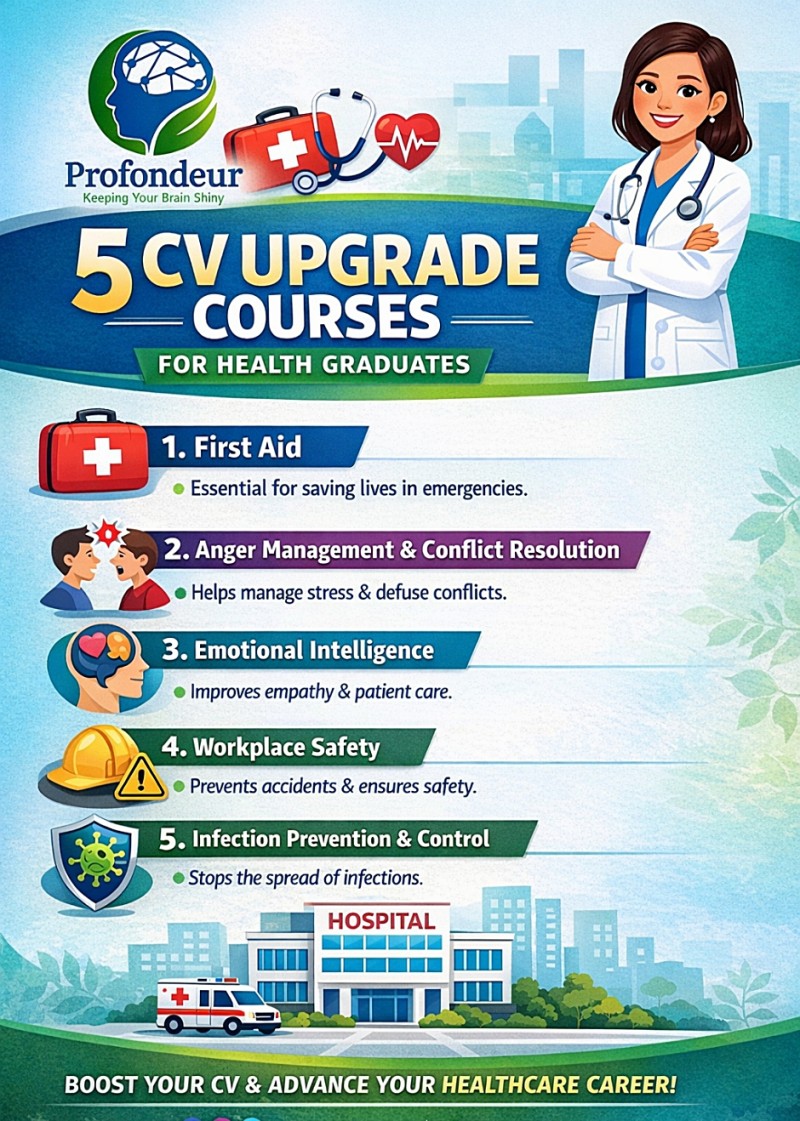
~5 HIGHLY DEMANDED CV UPGRADE COURSES FOR HEALTH GRADUATES ~
1. First Aid
First Aid training equips health graduates with the ability to respond immediately to emergencies such as bleeding, fractures, burns, shock, or cardiac arrest. Its striking importance lies in saving lives within the critical “golden minutes” before advanced care becomes available. Employers value this skill because it demonstrates preparedness, responsibility, and the ability to remain calm and effective under pressure.
2. Anger Management and Conflict Resolution
Healthcare environments are often stressful, involving patients in pain, anxious relatives, and high workloads. Training in anger management and conflict resolution enables health graduates to de-escalate tense situations, prevent violence, and maintain professional relationships with colleagues and patients. This skill improves teamwork, patient satisfaction, and reduces workplace disputes, making the graduate more employable and leadership-ready.
3. Emotional Intelligence (EI)
Emotional intelligence enhances a health professional’s ability to recognize, understand, and manage their own emotions while empathizing with others. Its importance lies in improving patient communication, building trust, and delivering compassionate care. High EI also supports better decision-making, stress management, and leadership effectiveness, which are critical in patient-centered healthcare settings.
4. Workplace Safety
Workplace safety training focuses on identifying hazards, preventing accidents, and ensuring compliance with safety regulations in healthcare facilities. This course is crucial because it protects health workers from occupational risks such as needle-stick injuries, chemical exposure, slips, and ergonomic strain. Employers prioritize candidates who understand safety protocols, as this reduces institutional liability and promotes a culture of safety.
5. Infection Prevention and Control (IPC)
IPC training is one of the most critical competencies for health graduates, especially in the era of emerging and re-emerging infectious diseases. It provides knowledge on hand hygiene, use of personal protective equipment (PPE), sterilization, waste management, and isolation procedures. Its striking importance lies in protecting patients, healthcare workers, and communities from healthcare-associated infections and outbreaks, making it indispensable in clinical practice.