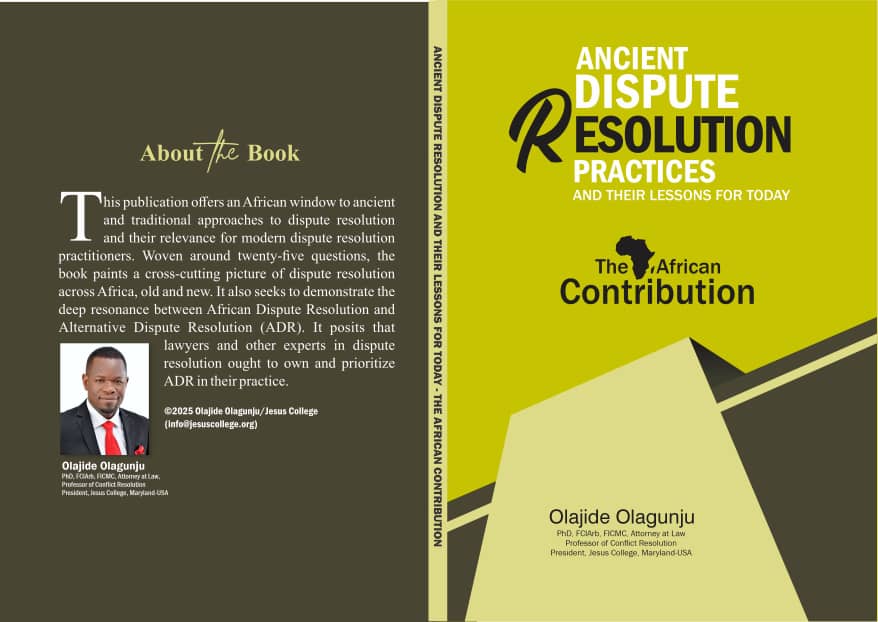
Ancient Dispute Resolution Practices and their Lessons for Today: The African Contribution

This publication offers an African window to ancient and traditional approaches to dispute resolution and their relevance for modern dispute resolution practitioners. Woven around twenty-five questions, the book paints a cross-cutting picture of dispute resolution across Africa, old and new. It also seeks to demonstrate the deep resonance between African Dispute Resolution and Alternative Dispute Resolution (ADR). It posits that lawyers and other experts in dispute resolution ought to own and prioritize ADR in their practice.
The book examines the import, variety and convergence of African Dispute Resolution, drawing on six decades of African experience; thirty years of scholarship in Alternative Dispute Resolution (ADR) and in African perspectives on dispute resolution; twenty years of research in peace studies and in anthropology; four years of studies in biblical perspectives on conflict resolution; the work of several other African dispute resolution scholars; online sources; and the following twenty five questions inspired by previous research and the author's two original models of dispute resolution - The 10-Step Mediation and the 7 Secrets of Effective Conflict Resolution:
· How did people live in pre-colonial Africa?
· What types of disputes and dispute resolution mechanisms existed in pre-colonial Africa?
· What is the African philosophy of conflict?
· Is African dispute resolution spiritual or merely social?
· What is the relationship between African values and African dispute resolution?
· What is the goal/focus of African dispute resolution?
· Is there an African approach to dispute resolution?
· Is there a commonality in African dispute resolution between different cultures?
· Is African dispute resolution one track or different approaches exist?
· How are inter-communal disputes resolved?
· Are there second-order disputes?
· Does African dispute resolution cover only civil cases or does it also include criminal matters?
· Where does African dispute resolution take place?
· Who selects those who conduct African dispute resolution? How are they selected? Is gender an issue in selection?
· Are there procedural steps in African dispute resolution?
· Are there rules governing African dispute resolution?
· Are there skills that are required for African dispute resolution?
· How are African dispute resolution skills learned or taught from one generation to the other?
· At the end of African dispute resolution, do we have an agreement between the parties or a third-party imposition?
· What socio-cultural changes and values have affected African dispute resolution approaches?
· What makes African dispute resolution resilient?
· What is the difference between traditional and modern disputes in Africa?
· What changes have taken place in African dispute resolution’s approaches because of exposure to new approaches to dispute resolution, notably the modern Court systems: How has colonialism impacted African dispute resolution?
· Is it African or humane dispute resolution?
· What does African dispute resolution teach the world about dispute resolution?