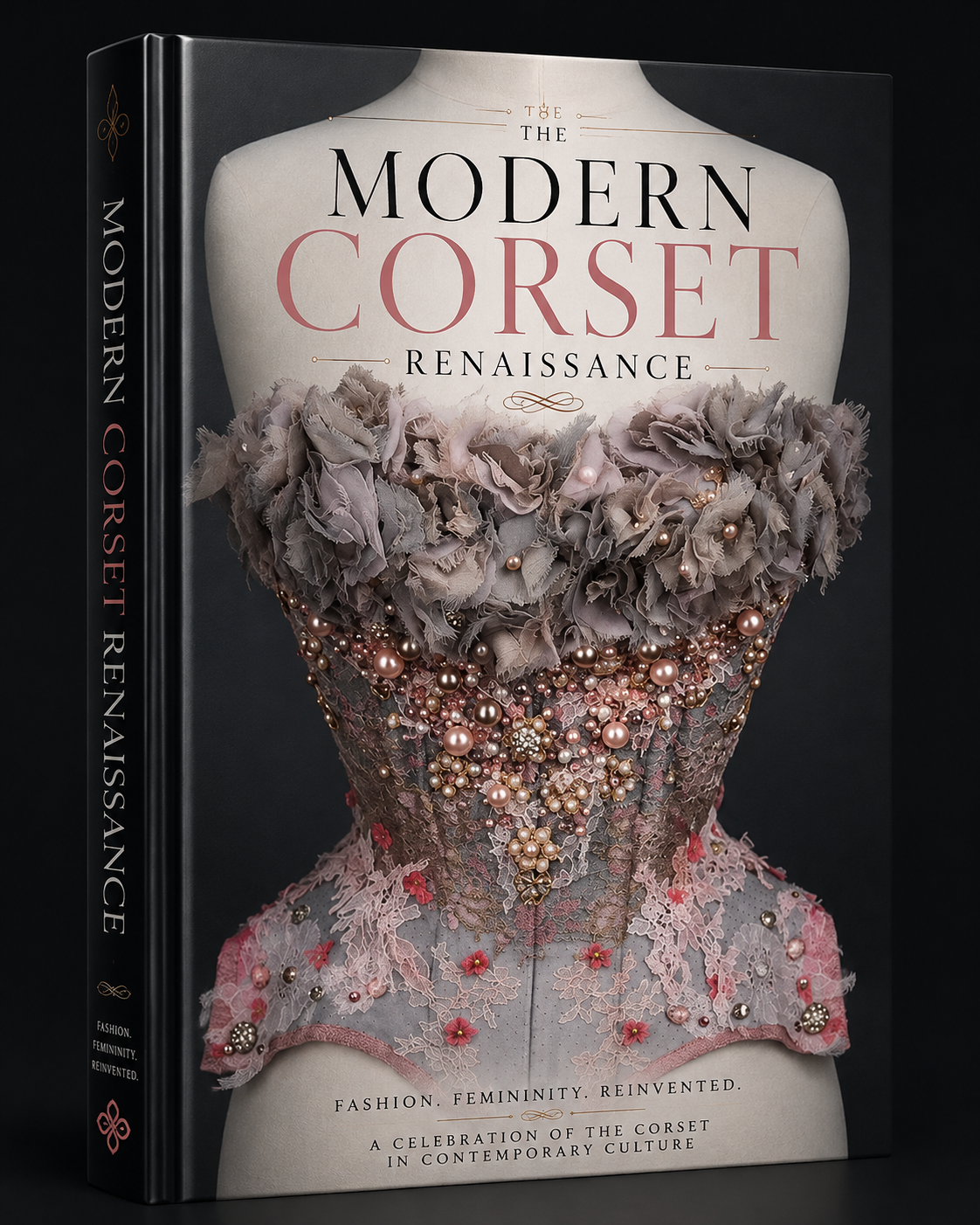
Modern Corset Renaissance
“The Modern Corset Renaissance” (from The Underpinnings Museum exhibition, with introductory text by Lorraine Smith) examines the contemporary revival of the corset as both a functional garment and a fashion statement. It challenges the dominant narrative that frames the corset solely as a symbol of female repression, with its 20th-century decline equated to liberation.
Core Perspective
Drawing on Valerie Steele’s The Corset: A Cultural History (2001), the text emphasizes that corsetry was never a single, uniform experience of oppression. As Steele noted, it was “a situated practice that meant different things to different people at different times.” The introduction compares this complexity to high-heeled shoes: restrictive and impractical for some, yet empowering and essential for others. Mainstream discourse has often been one-sided, overlooking the garment’s varied cultural meanings, personal agency, and aesthetic appeal.
Fashion History of the Modern Revival
The piece traces key moments in the corset’s late-20th- and early-21st-century resurgence as outerwear and high-fashion element:
- Vivienne Westwood is credited as one of the first high-profile designers to reintroduce the corset to the catwalk in her 1987 Harris Tweed collection.
- Jean-Paul Gaultier’s conical-bust design for Madonna’s 1990 Blonde Ambition tour popularized the idea of the corset as outerwear, though these early versions offered little more body-shaping than a standard bra and were primarily inspired by historical forms.
- In the late 1990s, designers went further by reviving authentic Victorian corsetry techniques (with the assistance of renowned corsetier Mr Pearl). Thierry Mugler, John Galliano (for Christian Lacroix), and Alexander McQueen presented dramatic, elaborately structured garments on the runway. These shows helped pave the way for the broader 21st-century corset revival.
Broader Context
The exhibition as a whole (of which this forms the introduction) explores how modern corsetieres reconceptualize the garment both functionally and aesthetically. Contemporary makers draw on historical techniques (busks, flossing, steel boning, lacing) while innovating with new silhouettes, materials, and purposes. Corsets are no longer obligatory undergarments but chosen fashion items, symbols of expression, empowerment, or artistry—worn as outerwear, statement pieces, or personalized shapewear.
In summary, the text positions the modern corset renaissance as a multifaceted cultural phenomenon that reclaims the garment from simplistic oppression narratives, highlighting its evolution from historical foundation to contemporary high fashion and personal style.