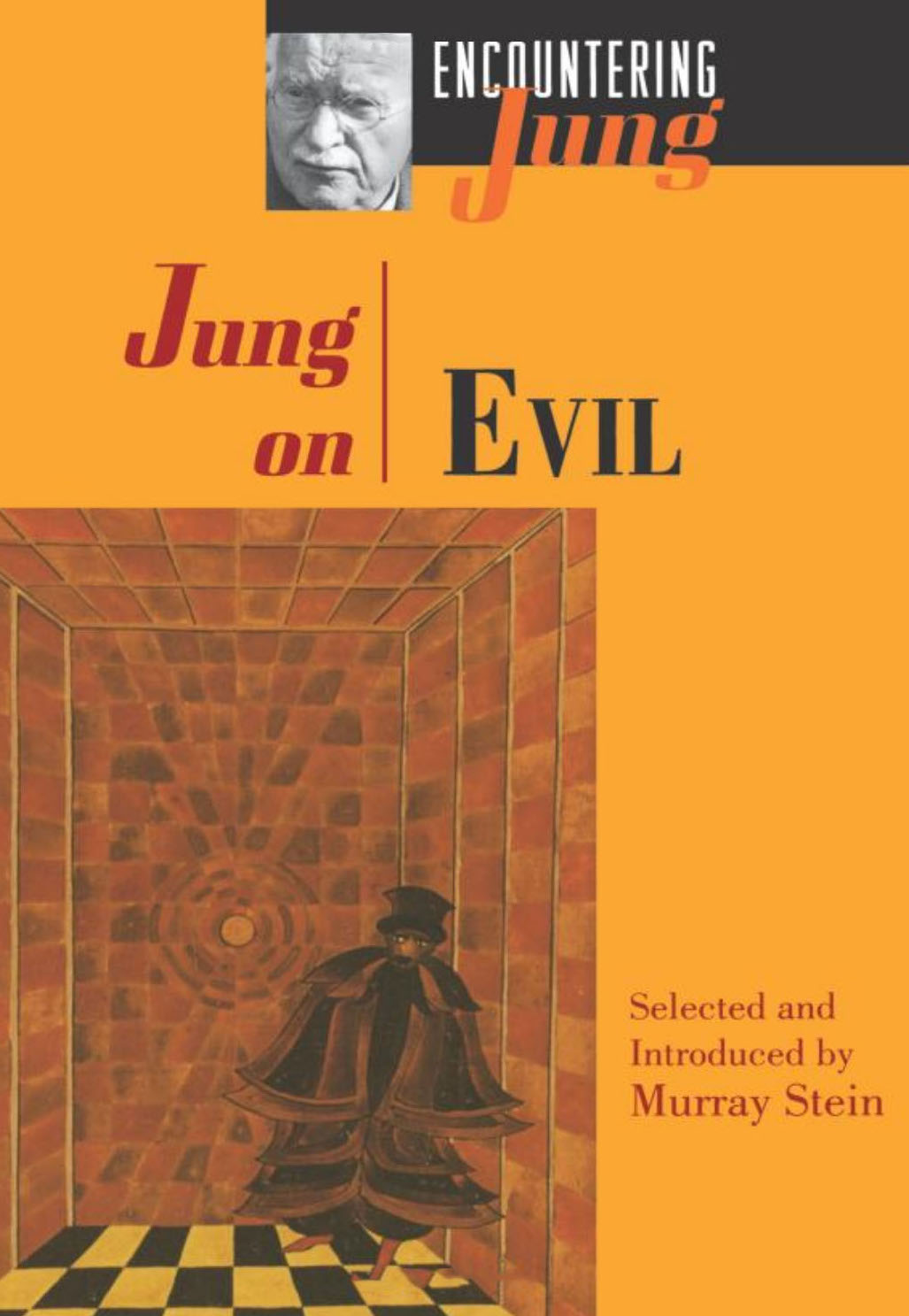
Stein, Murray (ed.) - Jung on Evil (Princeton, 1996)

We need more understanding of human nature. because the only real danger
that exists is man himself. He is the great danger, and we are pitifully
unaware of it. We know nothing of man, far too little. His psyche should
be studied, because we are the origin of all coming evil.
(Jung 1 977: 436)
The problem of evil is a perennial one. Theodicies abound throughout history,
explaining God's purposes in tolerating evil and allowing it to exist.
Mythological and theological dualisms try to explain evil by asserting its
metaphysical status and grounding and the eternal conflict between evil and
good. More psychological theories locate evil in humanity and in psychopathology.
Probably humans have forever wrestled with questions like these:
Who is responsible for evil? Where does evil come from? Why does evil
exist? Or they have denied its reality in the hope, perhaps, of diminishing its
force in human affairs.
The fact of evil's existence and discussions about it have certainly not been
absent from our own century. In fact, one could argue that despite all the
technical progress of the last several thousand years, moral progress has been
absent, and that, if anything, evil is a greater problem in the twentieth century
than in most. Certainly all serious thinkers of this century have had to
consider the problem of evil, and in some sense it could be considered the
dominant historical and intellectual theme of our now fast closing century.
More than most other intellectual giants of this century, Jung confronted
the problem of evil in his daily work as a practicing psychiatrist and in his
many published writings. He wrote a great deal about evil, even if not
systematically or especially consistently. The theme of evil is heavily larded
throughout the entire body of his works, and particularly so in the major
pieces of his later years. A constant preoccupation that would not leave him
alone, the subject of evil intrudes again and again into his writings, formal
and informal. In this sense, he was truly a man of this century.