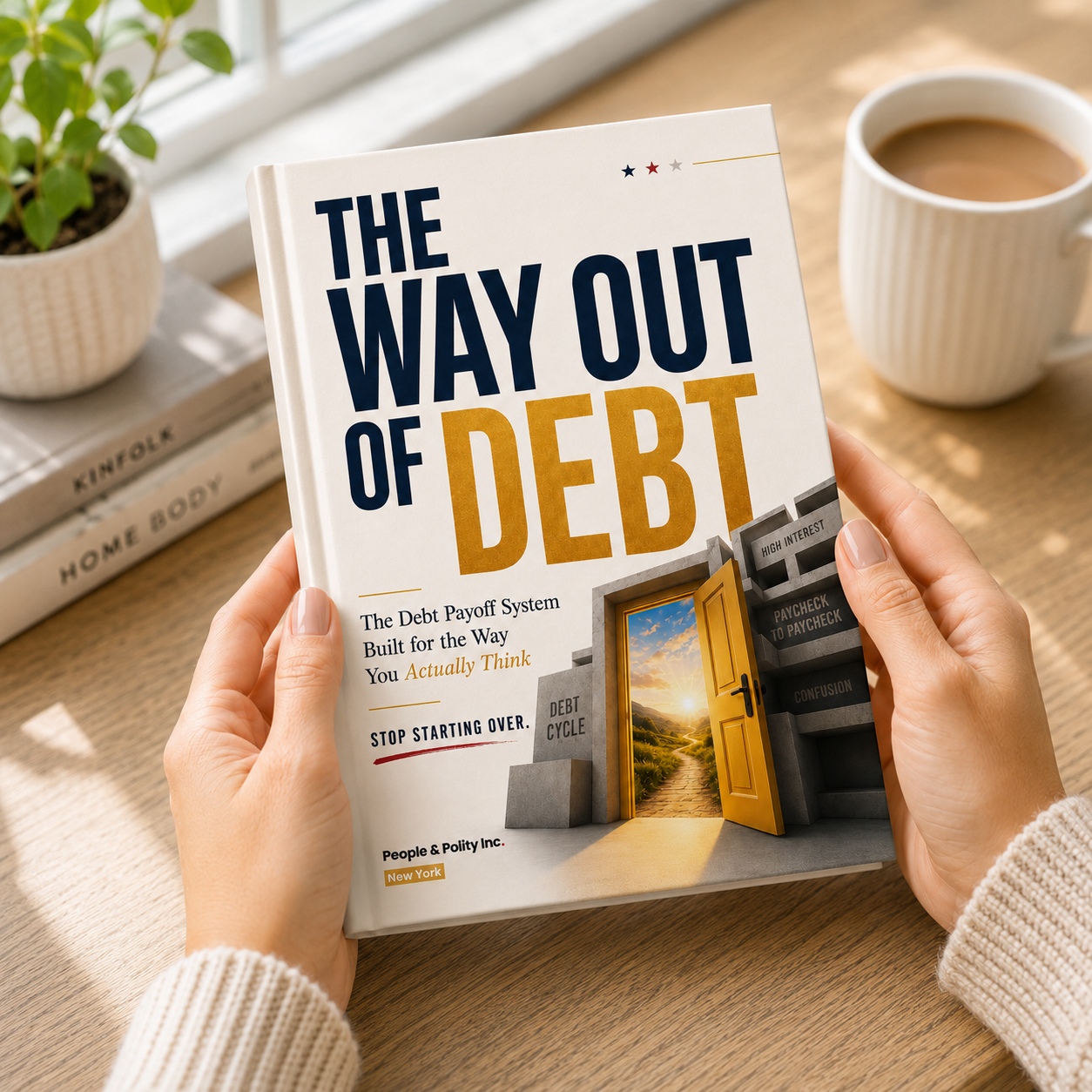
Here's what nobody told you the last time you tried to pay off your debt:
It wasn't a discipline problem. It was a method problem.
You've probably tried before.
Maybe you made a plan. Set a budget. Attacked the cards. And for a few months, it actually worked.
Then life happened. Or the progress felt invisible. Or you got tired of the math and stopped checking.
And somewhere in the silence after, a familiar thought crept in:
"Maybe I'm just not the kind of person who can do this."
That thought is wrong. And this guide proves it.
The real reason debt payoff plans fail
There are only two proven methods for paying off consumer debt. You've probably heard their names — the Debt Snowball and the Debt Avalanche.
What nobody tells you is that one of them is built for your personality, and one of them isn't.
Pick the wrong one and you'll quit — not because you're weak, but because your brain literally isn't wired to stay motivated by it. Pick the right one and something shifts. The progress feels real. The wins keep coming. And you actually finish.
The Way Out of Debt is built entirely around that one insight.
What's inside
This is a 45-page, straight-talking guide that walks you through:
Why you're in debt — and why it's probably not what you think. (41% of American credit card debt comes from emergencies. 33% from everyday expenses. Only 17% from what most people call "lifestyle spending." You've been blaming yourself for the wrong thing.)
Why your last plan failed — the psychology of the Shame Loop, the Ostrich Effect, and why the mathematically "correct" method causes most people to quit
Both methods, explained with real numbers — using the same person, same debts, month by month, all the way to zero
Six questions that identify your method — no guessing, no personality tests, just honest answers that tell you exactly which path is yours
Your complete step-by-step plan — whichever method fits you, you'll have a written plan and a first action before you finish the chapter
Where to find $100–$400/month you don't think you have — including a word-for-word script that 76% of Americans who used it got a lower interest rate with (LendingTree, 2023)
Your legal rights with debt collectors — what they're allowed to do, what they're not, and the exact letters and scripts to use if they cross the line
What to do when life wrecks your plan — because it will, and a pause is not the same as quitting
The psychology of finishing — identity, celebration, and the mental shift that separates people who pay off debt from people who almost did
This guide is for you if...
→ You're carrying between $3,000 and $15,000 in credit card or consumer debt
→ You've tried to pay it off before and stopped
→ You feel like you've been in this hole forever with nothing to show for it
→ You're tired of advice that sounds smart but doesn't account for how actual people think and feel
You want a plan — not inspiration, not a lecture. A plan.
This guide is not for you if...
→ You're looking for loopholes, hacks, or ways to avoid paying what you owe
→ You want someone to tell you what you want to hear
→ You're in a financial crisis that requires bankruptcy counsel (we'll tell you exactly where to get that help for free)
A note on the price
At $17, this costs less than two months of interest on a $3,000 balance at the average American APR.
If you use one thing in here — one script, one strategy, one reframe — it pays for itself before the week is out.
What you get
✔ Instant digital download — PDF, readable on any device
✔ 45 pages of straight-talk, zero fluff
✔ Real worked examples with real math, not just theory
✔ Fillable worksheets and trackers you can use today
✔ Your projected debt freedom date — a specific month, a specific year
The only question left
You already know what staying where you are costs.
You've felt it every time the statement comes. Every time your phone rings from a number you don't recognize. Every time you transfer a balance or move money around hoping this month will somehow be different.