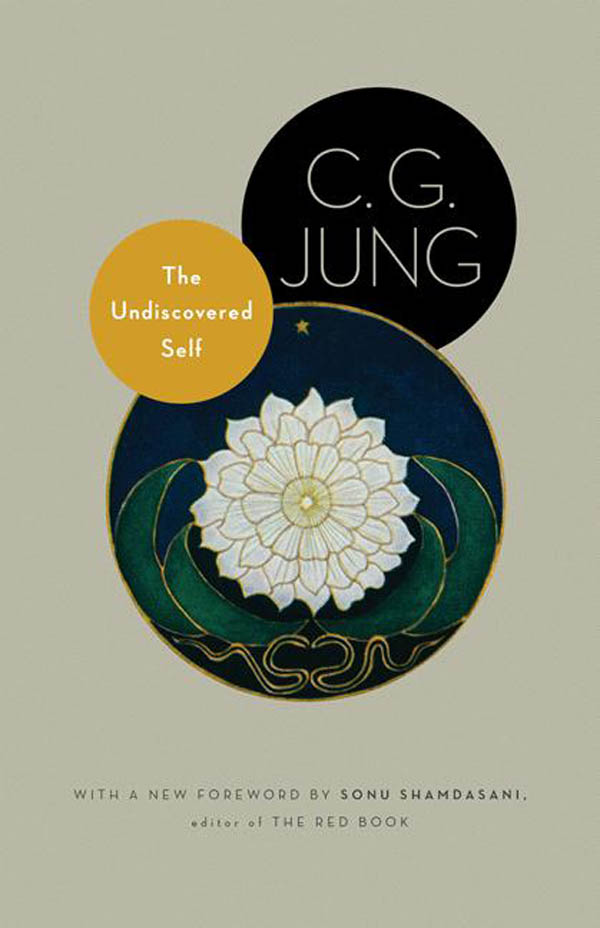
Jung, C. G. - Undiscovered Self, The (Princeton, 2011)

With the publication of Liber Novus----Jung's Red Book1-a new chapter
opens in the reading ofjung's works. For the first time, one is
in a position to grasp the constitution of Jung's work from 1914
onward, and to trace the intimate connections between his selfexperimentation
and his attempts to determine the typical features
of this process through his work with his patients and translate his
insights into a language acceptable to a medical and scientific public.
Thus, reading Liber Novus brings with it the task of rereading
Jung's Collected Works-much of which appears in a wholly new light.
In the winter of 1913, Jung embarked on a process of selfexperimentation.
He deliberately gave free rein to his fantasy thinking
and carefully noted what ensued. He later called this process
"active imagination." He wrote down these fantasies in the Black
Books. These are not personal diaries, but rather the records of a selfexperimentation.
The dialogues that form these active imaginations
can be regarded as a type of thinking in a dramatic form.
vVhen vVorld War I broke out, Jung considered that a number
of his fantasies were precognitions of this event. This led him to
compose the first draft of Liber Novus, which consisted of a transcription
of the main fantasies from the Black Books, together with
a layer of interpretive commentaries and lyrical elaboration. Here
Jung attempted to derive general psychological principles from
the fantasies, as well as to understand to what extent the events
portrayed in the fantasies presented, in a symbolic form, developments
that were to occur in the world.