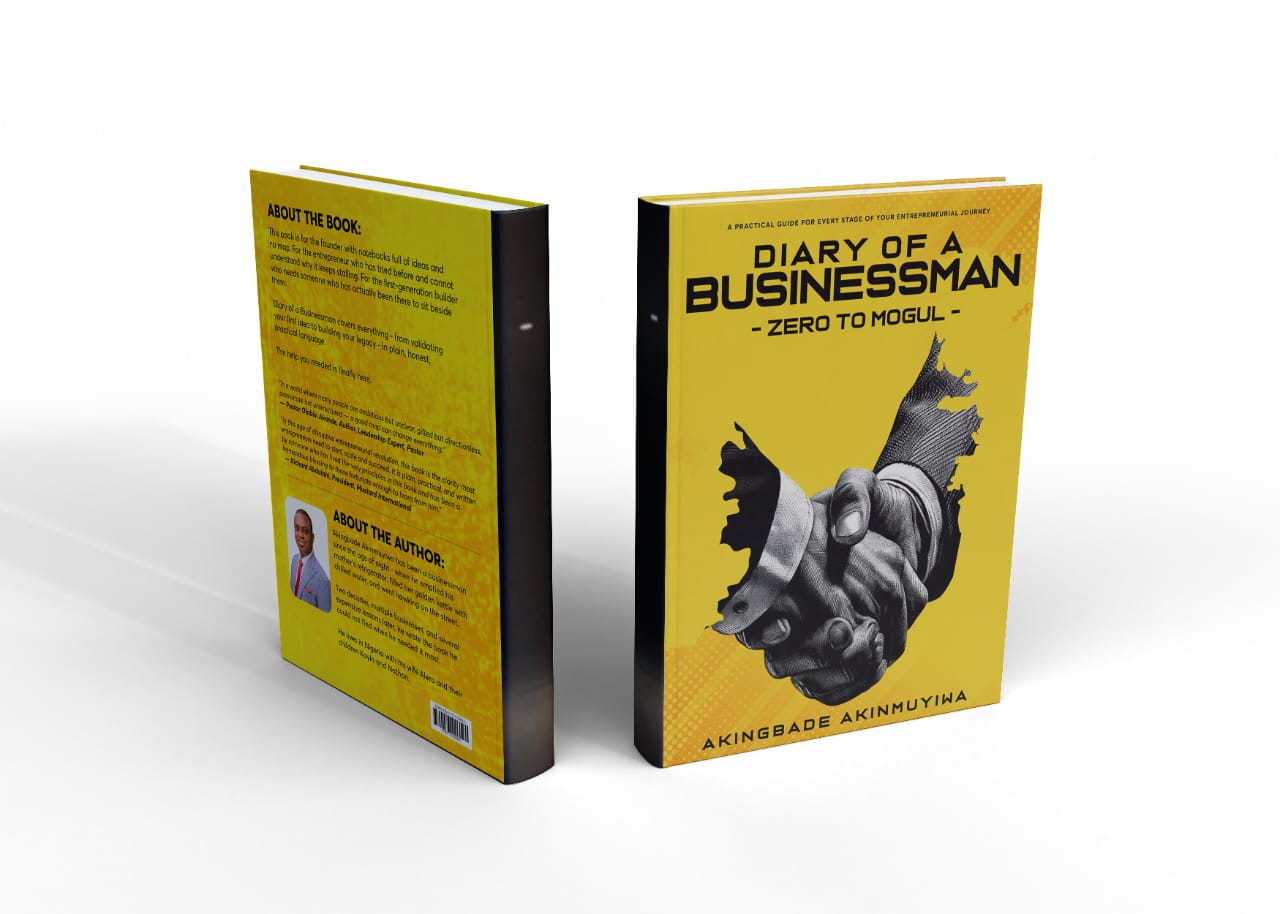
DIARY OF A BUSINESS MAN- ZERO TO MOGUL (A PRACTICAL GUIDE FOR EVERY STAGE OF YOUR ENTREPRENUERSHIP JOURNEY)- AKINGBADE AKINMUYIWA
I was maybe eight or nine years old, and I made a business decision that my mother was not consulted about.
I came home from school one afternoon, spotted her golden water kettle sitting there doing nothing useful, walked to our old Debo refrigerator, emptied the chilled water into it, grabbed some cups, and headed straight out to the street.
I was hawking water. Unofficially. Unsupervised. Unbothered.
And honestly? I felt like a CEO.
I was so proud of myself that I trekked all the way to my parents' shop, the actual shop where they worked, fully expecting a standing ovation. I imagined them turning to their customers and saying, "See our son. This one has a future."
What I got instead was a firm rebuke and instructions to go home.
My parents were traders, had been all their lives, and they were proud of it. But I was a straight-A student, and in their minds, business was for after education, not instead of it. They were not wrong to think that. They were just dealing with a child who had already decided.
Every weekend after that, I was at their shop. When my long holiday came after Year 9 exams, I went to work with them properly. And at some point, they gave me my own small space, firewood offcuts from commercially sawn timber, to sell.
That was it. That was the moment.
Standing in that little space, responsible for something real, watching people exchange money for what I had on offer, I felt something settle inside me. Not excitement. Something deeper than that. Like recognition. Like my own life looked me in the eye and said, yes, this is you.
I have been chasing that feeling, building on it, losing it, and finding it again ever since.
Now, years later, I want to tell you about 2010. Because if the kettle story is where the dream started, 2010 is where it nearly ended.
I was newly married. I had found what I believed was an exceptional opportunity in FX trading, and I did what overconfident people do with exceptional opportunities: I went all in. I collected money from friends. I added everything I personally had. I over-promised on the returns. And I signed an MoU that I wrote myself, without a lawyer, because at the time I thought that was something only overly cautious people did.
Then the market moved.
I watched, in real time, as everything disappeared from the screen. It was a volatile day. I had placed no stop loss, which in FX trading is basically the equivalent of driving on a highway with no brakes because you are genuinely confident you will not need them.
I lost all the money, and I nearly lost my marriage too.
That season taught me two things that no book had ever thought to warn me about. First: never trade all your money. Compartmentalise. Second: never write your own agreements. A lawyer is not a luxury; they are protection. The money you spend on legal counsel is almost always cheaper than the money you will lose without it.
I learned both lessons the expensive way.
But here is the thing about expensive lessons: they tend to stick.
I have written this book because I kept looking for it and it did not exist. Not in the form I needed it.
Most entrepreneurship books are one of three things - motivational, academic, or biographical. Each has genuine value. Each has also left a gap.
The motivational book lifts the spirit but can leave the hands empty. The academic book builds the mind but can lose the founder in the theory. The biographical book inspires through testimony but is often written from the summit - looking down at a climb the author has long since completed.
What I kept looking for was something different. Something that sat beside you at the beginning - practical enough to use, honest enough to trust, and close enough to the starting line to remember what zero actually feels like.
That is the gap this book was written to fill.