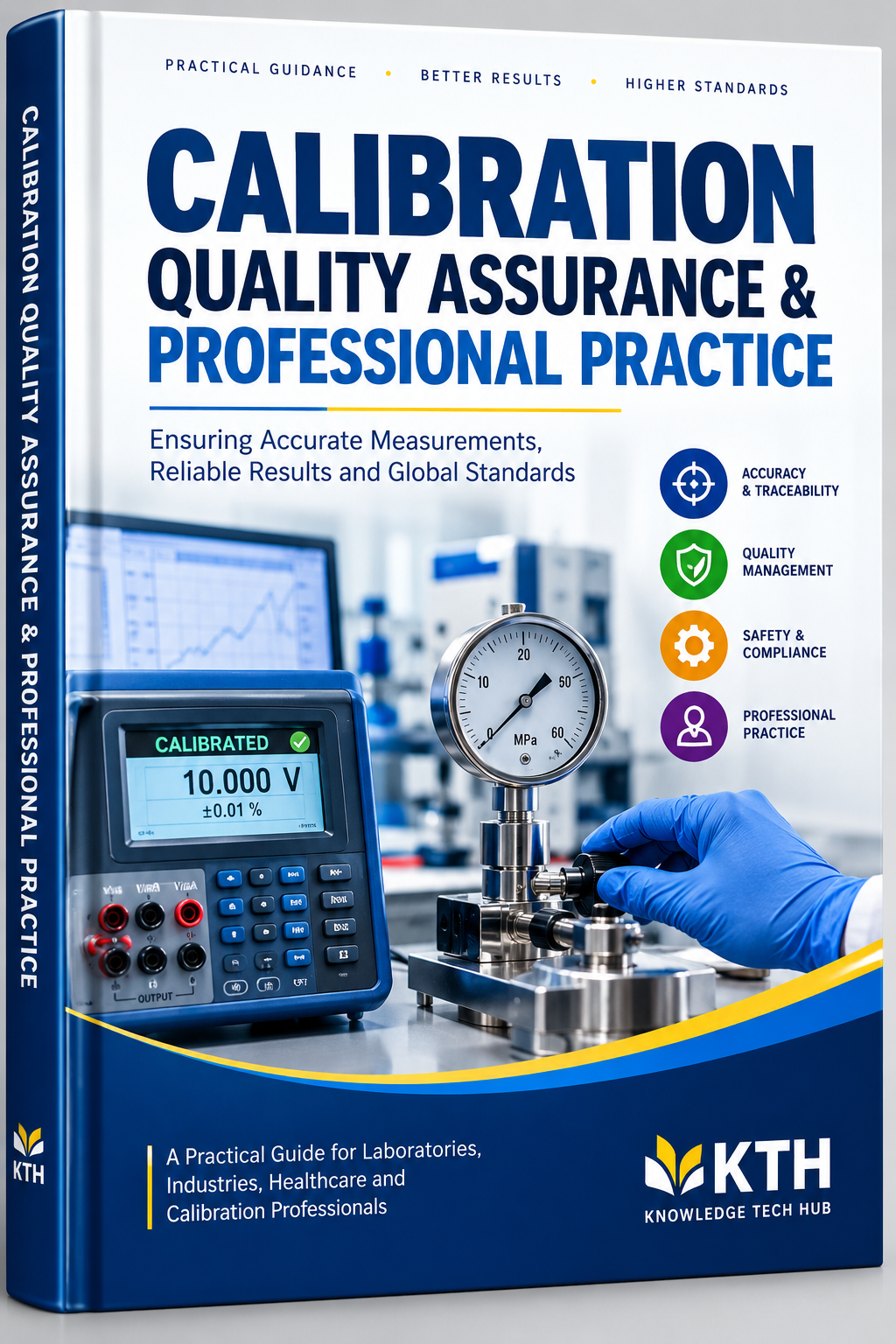
CALIBRATION QUALITY ASSURANCE & PROFESSIONAL PRACTICE - A Practical Guide to Calibration Competence, Traceability, Measurement Uncertainty, Technical Integrity and Customer Quality Assurance

Calibration is more than comparing an instrument against a standard and issuing a certificate. Reliable calibration requires technical competence, appropriate procedures, measurement traceability, sound uncertainty evaluation, accurate documentation and professional integrity.
Calibration Quality Assurance & Professional Practice is a practical professional guide designed to help calibration engineers, laboratory professionals, quality personnel, equipment owners and organizations understand and apply the principles that support reliable calibration services and trustworthy measurement results.
The course explores the key technical and professional considerations involved in calibration quality assurance—from planning and performing calibration activities to evaluating results, documentation, certificates and customer requirements.
What You Will Learn
You will develop a stronger understanding of:
- Calibration principles and professional responsibilities
- Calibration competence and technical capability
- Measurement traceability and the importance of recognized standards
- Calibration procedures and control of measurement processes
- Measurement uncertainty and its significance in calibration results
- Calibration certificates and essential documentation
- Equipment, reference standards and environmental considerations
- Quality assurance throughout the calibration process
- Customer requirements and effective communication
- Technical integrity, impartiality and professional conduct
- Common calibration-service quality problems and how to prevent them
- Practical approaches to maintaining confidence in measurement results
Who Is This Course For?
This course is suitable for:
- Calibration engineers and technicians
- Laboratory technologists and laboratory professionals
- Metrology and measurement professionals
- Quality assurance and quality control personnel
- Maintenance and engineering professionals
- Laboratory and technical managers
- Equipment owners and users
- Procurement and technical evaluation teams
- Organizations responsible for calibration management and measurement quality
Practical Professional Focus
Rather than focusing only on theoretical concepts, this guide connects calibration principles with real-world professional practice.
It helps professionals and organizations understand what good calibration practice should look like, what evidence to look for, what questions to ask, and how to identify weaknesses that may compromise measurement confidence.
Why This Course Matters
Poor calibration practices can result in unreliable measurements, questionable test results, equipment-related decisions based on inaccurate data, and avoidable quality problems.
Understanding calibration quality assurance helps organizations make better decisions about their measuring equipment and the calibration services they engage.
Build stronger calibration practices. Strengthen measurement confidence. Protect technical integrity.
Knowledge Tech Hub
Learn today. Build tomorrow.