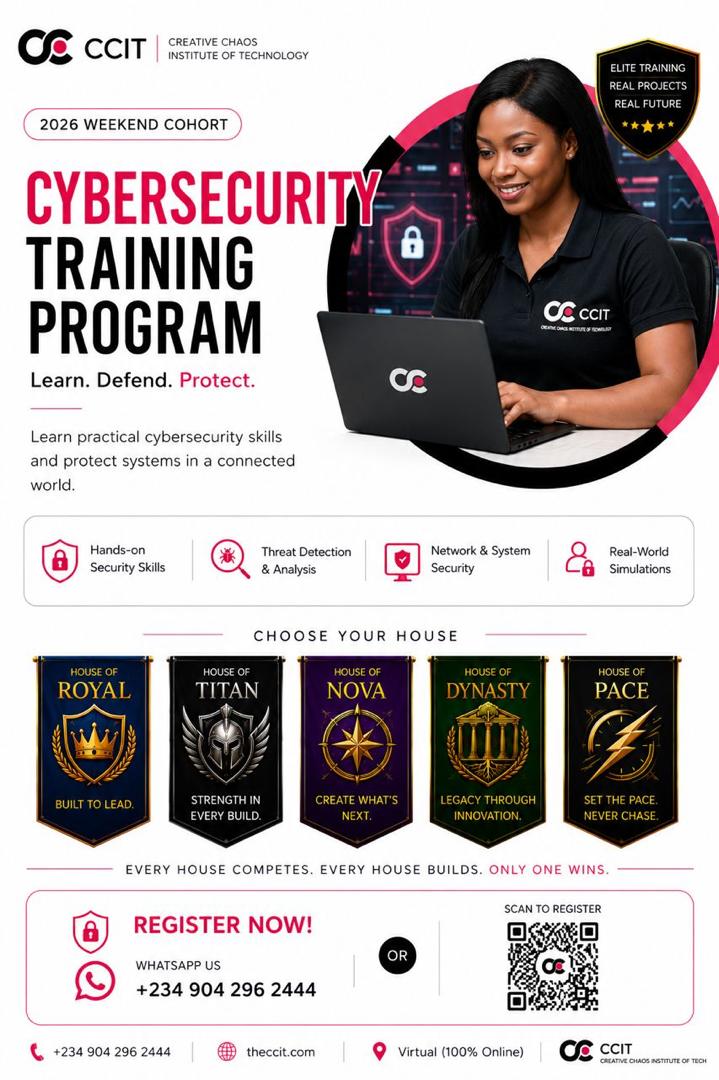
Cybersecurity

Cybersecurity
Protect the Digital World. Build a Career That Matters.
Every day, businesses, governments, financial institutions, hospitals, and individuals face cyber threats that can disrupt operations, expose sensitive information, and cost millions of dollars. As technology continues to power every aspect of modern life, the demand for skilled cybersecurity professionals has never been greater.
The CCIT Cybersecurity Program is designed to equip you with the practical knowledge, technical skills, and problem-solving mindset needed to secure digital systems against modern threats. Whether you are starting your journey in technology or looking to transition into one of the world’s fastest-growing industries, this program provides a structured pathway into cybersecurity through hands-on learning, real-world scenarios, and industry-relevant tools.
At CCIT, we believe cybersecurity is not simply about learning to use security tools—it’s about understanding how attackers think, identifying vulnerabilities before they become problems, and designing systems that are secure by default.
Why Study Cybersecurity?
Cyber attacks are increasing in both frequency and sophistication. Organizations across every industry require professionals who can identify risks, prevent attacks, detect threats, and respond effectively when incidents occur.
Cybersecurity professionals play a critical role in protecting:
• Financial institutions
• Government agencies
• Healthcare systems
• Technology companies
• Educational institutions
• Startups
• E-commerce platforms
• Cloud infrastructure
• Personal and business data
As organizations continue to digitize their operations, cybersecurity has become one of the most valuable and stable career paths in technology.
What You Will Learn
Throughout this program, you will build a strong foundation in both the theoretical and practical aspects of cybersecurity.
You will learn how computer networks operate, how attackers exploit vulnerabilities, and how security professionals defend digital environments.
Key learning areas include:
Cybersecurity Fundamentals
Understand the core principles of information security, confidentiality, integrity, availability, threat landscapes, and modern security practices.
Networking Essentials
Learn how networks communicate, understand TCP/IP, DNS, HTTP, firewalls, routers, switches, VPNs, and network architecture.
Operating Systems Security
Explore Windows and Linux environments while learning how to configure, monitor, and secure operating systems.
Threat Detection
Learn how malware, ransomware, phishing, social engineering, insider threats, and advanced persistent threats operate.
Vulnerability Assessment
Discover how security professionals identify weaknesses within systems before attackers do.
Security Monitoring
Gain experience analyzing logs, monitoring unusual activity, and understanding how Security Operations Centers (SOCs) work.
Identity and Access Management
Understand authentication, authorization, password security, multi-factor authentication, and user access control.
Cloud Security
Learn the security principles behind modern cloud platforms and understand shared responsibility models.
Incident Response
Develop the ability to investigate security incidents, contain threats, recover systems, and document findings.
Cybersecurity Best Practices
Understand governance, compliance, security policies, risk management, and organizational security culture.
Hands-on Projects
Learning cybersecurity should never be limited to theory.
Throughout the program, you’ll gain practical experience by working on projects that simulate real-world security challenges.
Projects may include:
• Securing a small business network
• Performing vulnerability assessments
• Identifying phishing attempts
• Configuring firewall rules
• Conducting security audits
• Investigating simulated cyber incidents
• Hardening Windows and Linux systems
• Designing secure network architectures
• Creating security awareness campaigns
• Developing incident response plans
These projects are designed to help you build confidence while developing a portfolio that demonstrates your practical skills.
Tools You’ll Work With
You’ll be introduced to widely used cybersecurity tools and technologies, including:
• Wireshark
• Nmap
• Burp Suite
• Kali Linux
• Microsoft Defender
• Linux Terminal
• Virtual Machines
• Password Managers
• SIEM fundamentals
• Vulnerability Scanners
• Network Monitoring Tools
Our curriculum evolves continuously to reflect current industry practices and emerging threats.
Who This Program Is For
This program is suitable for:
• Beginners with no cybersecurity experience
• Students interested in technology careers
• IT professionals seeking to specialize
• Career changers
• Graduates looking for practical, employable skills
• Business owners who want to improve their understanding of digital security
• Anyone passionate about protecting digital systems
No advanced technical background is required. We begin with the fundamentals before progressing to more advanced concepts.
Career Opportunities
Cybersecurity is one of the fastest-growing technology fields worldwide.
After completing this program, you’ll be equipped with foundational skills for roles such as:
• Cybersecurity Analyst
• Security Operations Center (SOC) Analyst
• Information Security Analyst
• Network Security Technician
• IT Security Support Specialist
• Security Administrator
• Junior Penetration Tester
• Vulnerability Assessment Analyst
• Incident Response Analyst
• Compliance and Risk Associate
Many graduates also continue pursuing globally recognized certifications and advanced specializations.
Why Learn Cybersecurity at CCIT?
At CCIT, we don’t just teach concepts—we help you develop practical skills that employers value.
Our learning experience combines:
• Live instructor-led sessions
• Practical, project-based learning
• Hands-on labs and simulations
• Real-world case studies
• Collaborative House challenges
• Mentor support
• Peer learning community
• Career guidance
• Lifetime access to the CCIT builder community
You won’t simply memorize concepts—you’ll learn how to think like a cybersecurity professional.
By the End of This Program, You Will Be Able To:
• Understand modern cyber threats and how they work.
• Secure computers, networks, and digital systems using industry best practices.
• Identify vulnerabilities and recommend practical solutions.
• Investigate common cybersecurity incidents.
• Configure basic security controls.
• Understand cloud and network security fundamentals.
• Apply security principles to real-world environments.
• Build a portfolio of practical cybersecurity projects.
• Confidently begin your journey toward a career in cybersecurity.
Build the Skills to Defend the Future
Every organization depends on technology, and every technology system needs protection. Cybersecurity professionals are at the forefront of defending businesses, governments, and communities against evolving digital threats.
Whether your goal is to launch a new career, strengthen your technical expertise, or become a trusted security professional, the CCIT Cybersecurity Program provides the knowledge, practical experience, and community to help you succeed.
Your journey into cybersecurity starts here.