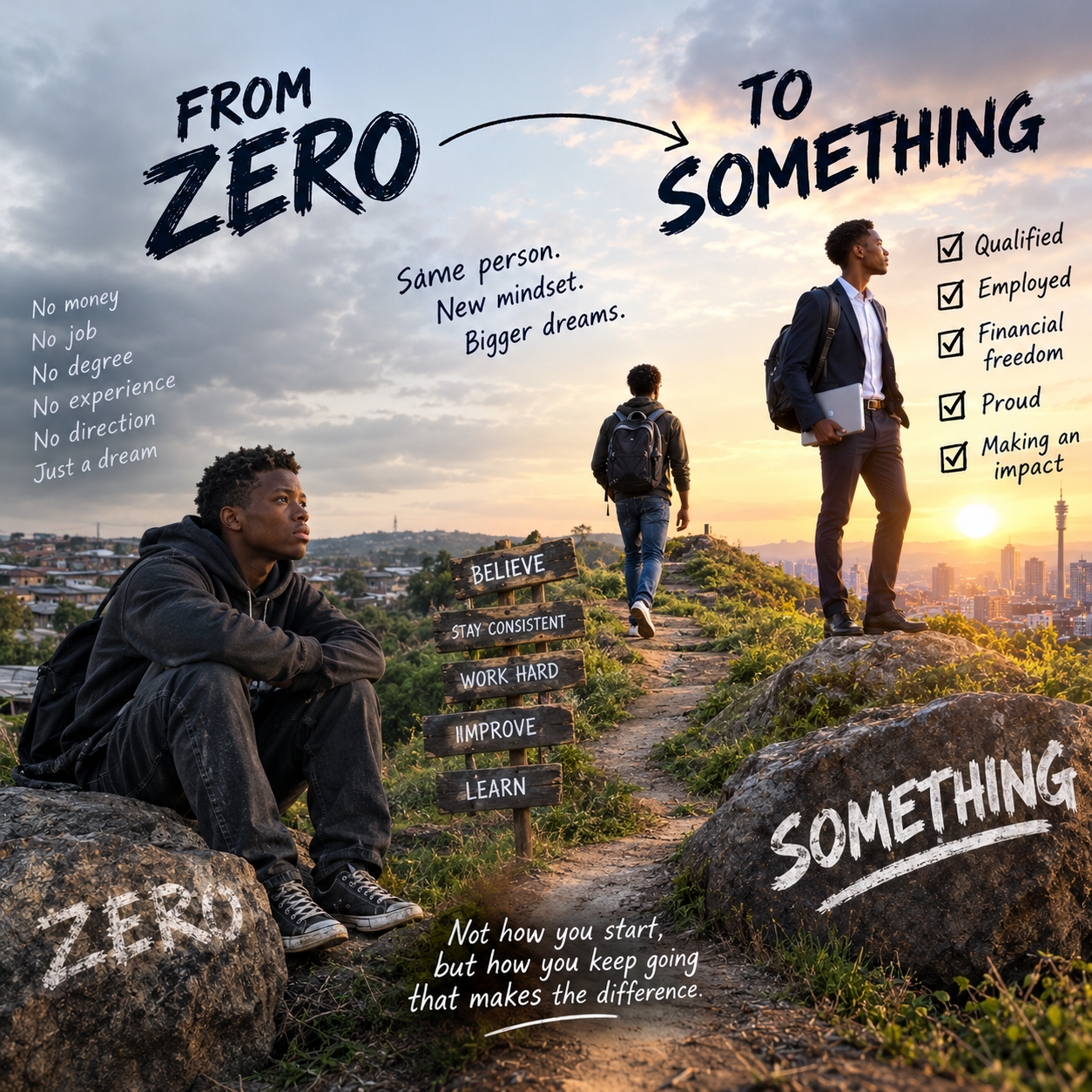
From Zero to Something
Table of contents
PART ONE — CHANGE THE WAY YOU THINK
1. Zero Does Not Mean Nothing
2. The Degree Is Not the Only Door
3. Discovering What You Already Have
PART TWO — MAKE MONEY WITH YOUR HANDS
4. Turning Practical Skills into Income
5. Starting a Service Business with Little Money
6. From Household Skills to Professional Services
PART THREE — MAKE YOUR PHONE WORK FOR YOU
7. Your Phone Is More Than a Communication Device
8. Selling Products and Services on WhatsApp
9. Using Facebook, TikTok and Instagram to Find Customers
10. Creating Content That Opens Doors
PART FOUR — MAKE MONEY WITH YOUR WORDS
11. The Power of Speaking and Writing
12. Tutoring, Teaching and Sharing Knowledge
13. Copywriting, Translation and Communication Services
14. Selling Ideas, Not Just Products
PART FIVE — TURN KNOWLEDGE INTO INCOME
15. Learn a Skill That People Need
16. Solving Problems People Will Pay You to Solve
17. Building a Personal Brand Without Becoming Famous
PART SIX — EARN THROUGH DIGITAL SERVICES
18. Freelancing from South Africa
19. Graphic Design, Video Editing and Digital Marketing
20. Virtual Assistance and Online Administrative Work
21. Websites, Online Stores and Digital Products
22. Finding Legitimate Online Work and Avoiding Scams
PART SEVEN — BUILD SOMETHING THAT LASTS
23. Finding Your First Customer
24. Pricing Your Work and Getting Paid
25. Managing Money, Saving and Reinvesting
26. Turning a Side Hustle into a Business
27. Your First 30 Days: From Zero to Something
FROM NOTHING TO SOMETHING
A Practical Handbook for All South Africans on Earning a Living Without a Degree
Harnessing Your Hands, Phone, Words, Knowledge and Digital Services
Writer: Ntene TF
SECTION ONE: TRANSFORM YOUR MINDSET
DEDICATION
This book is devoted to every South African who has ever considered their situation and
questioned whether life might hold something better.
It is devoted to the young person who has completed school but is unable to find work, the
graduate still looking for an opportunity, the parent who wishes to provide for their children,
the person who has lost a job, and the individual who has an idea but is unsure where to
start.
It is also devoted to the person who has been made to feel that they are not smart enough,
qualified enough, well-connected enough or financially secure enough to succeed.
This book is meant for you.
You may not hold a degree. You may not have the money to rent an office. You may not
possess costly equipment, influential friends or a family business waiting for you. But you
may have hands that can work, a phone that can link you to people, words that can convey
an idea, and knowledge that can solve someone's problem.
Those things are important.
Your present circumstances may describe where you are today, but they do not have to
decide everything you will become tomorrow
YOU CAN START WITH WHAT YOU HAVE
Picture waking up in the morning with no job to go to, no salary to expect at the end of the
month and no clear sense of how you will make money. You look around your home and
notice a smartphone, a notebook, a few household tools and the skills you have built up
over your life.
You start asking yourself questions.
What can I do? Who would be willing to pay me? Where can I find customers? How can I
start a business when I have no money? Do I have to wait for someone to employ me before
I can start earning?
For a great many South Africans, these are not hypothetical questions. They form part of
daily existence.
Securing work can prove hard. Getting business off the ground can seem costly. Certain
opportunities call for qualifications, experience or connections that people do not yet
possess. Consequently, many capable individuals come to think that their only choice is to
wait.
Yet waiting is not the sole response available.
There is another approach to earning a living: spotting a problem, building the ability to
solve it, locating someone who needs that solution, and presenting your service honestly
and professionally.
This is the core idea that From Zero to Something is built on.
This book does not aim to persuade you that qualifications are worthless. Education,
professional training and university degrees can open significant doors. Rather, this book
questions the belief that a person must hold a degree before they can start creating value
and earning an income.
A person can learn to repair furniture, clean homes, tend gardens, prepare food, design,
edit videos, tutor learners, write professional documents, run social media pages or assist
small businesses in organizing their work. Certain activities demand formal qualifications,
registration, licenses or specialized training, and those requirements deserve respect. Still,
plenty of other services can be learned and launched on a small scale.
The key question is not merely, "What qualifications do I have?"
It is also, "What problem can I solve, and how can I show that I can solve it well?"
Five resources that can shift your starting point This book centers on five resources that many people can develop and use.
1. Your hands. Skills you can put into practice may turn into services people pay for.
Cleaning, sewing, gardening, cooking, painting, assembling furniture and other handy skills
can open opportunities when done safely and dependably.
2. Your phone. A smartphone can help you promote services, stay in touch with customers,
show samples of your work, take enquiries and keep track of orders. When connected to
the internet, it can also give you access to learning materials and chances to do digital
work.
3. Your words. Good communication has real value. People need help with writing, editing,
tutoring, translation, customer service, marketing and presenting ideas. If you
communicate well, you may be able to turn that strength into a service.
4. Your knowledge. What you know can be of help to someone else. You might have a grasp
of a school subject, a local market, practical skills, a computer program or the needs of a
particular community. With proper preparation and an honest account of your abilities, that
knowledge can become useful to others.
5. Digital services. Businesses and individuals are increasingly relying on digital tools to
communicate, promote products and organize their work. Learning services like graphic
design, video editing, virtual assistance and digital marketing can open extra opportunities.
Mastering all five resources at once is not necessary. All you need to do is find a suitable
place to start.
What this book promises—and what it does not
This book offers practical ideas, examples, exercises and step-by-step activities to help
turn abilities into possible sources of income.
It explains how to select a service, find potential customers, create simple advertisements,
set fair prices, approach customers professionally, manage income and build trust.
It will also address the challenges that come with earning a living independently. Not every
idea will succeed. Some customers will turn down your offer. Certain months will be better
than others. You may need to practice, sharpen your skills or adjust your approach.
Income is never guaranteed, and simply owning a phone does not make someone a
successful entrepreneur. Online opportunities can also bring scams, competition and
unreliable payments. Progress takes patience, effort, responsible decisions and ongoing
learning.
The aim is to replace empty promises with practical action.
You do not have to get rich overnight. Your first achievement could be earning your first
R100 from a service. Your next goal could be to find five regular customers. Later, you might
buy better equipment, formalize your business or hire another person
Every stage counts.
Going from zero to something means moving from a lack of clear plans to a practical sense
of direction, from waiting for an opportunity to creating one, and from an unused ability to a
skill that delivers value.
Your starting point does not need to be impressive. It simply needs to be possible.
Let’s begin.