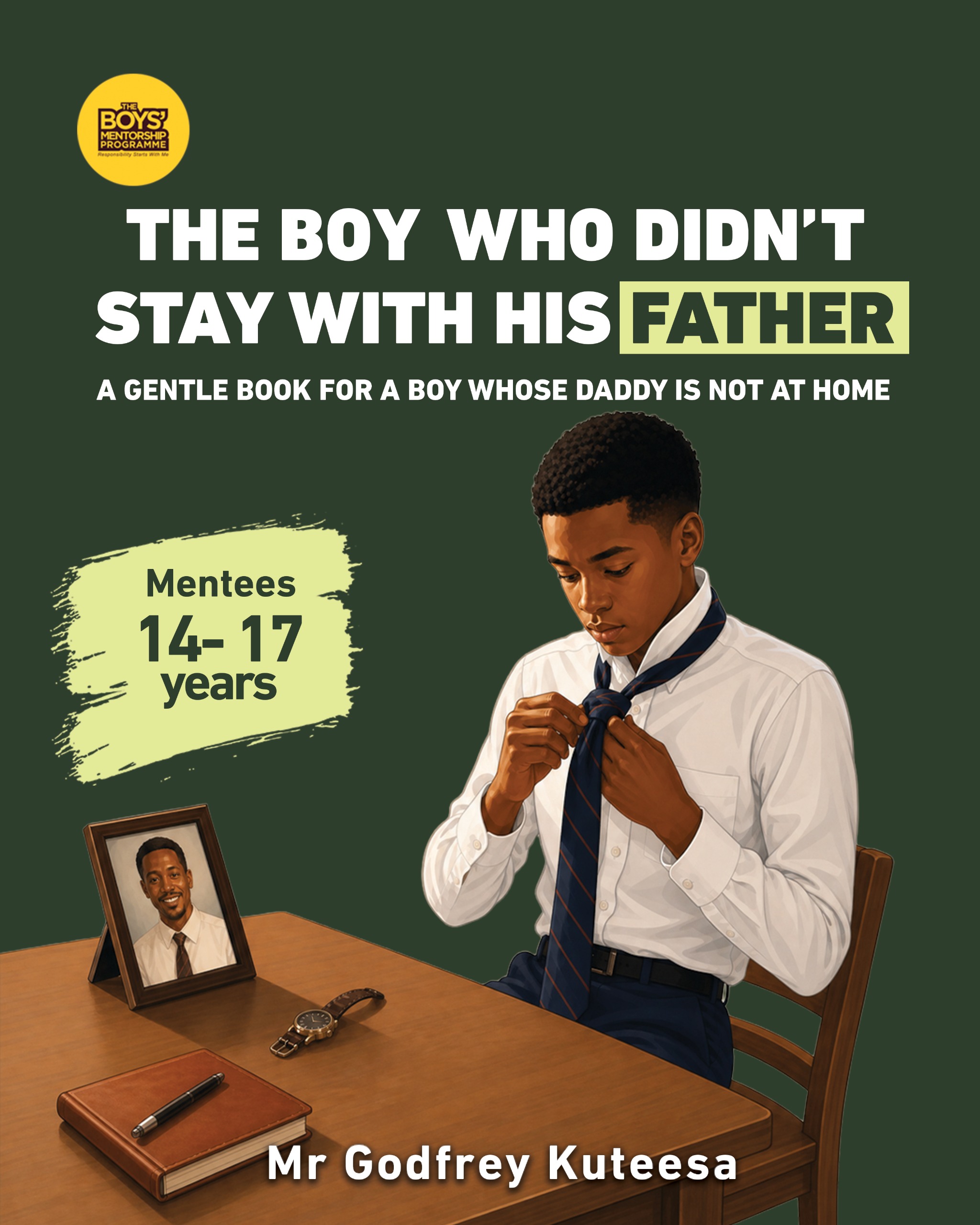
The Boy Who Didn't Stay With His Father — Ebook (Ages 14–17)
It is not dramatic. It is standing in front of a mirror working out a tie knot from a video, because there was no one in the house to show him. It is filling a form and pausing at the father’s details line. It is being asked what kind of man he wants to be and realising he has no template only a photograph.
He has stopped grieving it. He has started managing it. And what he manages it with is usually one of two things: a hardness that keeps everyone at arm’s length, or a hunger for approval that follows him into every relationship he will have.
This book is about naming that before it sets.
The Boy Who Didn’t Stay With His Father is written for young men aged 14 to 17. It treats him as almost-adult, because he is. It does not soothe him and it does not lecture him. It puts the honest questions in front of him and gives him room to answer them himself.
What he works through:
• What he actually concluded about his own worth, and whether that conclusion holds up
• The two common defences — hardness and hunger — and which one he has been using
• What forgiveness is and is not, and why it is not the same as excusing anyone
• Whether to make contact, and how to survive being disappointed if he does
• What he will do differently as a father, written down while he still has time to mean it
• How to ask a good man for mentorship without feeling like a beggar
• Why a father’s absence explains something about his life but decides nothing about his future
A word to the parent or guardian
At this age he is unlikely to work through this with you in the room, and he should not have to. Give it to him and let it be his. If he never shows you a page of it, the book has still done its work.
If you are a mother who raised him alone: this book does not hand him a fantasy of the man who left. It asks him to become a better one.