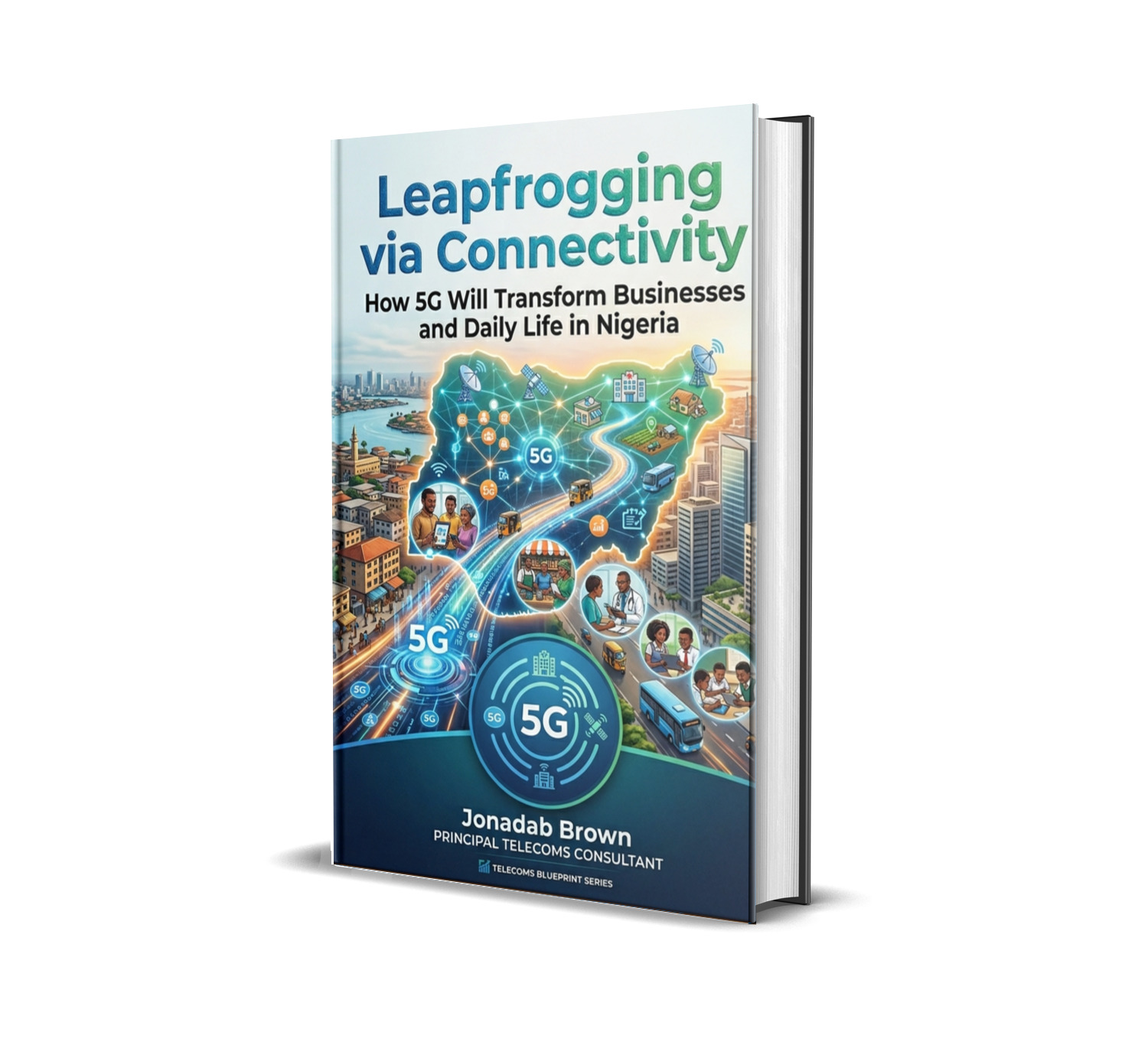
Leapfrogging via Connectivity - How 5G Will Transform Businesses and Daily Life in Nigeria
The book "Leapfrogging via Connectivity" looks at how Nigeria is going through a huge change, mainly because it's using 5G internet technology. In the past, developing countries usually had to build a lot of physical things first, like many roads, strong power systems, and phone lines across the country, before their economy could really grow. This book argues that very fast, high-capacity wireless internet that doesn't lag can directly replace those older physical ways of distributing things. So, by skipping the older stages of economic development, Nigeria can put modern, practical solutions right onto a digital base.
In its ten easy-to-understand chapters, this book shows how important parts of Nigeria's economy are changing. It looks at everything from very precise farming and immediate medical help in rural areas to financial tools that work with local computers and cloud-based business setups for the informal economy. Essentially, 5G is presented as a way to include everyone, starting from the community level. Beyond these specific ways 5G can improve different sectors, the book also gives a clear picture of the problems right now. These include the high costs, the practical challenges of setting up enough equipment, and the need for local solar-powered systems to handle the limits of the existing power grid. Finally, this work offers a complete guide for businesses and government officials – like business owners, executives, and people who make decisions – who want to help people achieve their best and strengthen Nigeria's independence in Africa's biggest digital economy.