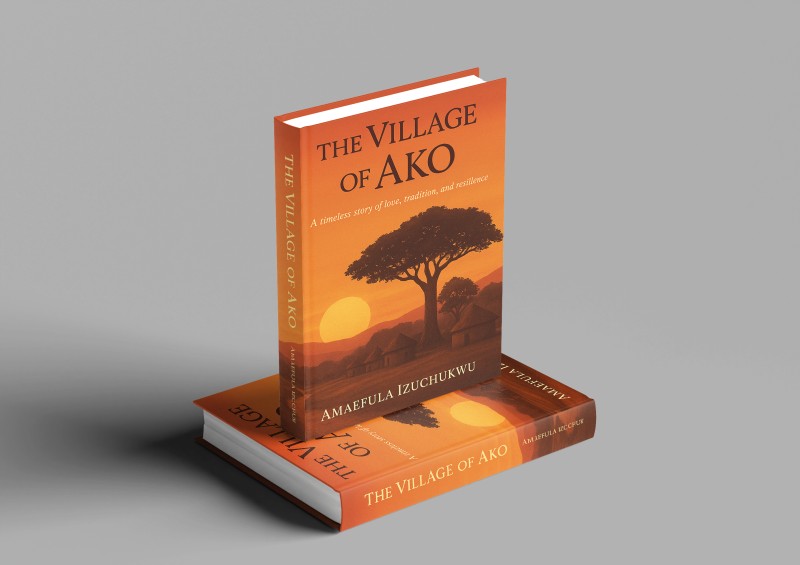
The Village of Ako, John and Mary Live in Ako- Novel

Abstract
The Village of Ako is a sweeping tale of love, tradition, resilience, and transformation. Set in the fictional African village of Ako, the novel follows the intertwined journeys of John and Mary, whose love story becomes the heart of a community struggling through hardship and change. From the warmth of daily traditions to the shadows of conflict and drought, Ako endures trials that test its very survival. Land disputes, generational tensions, and the weight of leadership threaten to tear the village apart, while love, wisdom, and unity strive to hold it together. Through John’s fiery determination, Mary’s quiet strength, and their son Obinna’s rise into leadership, the people of Ako confront storms both natural and human-made. Spanning themes of family, cultural identity, gender roles, and the resilience of community, the novel traces Ako’s evolution from a fractured society to a village reborn, carrying forward not just scars of the past but seeds of hope for the future. At its core, The Village of Ako is both a story and a legacy—a reminder that even in the smallest of places, love and wisdom can shape generations, and that every dawn carries the promise of renewal.