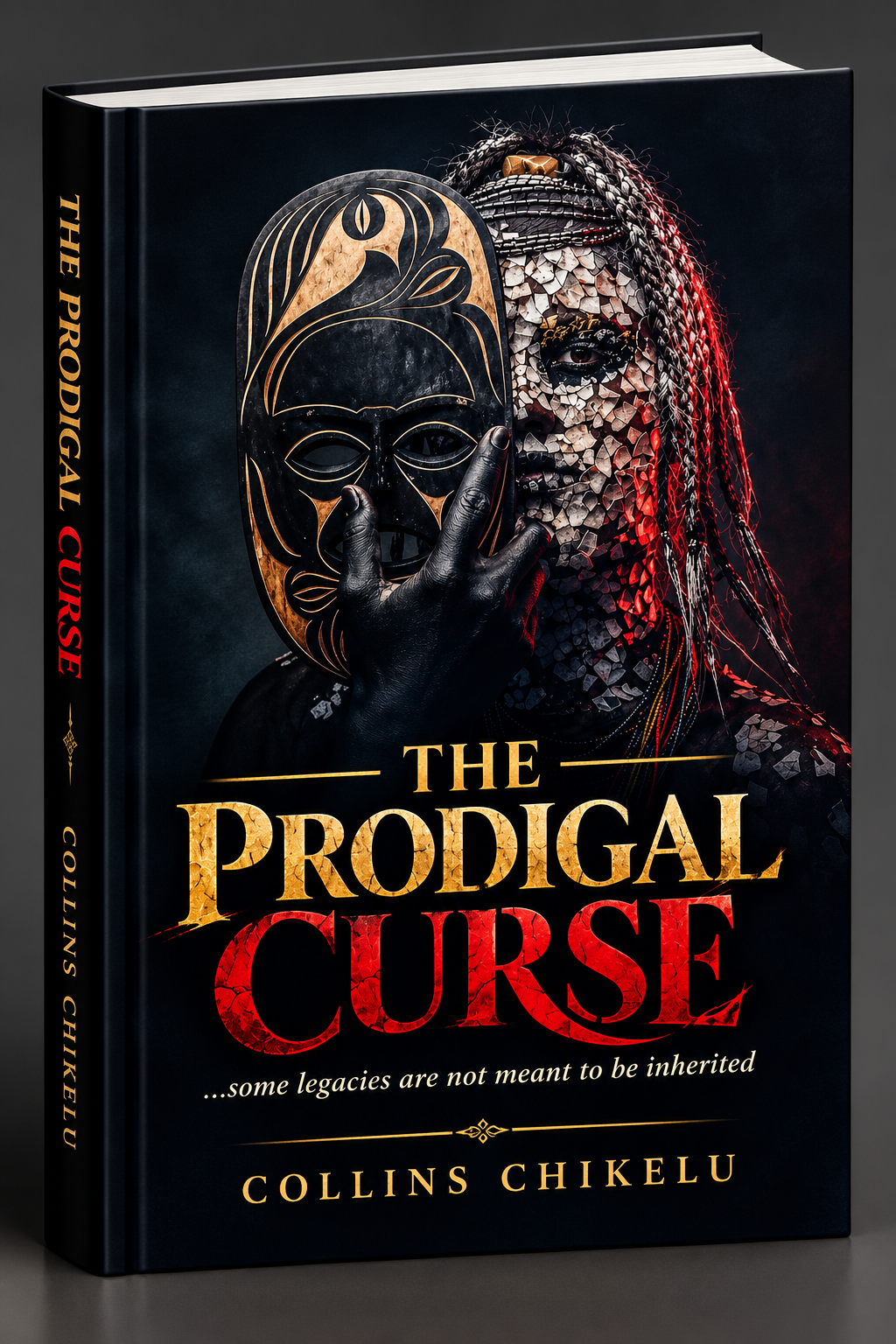
THE PRODIGAL CURSE
The Prodigal Curse is ultimately a tragedy about the inheritance of violence, revenge, ignorance and wrongdoing.
The story begins with one generation's decisions and ends with their consequences destroying later generations.
Umuagu's elders choose political expediency over justice when they kill Onwu. Aniagolu's thirst for revenge contributes to further bloodshed. Obika inherits his father's anger and spends his life seeking revenge based on a false belief. Ikemefunna inherits a mysterious destiny and eventually commits acts that destroy his own family.
The title carries several meanings. The "curse" is not simply a supernatural punishment. It is also the legacy of choices passed from parent to child—hatred inherited as though it were an heirloom.
The novel's most painful irony is that many of its characters believe they are fighting for justice, honour, family or survival, yet their actions repeatedly produce the opposite: death, betrayal, broken families and the destruction of the very community they seek to protect.
By the end, nearly every major conflict has come full circle. Fathers and sons become enemies without knowing their relationship; revenge is directed at innocent people; brothers destroy brothers; and a family is reunited only after terrible acts have already been committed.
The novel ultimately suggests that ignorance can be as destructive as evil itself, and that refusing to confront the sins of the past only transfers their consequences to the future. This is why the opening idea—that people create the conditions that eventually imprison them—is so central to the entire story.