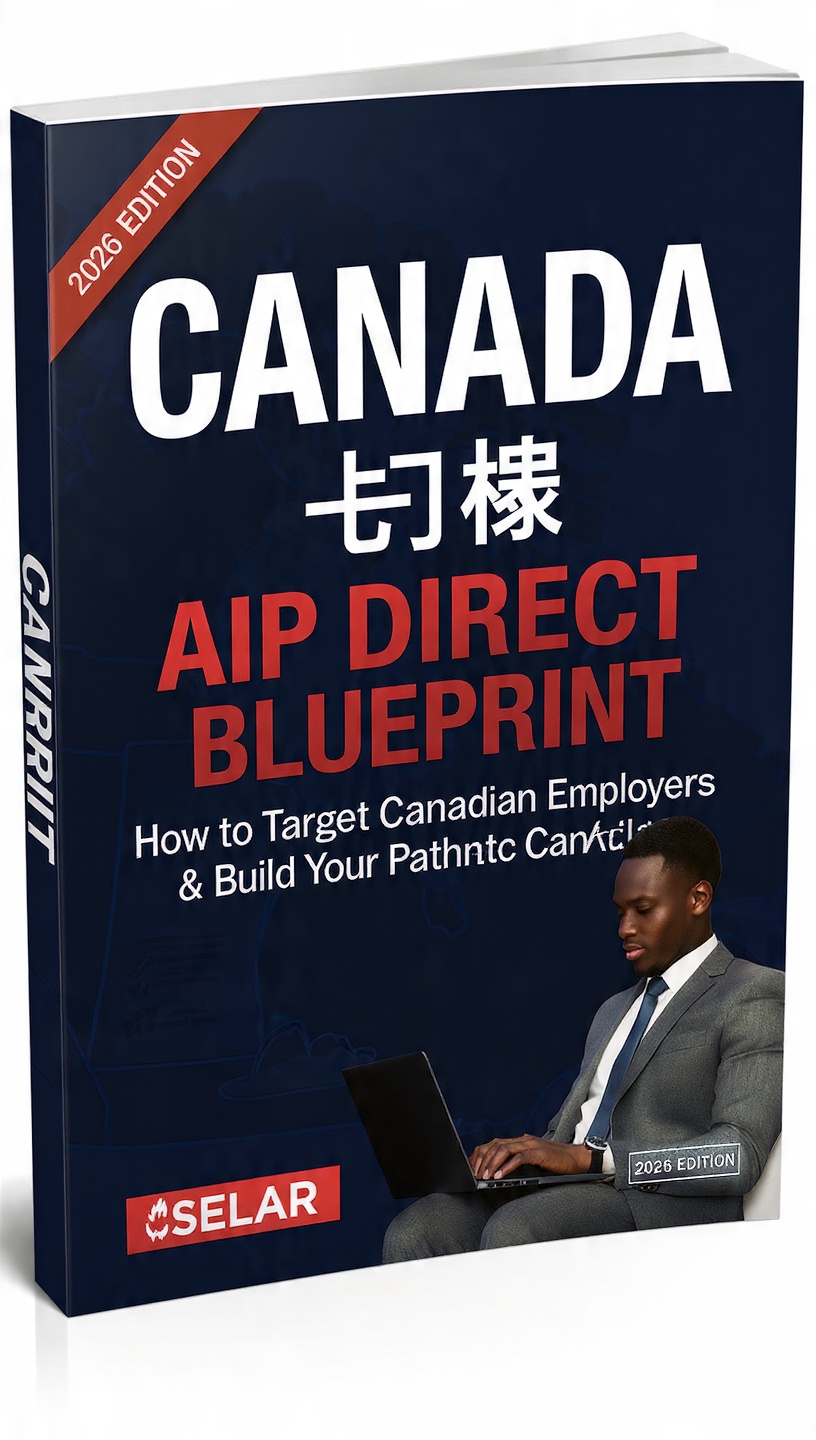
Canada AIP Direct Blueprint 🇨🇦 | Employer Job Strategy 2026
🇨🇦 CANADA AIP DIRECT BLUEPRINT
Direct Employer Targeting Strategy
Find • Target • Apply to Designated Employers
2026 EDITION
🚨 STOP SEARCHING RANDOMLY FOR “CANADA JOBS”
The Atlantic Immigration Program (AIP) can provide a pathway to permanent residence for eligible skilled workers and qualifying international graduates who receive a job offer from a designated employer in Atlantic Canada.
But here's the part many people miss:
A designated employer doesn't automatically mean a job.
You still need to identify suitable vacancies, present yourself professionally, secure a qualifying offer and satisfy the program's requirements.
That's exactly what this blueprint is designed to help you understand.
📘 WHAT YOU'LL LEARN INSIDE
01 — FIND DESIGNATED EMPLOYERS
Learn how to locate official designated-employer information across:
🇨🇦 New Brunswick
🇨🇦 Nova Scotia
🇨🇦 Prince Edward Island
🇨🇦 Newfoundland and Labrador
You'll learn how to turn those employer lists into an organized job-search pipeline.
02 — USE CANADA JOB BANK STRATEGICALLY
Learn how to search for relevant opportunities and use the AIP-related job-search filters to narrow your focus.
03 — UNDERSTAND THE LANGUAGE REQUIREMENTS
Understand the minimum language benchmarks associated with different job TEER categories and how to verify the current approved language-test requirements.
04 — CHECK YOUR SETTLEMENT-FUNDS REQUIREMENT
Understand when proof of funds is required, how family size affects the amount and where to verify the latest figures.
05 — BUILD A CANADIAN-STYLE RESUME
Use the included ATS-friendly resume framework to organize your:
• Professional summary
• Core competencies
• Work experience
• Education
• Credentials
• Language qualifications
06 — APPROACH EMPLOYERS PROFESSIONALLY
Get a practical cold-email framework you can personalize when contacting suitable employers.
The goal isn't to spam employers.
It's to communicate your qualifications clearly and professionally.
07 — UNDERSTAND WHAT HAPPENS AFTER A JOB OFFER
Follow the pathway from:
Job Offer → Settlement Plan → Provincial Endorsement → Certificate of Endorsement → PR Application
Eligible applicants may also have an option to apply for a temporary work permit while their PR application is processed, subject to IRCC requirements.
🎁 BONUSES INCLUDED
BONUS 1
Master Job-Hunt Tracking Template
Organize your employer research, applications, follow-ups and responses in one place.
BONUS 2
AIP Application Preparation Checklist
A step-by-step checklist covering documents, language testing, ECA, employer research and application preparation.
BONUS 3
Professional Follow-Up Email Template
Know how to follow up professionally when an employer hasn't responded.
🎯 WHO IS THIS FOR?
This blueprint is designed for people who want to understand how to:
✓ Research AIP designated employers
✓ Find relevant employment opportunities
✓ Organize their employer outreach
✓ Prepare a Canadian-style resume
✓ Understand the AIP process
✓ Approach employers professionally
✓ Build a structured Canada job-search strategy
⚠️ IMPORTANT
This is not a job-placement service.
Buying this guide does not guarantee:
❌ A Canadian job
❌ An employer response
❌ A provincial endorsement
❌ A work permit
❌ Permanent residence
❌ Visa approval
The Atlantic Immigration Program has specific eligibility requirements, including a qualifying job offer from a designated employer, work-experience/graduate requirements, education, language and settlement requirements.
Employers decide whom they hire, and designation does not obligate an employer to hire any particular candidate.
🇨🇦 YOUR NEXT STEP
If you're serious about understanding the direct employer-targeting approach to Atlantic Canada, this blueprint gives you a structured starting point instead of leaving you to search randomly.
Get the Canada AIP Direct Blueprint and start building your employer-targeting strategy.
📥 INSTANT DIGITAL ACCESS
Download the blueprint and start researching.
DISCLAIMER
This guide is provided for educational and informational purposes only. It is not legal or immigration advice and does not create a professional-client relationship.
Immigration rules, forms, fees, designated-employer information and financial requirements can change. Always verify current requirements directly with Immigration, Refugees and Citizenship Canada (IRCC) and the relevant provincial government before taking action or submitting an application.
Last verified: August 2026