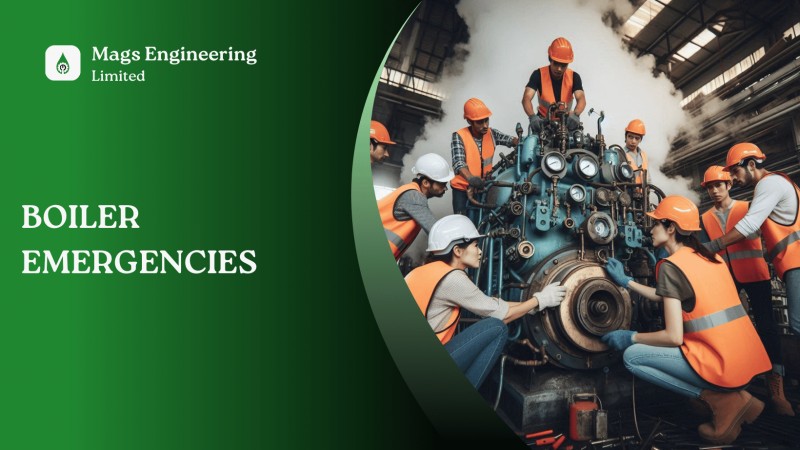
Boiler Emergencies and Solution
Trainer: Engr. Majid
About this Course
Boilers are critical components in various industrial systems, generating steam or hot water for processes such as heating, power generation, and manufacturing. However, due to their high-pressure, high-temperature environment, boilers can face several emergency situations that may lead to equipment damage, downtime, or safety hazards. Understanding these emergencies and the corresponding solutions is essential for maintaining safe and efficient boiler operations.
The course focuses on identifying common boiler emergencies, understanding their causes, and providing practical solutions and safety protocols to mitigate risks. It is tailored for plant operators, engineers, and maintenance personnel working with boiler systems, aiming to improve their emergency response skills and reduce downtime caused by boiler failures
Duration
3 Days
Methodology
Theoretical
Prerequisite
Basic Knowledge of Boiler Systems.
General Safety Awareness
Learning outcomes
- To understand the basic components, types, and functions of a boiler, and to explain its role in industrial applications, focusing on heat transfer, combustion, and steam generation.
- To identify the causes and effects of low and low-low drum level conditions, and to learn the corrective actions and safety protocols to maintain optimal drum levels in a boiler.
- To recognize the risks associated with high and high-high drum level conditions and to develop skills in diagnosing, troubleshooting, and mitigating high drum level issues.
- To understand the causes and consequences of high and high-high furnace draft pressures, and to learn methods for controlling and stabilizing furnace draft for safe and efficient combustion.
- To identify the causes of high bed temperatures in a boiler system, and to learn corrective actions for managing and reducing excessive bed temperatures to ensure safe operation.
- To recognize the impact of low bed temperatures on combustion efficiency and boiler performance, and to develop strategies to maintain proper bed temperatures in the boiler system.
- To understand the function of water walls, screen tubes, and evaporator tubes, and to identify the causes, symptoms, and corrective actions for tube failures in these critical components.
- To understand the role of super heater tubes in steam generation, and to identify the causes and solutions for super heater tube failures, including troubleshooting and replacement procedures.
- To recognize the causes and risks of high super heater temperatures, and to learn the techniques for managing and reducing super heater temperature to prevent damage and ensure optimal steam quality.
- To identify the consequences of low super heater temperatures, and to understand the corrective actions required to restore the super heater to its optimal temperature range for efficient boiler operation.
- To understand the causes of flame failure in the combustion process, and to learn the procedures for diagnosing and resolving flame failure issues to maintain safe and efficient boiler operation.
- To learn the causes and safety risks of furnace explosions, and to develop the skills needed to prevent, detect, and respond effectively to furnace explosion incidents.
- To understand the causes and hazards of high boiler pressure, and to develop skills in monitoring, controlling, and safely managing high pressure situations in the boiler system.
- To identify the causes and symptoms of coal feeder failure, and to learn the troubleshooting techniques and corrective actions necessary to restore coal feeder functionality and maintain efficient combustion.
- To understand the role of PAH (Primary Air Heater) and SAH (Secondary Air Heater) tubes in boiler systems, and to identify the causes of tube failures, along with methods for detecting and addressing these issues.
- To recognize the importance of boiler feed pumps, understand the causes of feed pump failure, and to learn the steps for diagnosing and repairing feed pump issues to ensure proper water circulation.
- To understand the function of fans in maintaining airflow and combustion efficiency, and to learn the causes, symptoms, and corrective actions for fan failure to prevent operational disruptions.
Course outline
Module 1: Introduction to Boilers and Their Function
Module 2: Drum level low and low-low.
Module 3: Drum level high and high high
Module 4: Furnace Draft high and high high
Module 5: Bed Temperature High
Module 6: Bed Temperature Low
Module 7: Water wall / screen tube / evaporator tube failure
Module 8: Super heater tube failure
Module 9: High super heater temperature
Module 10: Low Super heater temperature
Module 11: Flame Failure
Module 12: Furnace Explosion
Module 13: Boiler pressure high
Module 14: Coal feeder failure
Module 15: PAH / SAH tube failure
Module 16: Boiler feed pump failure
Module 17: Fan Failure
Module 18: Case Studies
Assessment
Online Written Exam
Course Delivery Formats
- Classroom-based training
- Online courses
- In-house workshops
- On-the-job training
Cost
₦120,000 / $100