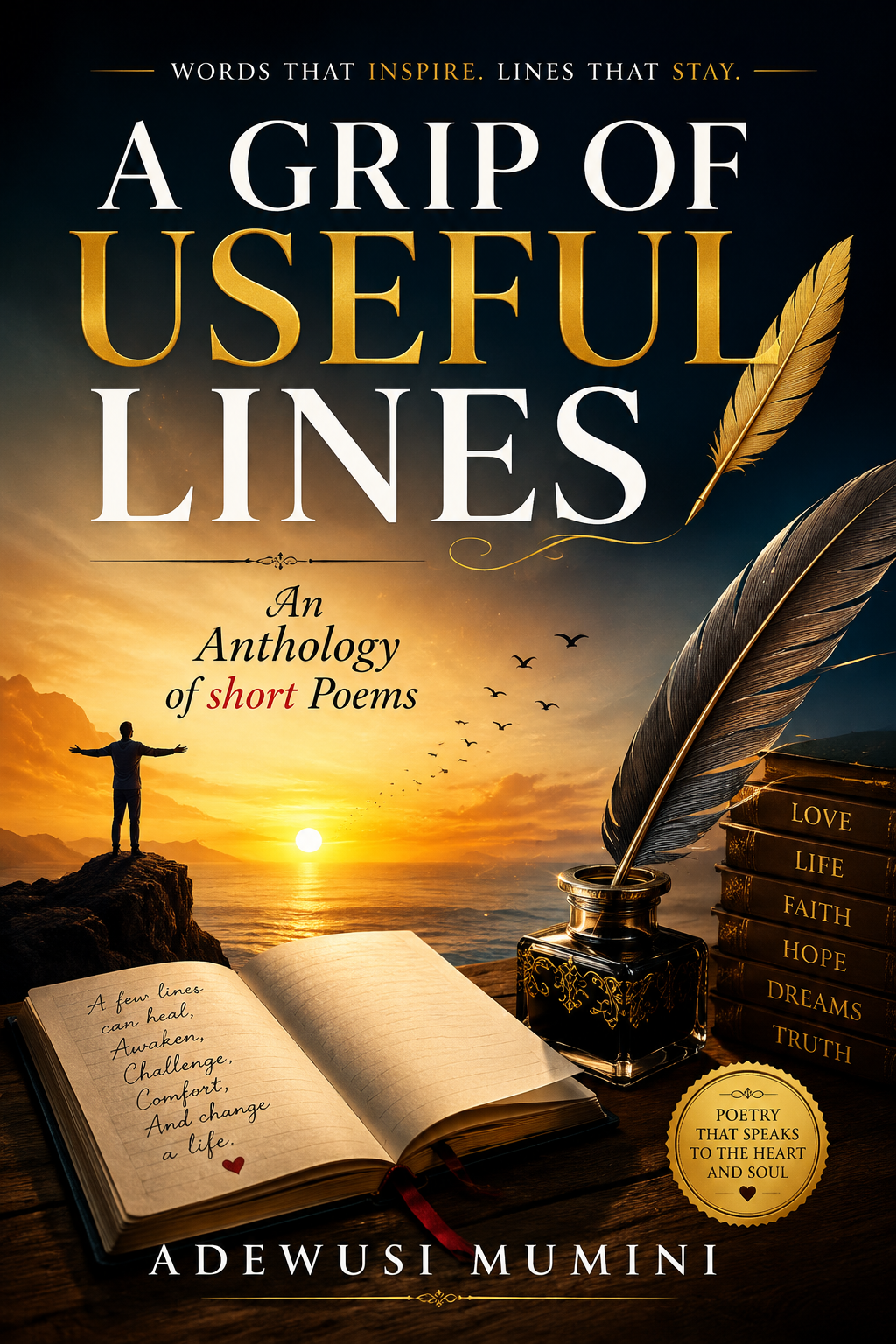
A GRIP OF USEFUL LINES: An Anthology of Short Poems

Poetry has a peculiar way of saying what ordinary language sometimes struggles to express. It can turn an experience into an image, a struggle into a metaphor, a memory into a song, and a question into a mirror. A Grip of the Useful Lines is born from that understanding.
This anthology is not merely a collection of poems arranged between two covers. It is a collection of observations, reflections, emotions, questions, aspirations and convictions gathered from the complicated theatre of human existence. Its lines move through the ordinary and the extraordinary, the personal and the social, the humorous and the solemn, the visible and the mysterious.
The poems explore different dimensions of life. Within a Single Night, for instance, looks into the countless activities, desires, struggles, decisions and mysteries that coexist within the same period of darkness. While some sleep, others work; while some pray, others plan; while some celebrate, others grieve. The poem reminds us that human beings inhabit different realities even when they share the same night.
Victory speaks from the territory of perseverance. It is a reflection on labour, disappointment, wandering, adversity and the eventual discovery that one's efforts may produce a harvest even when the journey appears unproductive. The poem transforms personal struggle into a broader meditation on endurance and hope.
In To the Women in My Life, the poet turns toward appreciation, challenging negative assumptions about women and celebrating women through historical, religious and cultural references. The poem ultimately becomes an affirmation of dignity, strength, intelligence and importance.
The anthology also does not shy away from social criticism. The Nap I Will Always Rebuke moves from the disturbance of generators and neighbourhood noise into a wider reflection on envy, mediocrity and a destructive social mentality. Its recurring concern is not merely physical discomfort but the deeper human tendency to interpret another person's progress as a threat.
There are poems about companionship and commitment, as seen in The Return of a Hermit, where matrimony is approached after a long period of solitude and uncertainty. There is also the solemn reflection of Lest I Breathe No More, which considers time, education, mentorship, achievement, legacy and the desire to leave something useful behind before life's final departure.
Three Magical Words offers a philosophical meditation on “will,” “is,” and “was.” Through these simple words, the poem considers aspiration, present reality and the lessons of the past. It encourages the reader not to become imprisoned by yesterday but to use the present wisely while working toward tomorrow.And to stop procrastination.
Other poems examine dreams, ageing, mortality, childhood expectations, career paths, success and the meaning of fulfilment. On My Birthday turns a personal milestone into a meditation on ageing, the brevity of life and the desire to live a meaningful and fulfilled existence. When the Days Were Young questions the assumptions by which society assigns people careers and destinies, especially when those predictions fail to correspond with the realities of human lives.
Perhaps one of the anthology's most important questions appears in The Paradigm of “Making It.” What does it actually mean to succeed? Is success wealth, comfort, social recognition or material possession? Or is it fulfilment, satisfaction and the ability to make other people's lives better? The poem leans toward a conception of success that measures achievement by impact rather than possession.
These and many more are what the readers will be able to read for their consumption.