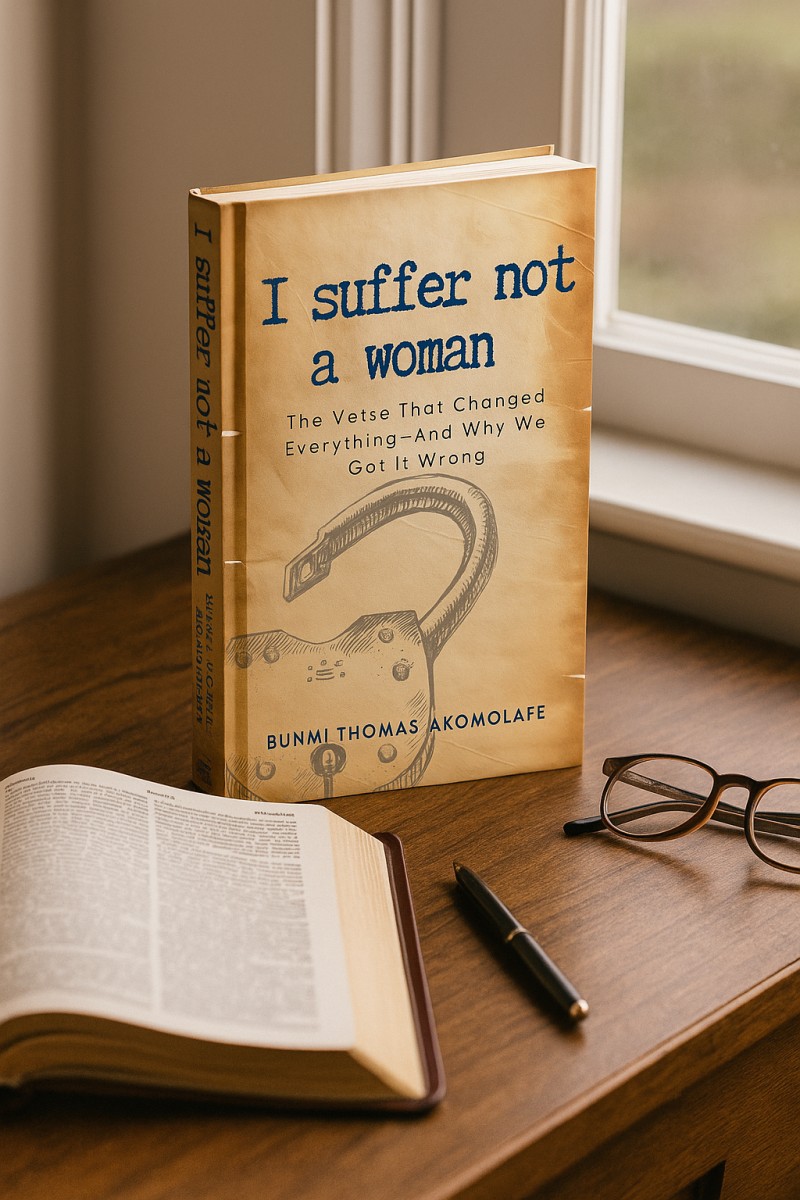
I Suffer Not a Woman: An Exposition of 1 Timothy 2:11–12

Few passages in the Greek section of the Bible have generated as much debate, tension, and misunderstanding as 1 Timothy 2:11–12:
“I suffer not a woman to teach, nor to usurp authority over the man…”
For centuries, this verse has been used to shape doctrines about women, authority, leadership, and participation in the life of the church. Yet many believers—both men and women—quietly wrestle with the question: Was this truly Paul’s universal command for all churches in all times, or have we inherited interpretations that deserve closer examination?
In I Suffer Not a Woman, Bible teacher Bunmi Thomas-Akomolafe offers a careful exposition of this passage through the lens of the original Greek language. Rather than approaching the subject through modern ideological debates, the book returns to the biblical text itself, examining original language, context, and historical setting to better understand what Paul was addressing in his letter to Timothy.
The study explores key questions such as:
• What does the Greek word that was translated to “permit” actually mean?
• What situation was Paul addressing in the Ephesian church?
• How have translation choices shaped long-standing doctrines about women in the church?
• Is the passage prescriptive for all times, or corrective for a specific situation?
Through close textual analysis and thoughtful engagement with Scripture, this book invites readers to reconsider one of the most disputed passages in the Bible with intellectual honesty and theological seriousness. The aim is not to provoke controversy, but to pursue clarity; allowing Scripture to speak as faithfully as possible in its own voice.
For pastors, Bible teachers, and thoughtful believers who desire a deeper understanding of this passage, I Suffer Not a Woman offers a fresh and careful exploration.
What You Will Learn
This book will help you:
• Understand the Greek terms used in 1 Timothy 2:11–12
• Examine the historical context of the Ephesian church
• Recognize how translation influences doctrine
• Approach difficult biblical passages with deeper interpretive tools
• Engage questions about women and authority in the church with greater theological accuracy
Who This Book Is For
This book is ideal for:
- Women in ministry
- Bible teachers
- Pastors and ministry leaders
- Christians wrestling with questions about women and leadership in the church