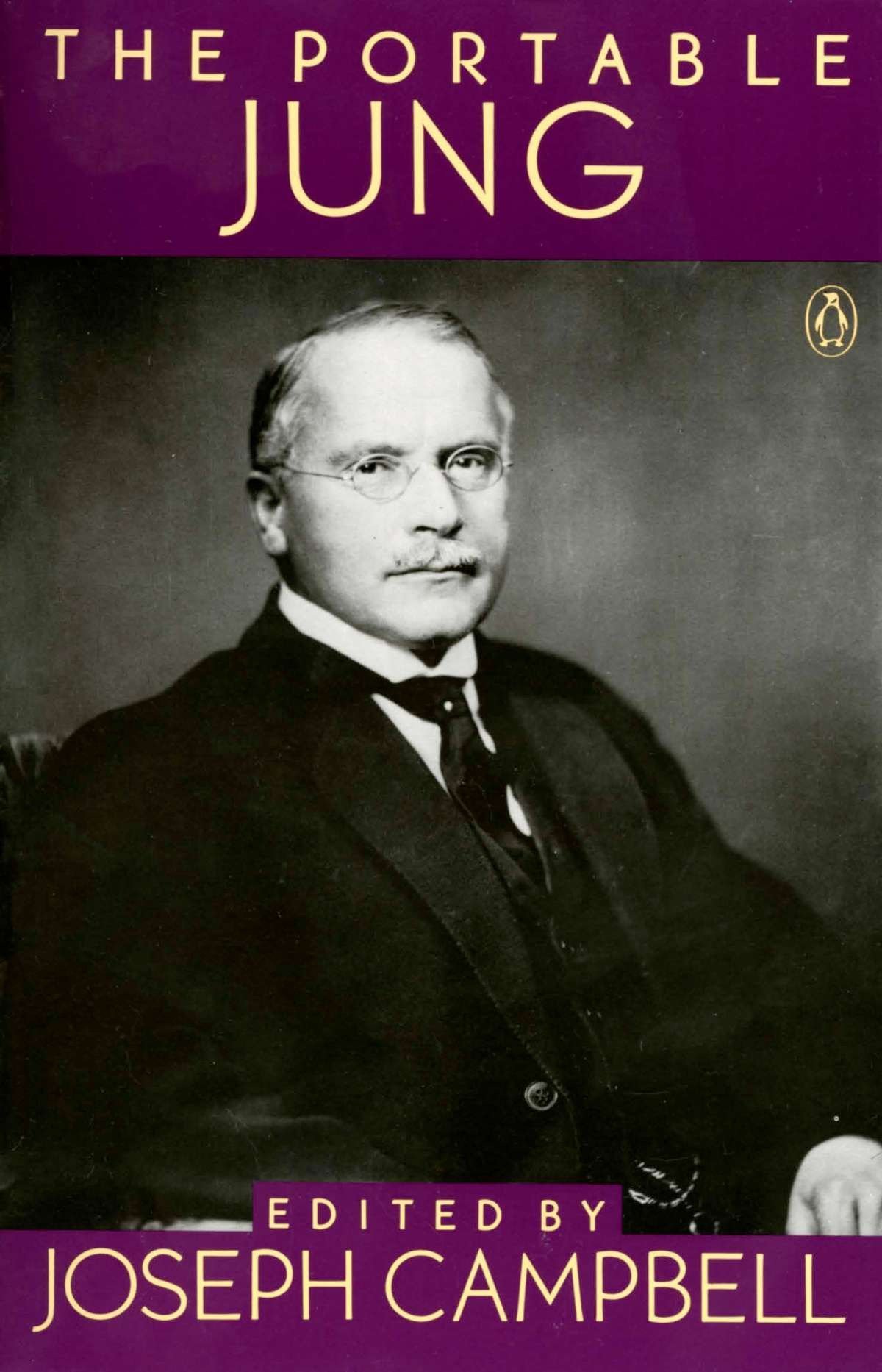
Campbell, Joseph (ed.) - Portable Jung (Penguin, 1976)

Carl Gustav Jung was born July 26, 1875, in Kesswil,
Switzerland, on Lake Constance. His paternal grandfather,
after whom he was named, had moved from Germany in
1822, when Alexander von Humboldt obtained an appointment
for him as professor of surgery at the University of
Basel. His father, Johann Paul Achilles Jung ( 1 842-
1896), was a· clergyman, and his mother, Emilie Preiswerk
Jung ( 1848- 1923), was the daughter of a long-established
Basel family. When the boy was four, his parents moved
to Klein-Hiiningen, near Basel, and it was there his education
began. His father taught him Latin, and his mother,
as he tells in a volume of old-age reminiscences, Memories,
Dreams, Re{fect.ions, read to him of exotic religions from
a n illustrated children's book, to which he constantly returned
to view with fascination its pictures of Hindu gods.
During early youth, Jung thought of archaeology as
a career. Theology, too, interested him, though not in his
father's sense; for the concept of Christ's life as the sole
decisive feature in the drama of God and man he regarded
as belying Christ's own teaching that the Holy Ghost
would take his place among men after his death. He
regarded Jesus as a man; hence, either fallible or a mere
mouthpiece of the Holy Ghost, who, in turn·, was "a manifestation
of the inconceivable God."