Farm Management Improves With Real-Time Wind Sensor Measurements

Introduction
Modern farming depends on accurate information. Farmers need to understand weather conditions, soil moisture, temperature, rainfall, and wind before making important decisions. Among these factors, wind can change quickly and affect many daily farm activities. A reliable wind sensor gives farmers real-time information about wind speed and direction, helping them respond to changing field conditions with greater confidence. When connected to a weather station or agricultural monitoring system, wind measurements can become a valuable part of a smart farm management strategy.
Rika Sensor develops environmental and weather monitoring solutions designed for practical applications in agriculture and other industries. With more than 15 years of experience in sensor manufacturing, Rika provides weather instruments such as anemometers, soil sensors, rain gauges, thermometers, water sensors, and complete weather stations. Its products are used in more than 100 countries and regions for agricultural, renewable energy, building, coastal, and research applications. By using dependable weather monitoring technology, farmers can turn live environmental data into better decisions, improved efficiency, and more responsible resource use.
Why Wind Data Matters in Modern Agriculture
Wind affects the farm environment in several important ways. Wind speed can influence evaporation, crop water loss, plant stress, spray movement, and the drying of leaves and soil. Wind direction is also important because it shows where air is moving across a field. Without current measurements, farmers may have to depend on general weather forecasts that do not always represent conditions at a specific farm location. A field-level wind monitoring system provides more localized information and helps farmers understand what is actually happening around their crops.
A quality wind sensor can continuously measure conditions and send useful information to a weather station, data logger, or farm monitoring platform. This creates a clearer picture of changing weather patterns throughout the day. For farms using precision agriculture methods, real-time environmental data can support more informed planning. Instead of treating the entire farm as having identical conditions, growers can use local measurements to recognize differences between fields, locations, and growing areas. This approach can improve operational planning while reducing uncertainty caused by rapidly changing weather.
Wind Sensors Support Smarter Irrigation Decisions
Water management is one of the most important parts of successful farming, especially in areas where water resources are limited. Wind can increase evaporation by moving dry air across crops and soil. When farmers combine wind measurements with temperature, humidity, rainfall, and soil moisture data, they can develop a more complete understanding of crop water requirements. A weather station equipped with appropriate environmental sensors can collect these measurements continuously, helping farmers monitor conditions instead of relying only on fixed irrigation schedules.
Real-time wind information can also support better irrigation planning by showing whether conditions are becoming more favorable or unfavorable for water application. Strong winds may cause water to move away from its intended area, depending on the irrigation method being used. Monitoring wind speed and direction gives farm managers another useful factor when evaluating irrigation timing and system performance. Rika Sensor offers agricultural weather monitoring solutions that can combine different environmental measurements, allowing users to build systems suited to their specific field conditions and project requirements.
Better Spray Management With Accurate Wind Measurements
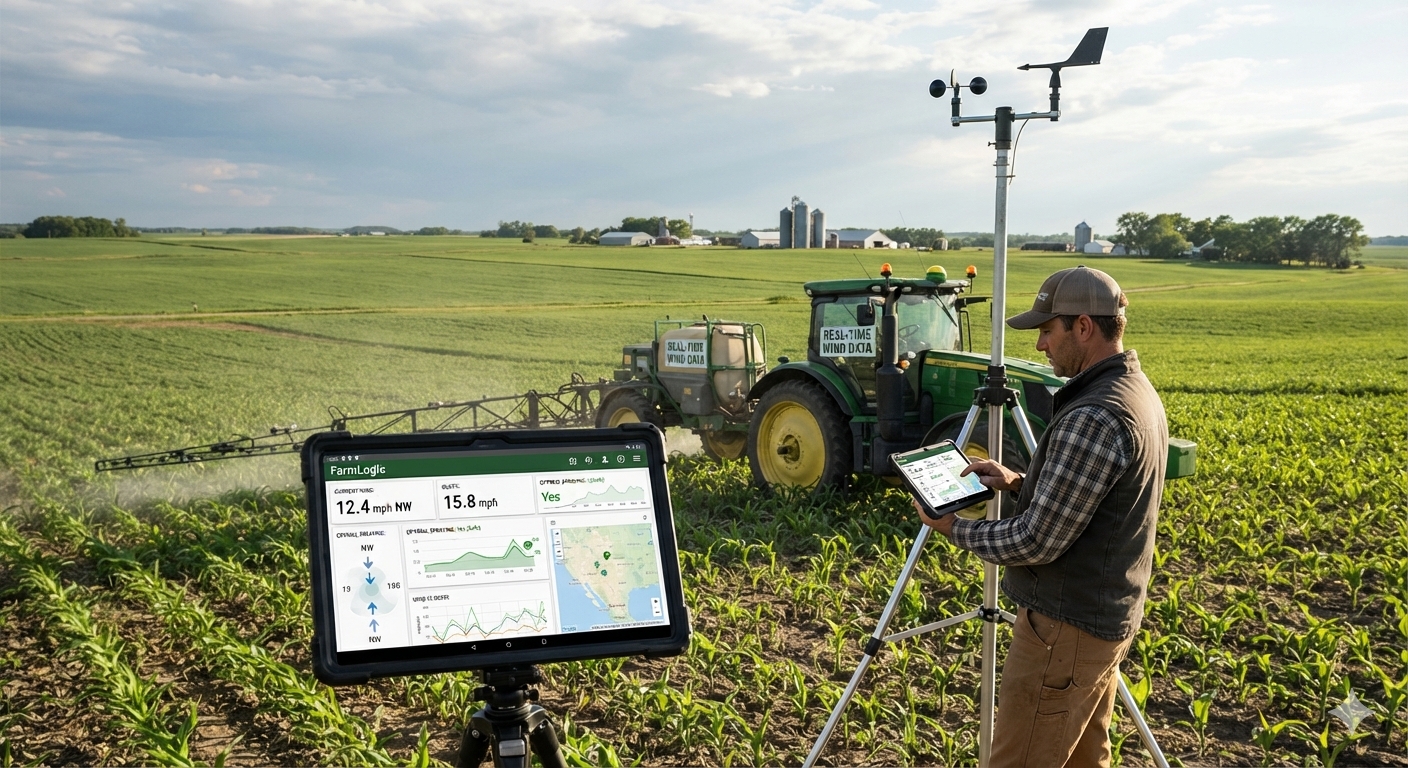
Crop spraying requires careful planning because wind can affect where liquid droplets travel. Excessive wind may increase drift and make it harder to keep an application within the intended area. A real-time wind monitoring system gives operators current information about wind conditions before and during field operations. By considering wind speed and direction alongside product instructions, local regulations, and professional agricultural guidance, farm teams can make more informed decisions about when spraying conditions are suitable.
An anemometer is commonly used to measure wind speed, while a wind vane or combined wind instrument can provide direction data. These measurements can become part of a broader agricultural weather station that records several environmental conditions at the same time. Accurate data also creates a useful record of conditions during farm operations. Rika Sensor specializes in weather monitoring equipment and can develop customized products for different customer requirements, making its technology suitable for agricultural projects that need reliable environmental measurements and practical integration.
Improving Crop Protection and Farm Planning
Weather changes can influence crop health throughout the growing season. Strong winds can place mechanical stress on plants, increase moisture loss, and affect the movement of airborne materials. When farmers monitor wind together with temperature, humidity, rainfall, and other conditions, they gain more context for understanding environmental risks. This information can support crop protection planning and help farm managers react more quickly when conditions change.
Long-term environmental records are also valuable. Historical wind data can help farmers identify common seasonal patterns, compare conditions between growing seasons, and understand how a particular location behaves. This can support decisions involving crop selection, field layout, irrigation planning, windbreaks, and agricultural infrastructure. Reliable sensors are especially useful when measurements must be collected continuously in outdoor environments. Rika Sensor focuses on quality products, technical support, timely delivery, and project solutions, helping customers create monitoring systems designed around real operational needs.
Choosing a Reliable Wind Sensor for Farm Monitoring
Selecting the right wind sensor requires more than simply checking the measurement range. Farmers and system designers should consider accuracy, response time, environmental protection, installation requirements, electrical output, communication options, and long-term durability. The sensor should be appropriate for outdoor conditions and compatible with the weather station, data logger, controller, or monitoring platform being used. Correct installation is equally important because nearby buildings, trees, and other obstacles can influence airflow and affect measurements.
Rika Sensor provides weather sensors and complete environmental monitoring solutions for a wide range of applications. Its product range includes anemometers and other instruments used to measure important atmospheric and environmental conditions. Because physical properties, electrical input and output, and package configuration can all matter in a monitoring project, customized development may also be necessary for specialized applications. Working with an experienced sensor manufacturer can help organizations select suitable equipment and build a dependable system that supports accurate data collection over time.
Conclusion
Real-time wind measurements can give modern farms a practical advantage. Wind affects evaporation, irrigation performance, crop conditions, and spraying operations, so knowing current wind speed and direction can improve everyday decision-making. When wind data is combined with information from soil, rain, temperature, humidity, and water sensors, farmers can create a more complete view of their growing environment. This supports precision agriculture, smarter resource management, and more responsive farm operations.
Rika Sensor brings more than 15 years of experience in environmental and weather monitoring, supplying products and solutions used across agricultural and other demanding applications worldwide. With weather stations, anemometers, soil sensors, rain gauges, water sensors, and customized solutions, Rika can support projects that require dependable field data. As agriculture continues to adopt data-driven technology, accurate wind monitoring can become an important part of building efficient, informed, and sustainable farm management systems.