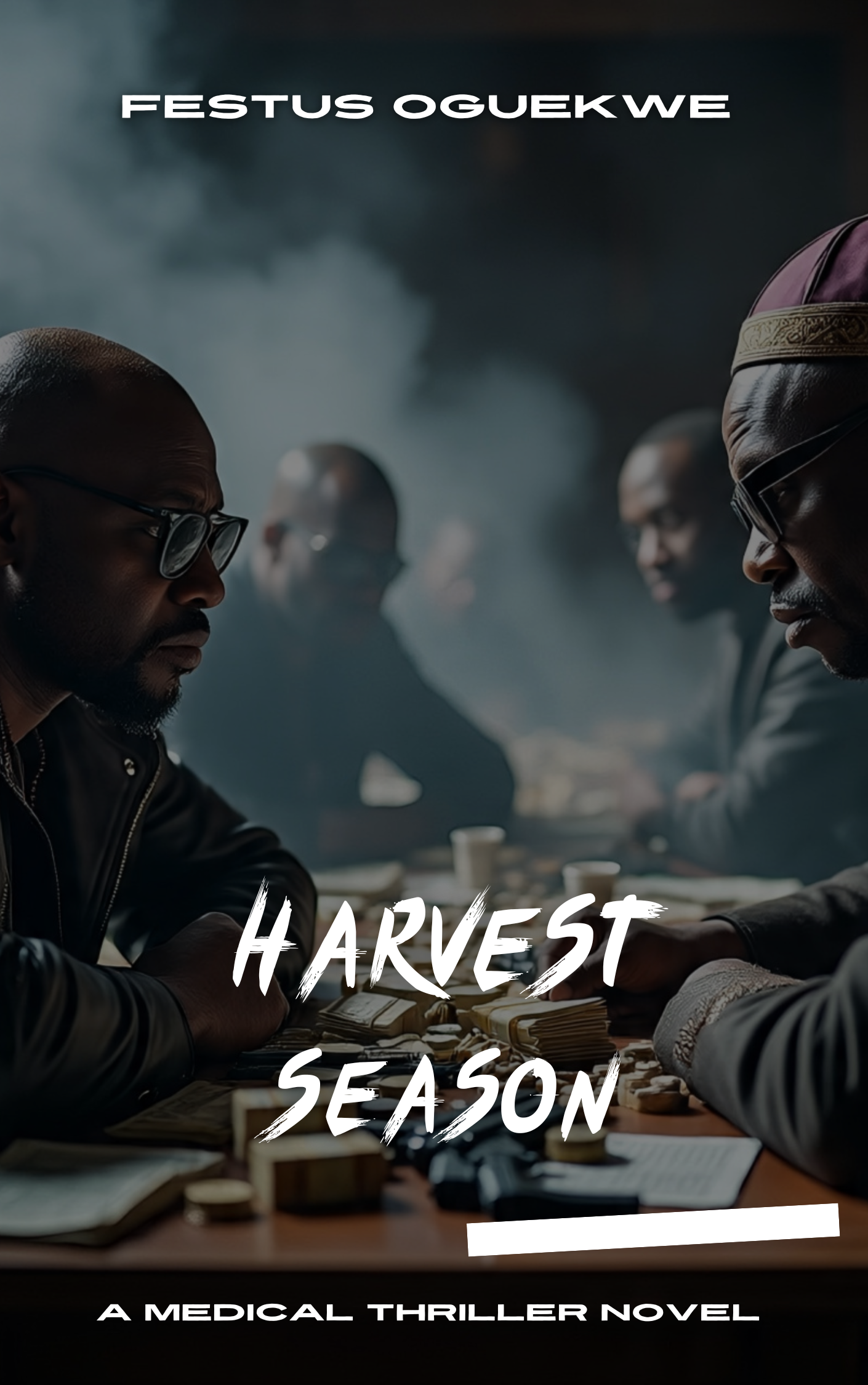
Harvest Season
Night in southern Nigeria carries a certain kind of silence—dense, waiting, almost breathing. It was the kind of silence Dr. Femi Ajayi had learned to fear. It usually meant the morgue was about to receive another body.
The call came at 1:14 a.m.
“Single male. No ID. Brought in by good Samaritans,” the voice on the phone said.
Good Samaritans. They always appeared after the lights went out, always vanished before questions could be asked.
Femi pulled on his gloves as the body slid onto the steel table. Something felt wrong immediately. The man looked young, healthy… yet empty. Not the kind of empty death brings—but the hollowing-out kind, the kind that suggested someone had gone shopping inside him.
He leaned closer.
A thin surgical incision, expertly sealed. Too clean. Too deliberate.
The man’s chest cavity had been opened before he died—no autopsy, no medical report, no authorization.
This was not an accident.
This was not a robbery.
This was a harvest.
As Femi reached for his recorder, a cold breeze brushed the back of his neck—though the morgue windows were shut. The fluorescent lights flickered, buzzing weakly, as if warning him to turn around and forget what he’d seen.
He didn’t.
He pressed the record button, voice steady though his palms had begun to sweat.
“Time of examination, 1:26 a.m. Subject shows signs of pre-mortem organ extraction—”
The lights snapped off.
Grab your Copy and experience the best of master storytelling