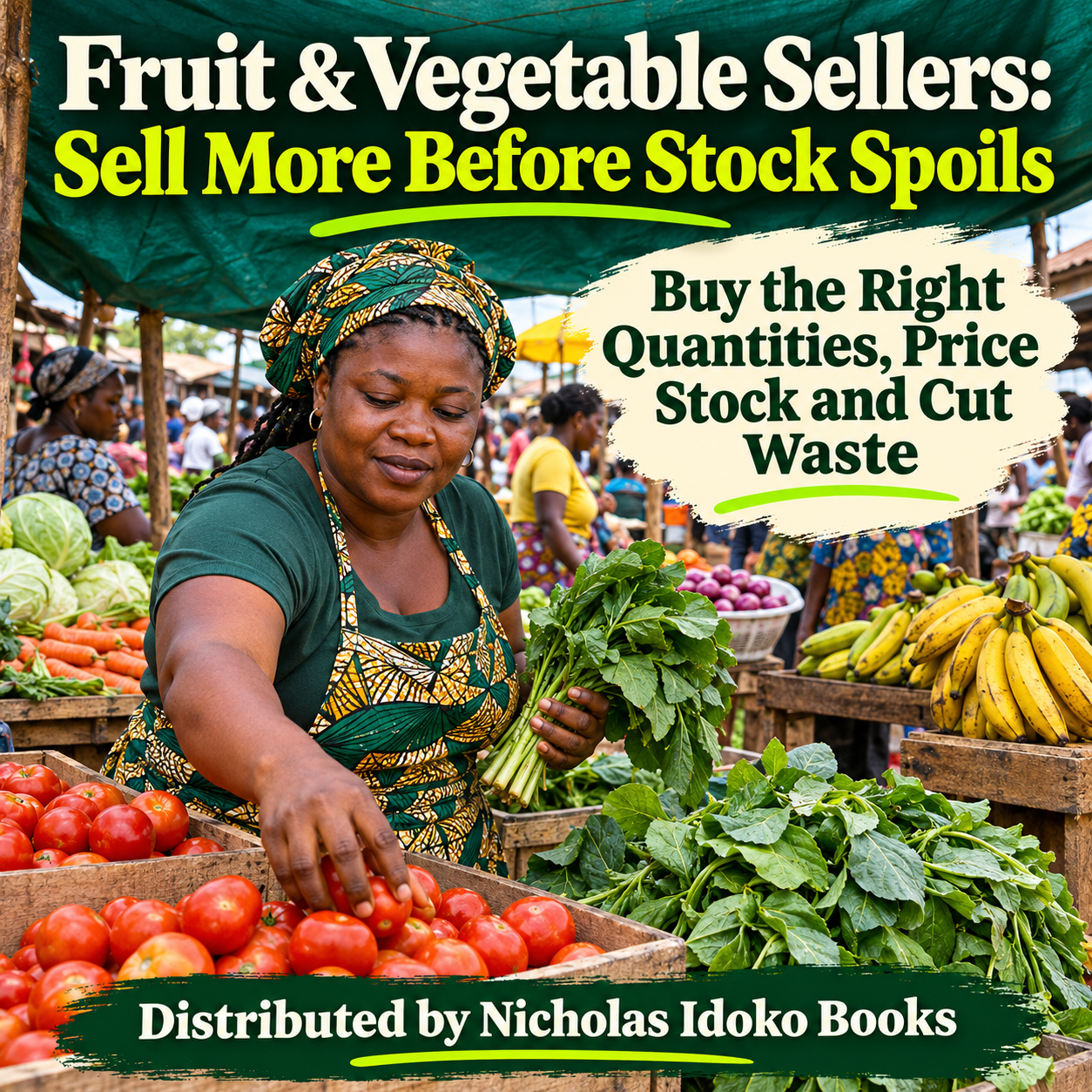
Fruit & Vegetable Sellers: Sell More Before Stock Spoils — Buy the Right Quantities, Price Stock and Cut Waste

Choose Daily Stock Quantities, Price for Real Profit, Reduce Spoilage and Build Repeat Household Customers
Who this ebook is for
Fruit and vegetable sellers, neighbourhood produce traders and market-stall operators who buy fresh stock to resell to households.
The problem it helps you solve
A cheaper crate can leave less cash after transport, spoiled stock and discounts. This guide shows how to buy for observed demand and check what each lot leaves after its costs.
What you will be able to do
- Choose a daily buying quantity using actual sales, confirmed orders and suitable stock left over.
- Weigh incoming produce, account for crate weight and record rejects or supplier credits.
- Calculate cost per kilogram sold and set a price that accounts for loss.
- Protect reserve stock and plan when to offer suitable produce at a lower price.
- Reconcile what sold, what was discarded and what safely carried into the next session.
- Separate cleared cash from sales still awaiting payment.
- Use repeat household orders and a seven-day test to refine how much you buy.
What is inside
Twelve practical chapters, four charts, a side-by-side lot comparison and troubleshooting for poor sales, late transfers and stock left at closing.
A worked example
Follow a fictional tomato seller as she compares 40 kg and 32 kg orders, counts what sells and what spoils, and checks the cash left after both lots close.
Tools you can reuse
Use twelve copyable forms for demand, orders, incoming weights, price floors, display checks, markdowns, stock reconciliation and repeat household orders.
Delivery
Downloadable PDF ebook for offline reading after purchase. The working forms are included in the ebook.
Scope of this guide
The guide covers the retail sale of whole fresh produce. Examples use invented amounts. Follow local rules for trading, food safety, weights and disposal.