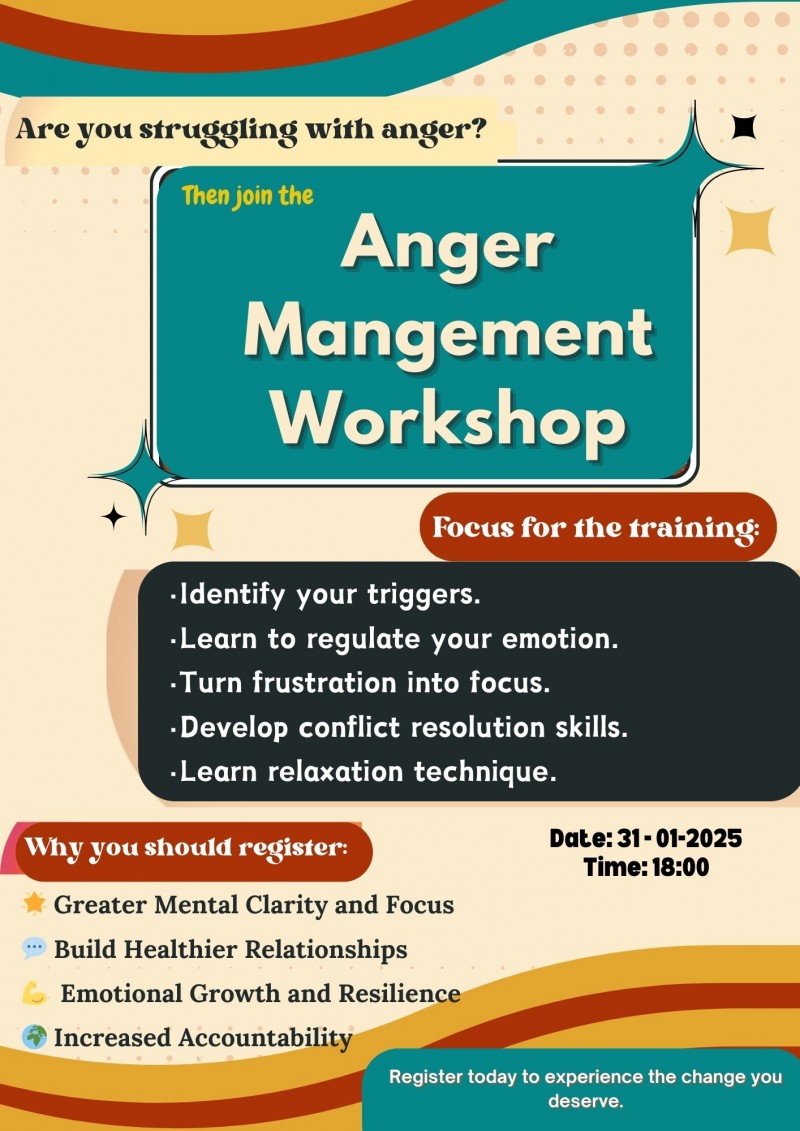
Anger Management Workshop

This workshop isn’t just about managing anger—it’s about creating a life filled with emotional balance, stronger relationships, and personal success. By joining, you’re choosing a path of growth, peace, and empowerment.
Areas of Concentration for the Anger Management Workshop
1. Identify Your Triggers: Understand What Sparks Your Anger and How to Respond Constructively.
Focus Areas:
- Gain Self-Awareness: Learn to recognize the specific situations, people, or environments that consistently provoke anger.
- Develop Emotional Mapping: Understand the connection between your emotions, thoughts, and actions.
- Learn Reflective Practices: Identify patterns in your behaviour by analysing past situations where anger escalated.
- Constructive Responses: Develop strategies to pause, reflect, and respond thoughtfully instead of reacting impulsively.
Outcome:
You will leave with a clear understanding of their personal triggers and actionable methods to address them constructively.
2. Regulate Your Emotions: Gain Control Over Your Feelings and Stop Anger from Dominating Your Actions.
Focus Areas:
- Emotional Regulation Techniques: Learn how to recognize the early signs of anger and manage them before they escalate.
- Mindfulness Practices: Cultivate present-moment awareness to avoid getting carried away by emotions.
- Cognitive Restructuring: Replace negative or irrational thought patterns with positive, constructive ones.
- Self-Compassion Skills: Develop kindness toward yourself to reduce the guilt and frustration that often accompany anger.
Outcome:
You will gain the ability to remain calm and composed, even in challenging situations, ensuring anger doesn’t take control.
3. Turn Frustration into Focus: Channel Your Energy into Achieving Your Goals with Clarity and Purpose.
Focus Areas:
- Reframing Techniques: Learn how to view frustrating situations as opportunities for growth.
- Goal-Setting Exercises: Redirect your energy toward actionable steps that align with your personal or professional objectives.
- Prioritization Strategies: Focus on what you can control while letting go of what you can’t.
- Time and Energy Management: Use your emotional energy productively to enhance focus and decision-making.
Outcome:
You will learn to harness frustration as motivation, transforming challenges into opportunities for progress and achievement.
4. Develop Coping and Communication Skills: Handle Challenges and Conflicts with Confidence and Empathy.
Focus Areas:
- Assertive Communication Training: Practice expressing your feelings and needs respectfully and clearly.
- Conflict Resolution Techniques: Learn to de-escalate tense situations and negotiate solutions effectively.
- Empathy-Building Exercises: Understand others' perspectives to foster better communication and reduce misunderstandings.
- Boundary-Setting Skills: Identify and communicate your limits in a way that protects your peace without offending others.
Outcome:
You will leave equipped to handle conflicts calmly, foster understanding, and maintain healthier, more fulfilling relationships.
5. Learn Relaxation Techniques: Master Simple Methods to Calm Your Mind and Body in Moments of Stress.
Focus Areas:
- Breathing Exercises: Practice deep, mindful breathing to reduce immediate stress and tension.
- Progressive Muscle Relaxation: Learn step-by-step techniques to release physical tension caused by anger.
- Visualization Techniques: Use guided imagery to create mental calm and reduce emotional intensity.
- Daily Relaxation Routines: Develop habits like meditation, yoga, or journaling to maintain emotional balance over time.
Outcome:
You will acquire simple yet effective relaxation methods you can use anytime to manage stress and stay calm during high-pressure situations.
With these skills, YOU show up empowered, balanced, and ready to create a more focused, harmonious, and successful life in this new year and beyond.
*After joining you will be redirected to fill a personal detail form.*