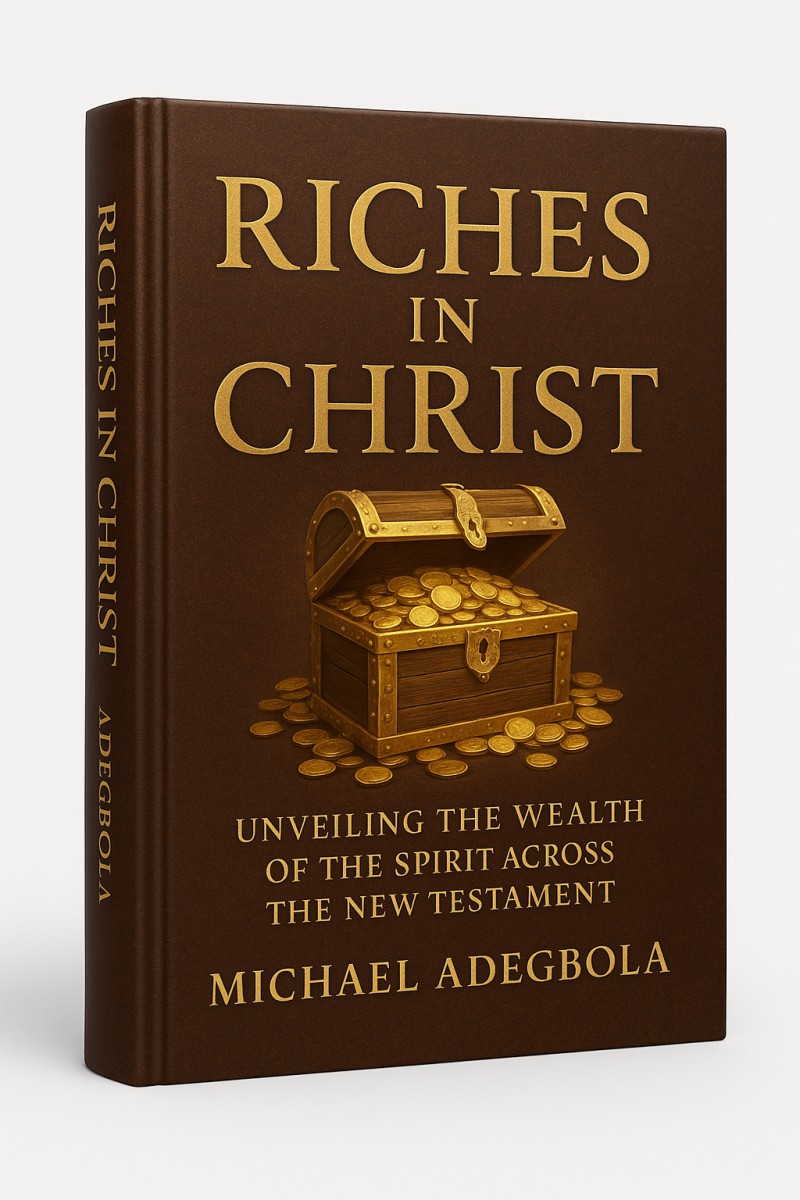
Riches in Christ: Unveiling the Wealth of the Spirit Across the New Testament

INTRODUCTION
Few themes are as central to the witness of the New Testament as the redefinition of prosperity in light of Christ. Across cultures and centuries, humanity has pursued wealth as a measure of security and significance. Yet the biblical writers consistently expose the limitations of material gain, declaring that true riches are found not in possessions but in the grace and presence of God. The gospel proclaims that in Christ, God’s people are blessed with a wealth that transcends earthly measures—an inheritance that is both present in spiritual reality and future in eschatological fulfillment.
The New Testament’s presentation of spiritual wealth is neither peripheral nor abstract; it is foundational to its vision of salvation. The Gospels situate prosperity in relation to the kingdom of God, where life is defined not by accumulation but by participation in Christ’s abundant life. Acts portrays the early church as rich in the Spirit’s empowering presence and in the Word’s advancing power, even amid material poverty and social marginalization. Paul’s theology is saturated with the language of abundance—grace that overflows, riches of glory, and every spiritual blessing—demonstrating that the believer’s true prosperity lies in union with Christ and the Spirit’s indwelling. The other epistles echo this testimony, emphasizing wisdom, endurance, holiness, and fellowship as facets of divine wealth, while Revelation culminates the narrative with the promise of an imperishable inheritance in the presence of God and the Lamb.
Theological Orientation
Theologically, the theme of riches in Christ integrates key strands of New Testament theology. It is rooted in Christology, for Christ Himself embodies and mediates God’s wealth. It is pneumatological, since the Spirit is both the down payment of the believer’s inheritance and the one who enables participation in it. It is soteriological, encompassing forgiveness, justification, adoption, sanctification, and glorification as dimensions of the believer’s riches. It is ecclesiological, for the church embodies these riches in community and mission. Finally, it is eschatological, since the fullness of wealth awaits consummation in the new creation.
Methodology
This study employs a biblical-theological approach, seeking to trace the development of the theme of spiritual wealth across the canonical witness of the New Testament. The guiding presupposition is that the New Testament speaks with diverse voices yet unified testimony, shaped by the saving work of Christ and the outpouring of the Spirit.
1. Canonical Order: The structure of this book follows the canonical sequence rather than a strictly thematic or systematic arrangement. This approach allows each New Testament witness to be heard in its own theological context while contributing to the larger canonical symphony.
2. Exegetical Sensitivity: While not offering verse-by-verse commentary, the study will engage key passages where the language of riches, inheritance, abundance, and blessing emerges most clearly. The exegesis is grounded in the original Greek text, yet direct citation of Greek lexemes is intentionally omitted for readability. Instead, the insights derived from lexical and semantic study inform the interpretation throughout. This approach allows the work to remain academically rigorous while remaining accessible to pastors, students, and thoughtful lay readers who may not have facility with the biblical languages.
3. Theological Synthesis: The findings of individual books will be integrated into broader theological categories (Christology, pneumatology, soteriology, ecclesiology, eschatology), showing how the theme of riches intersects with the whole of New Testament theology.
4. Practical Implications: Since the New Testament itself presents spiritual wealth as a reality meant to shape life, witness, and hope, this book will consistently draw pastoral implications. The aim is not only to describe the wealth of the Spirit in Christ but also to encourage the church to live out this inheritance with joy and faithfulness.
Purpose
Pastorally, this theme offers a critical corrective for the church today. In a world—and at times a church—captivated by materialist visions of prosperity, the New Testament calls believers to rediscover their true inheritance in Christ. The early Christians, though often poor and persecuted, lived with the unshakable confidence that they were rich toward God. Their joy, generosity, and endurance flowed from a wealth the world could not take away. The same vision must animate contemporary discipleship, grounding believers in the sufficiency of Christ and guarding against distortions of the gospel that reduce prosperity to possessions.
Outline
The chapters of this book trace the canonical unfolding of spiritual wealth:
- Chapter 1 clarifies the nature of true riches in Christ.
- Chapter 2 explores the Gospels’ presentation of abundant life as the essence of prosperity.
- Chapter 3 examines Acts, highlighting the Spirit’s empowering presence and the Word’s fruitful advance.
- Chapter 4 turns to Paul’s theology, where grace and spiritual abundance are expounded with theological depth.
- Chapter 5 concludes with the other epistles and Revelation, which anchor prosperity in perseverance, wisdom, holiness, and eternal inheritance.
The vision that emerges is both academically rigorous and pastorally urgent: the New Testament insists that God’s people are already immeasurably wealthy in Christ. To grasp this truth is to be reshaped in how we live, endure, and hope.