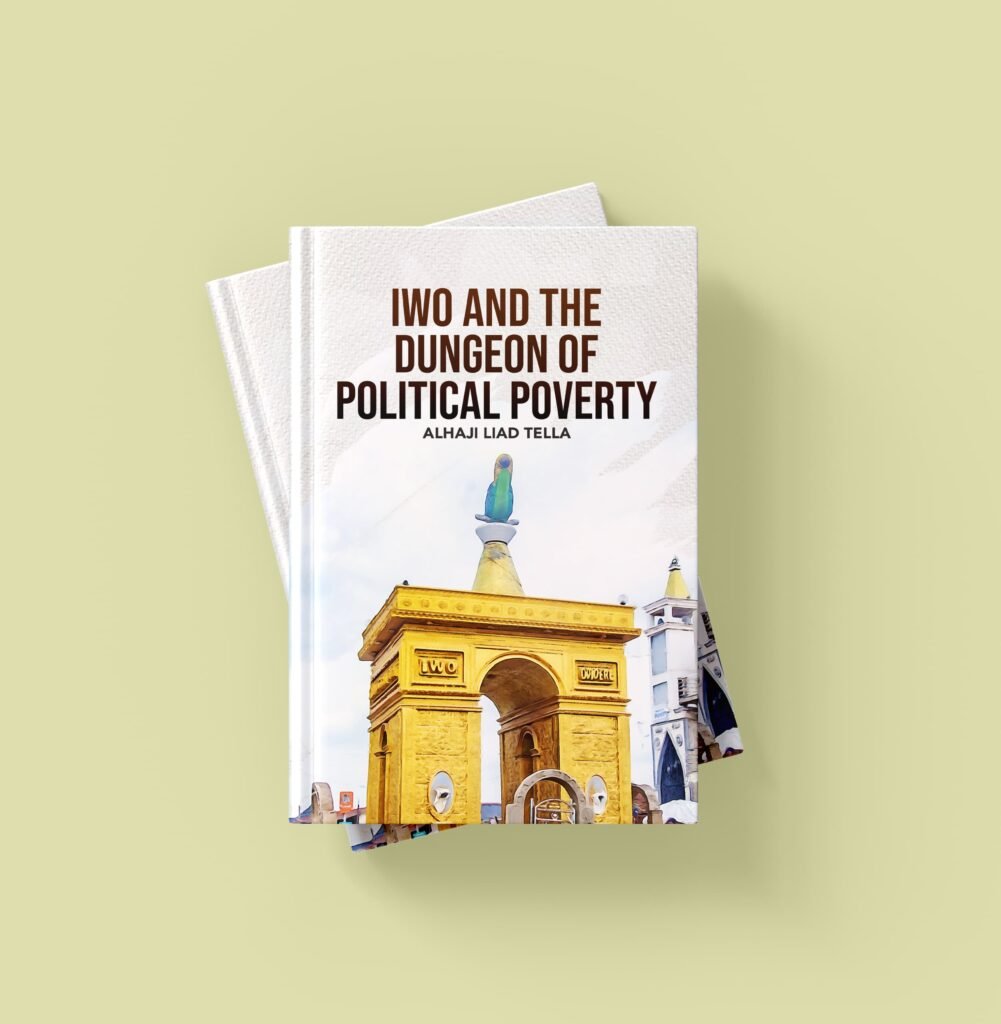
IWO AND THE DUNGEON OF POLITICAL POVERTY
The book, particularly traced the situation of political poverty in Iwo land, the cause and courses till date.
How the theory of political poverty and its appendages were covered in the first four chapters. This includes the poverty of qualitative education. At the early stage of national political development Iwo, only very few read beyond primary education. The few were mostly primary school teachers. Compares with emerging politicians from, Ijebu, Egba, Ijesa, and Ekiti areas of the old Western Region. The poverty of European education was traced to Islamic irredentism. Iwo was a complete Islamized town since the close of the 13th century. The fear of evangelization and forceful conversion to Christianity made the people to shun the white man school. Only few allowed their children to go to school and most of them were converted. Iwo therefore made high grade educated people to square up with their counterpart from the other major Yoruba cities and towns in the allocation of resources and sharing of political positions in the civil or public service.