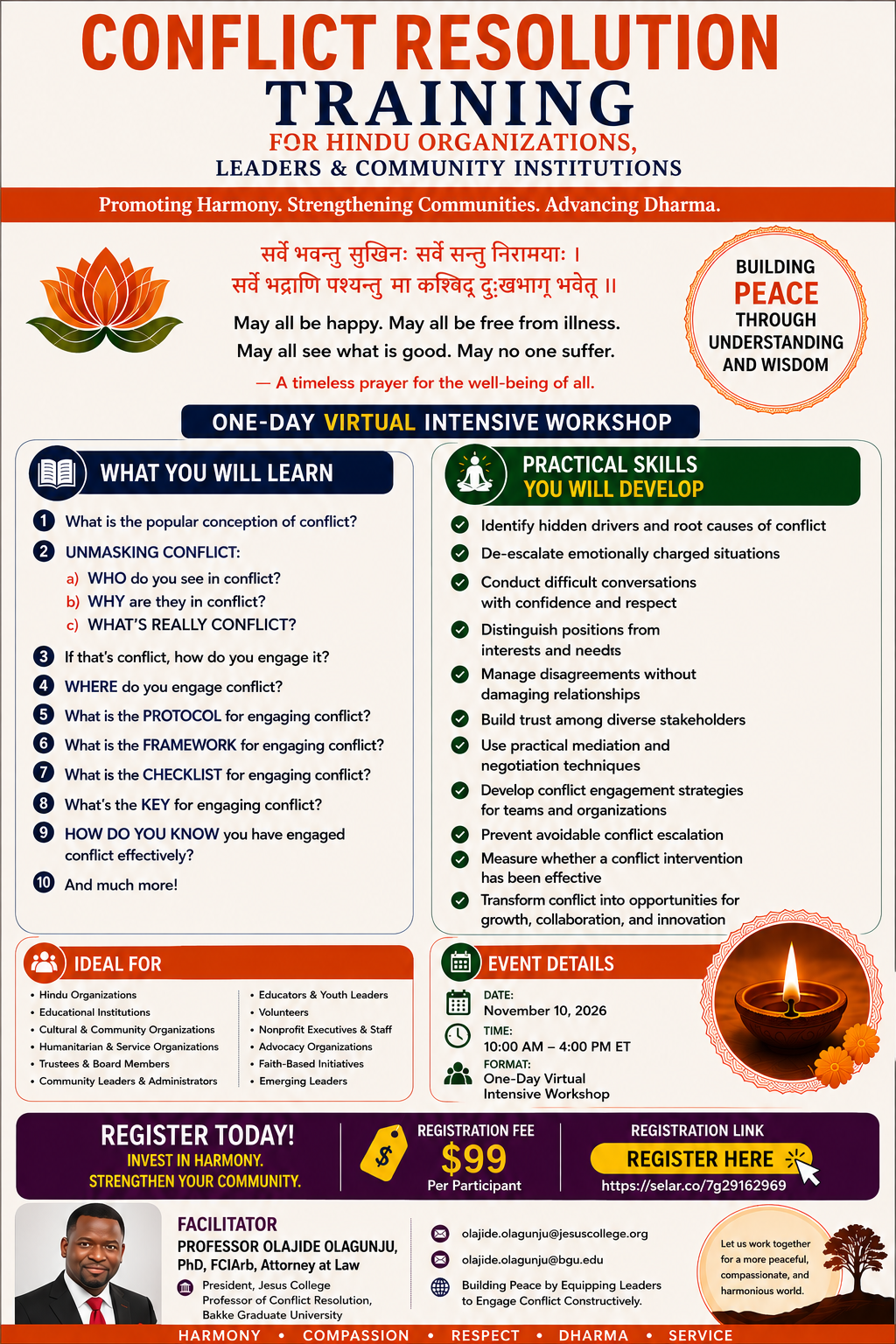
Conflict Resolution Training for Hindu Organizations (Live Online)

Get Tickets
Total Admissions: 0Hindu traditions have long emphasized harmony, compassion, self-discipline, respect for human dignity, nonviolence (ahimsa), righteous conduct (dharma), and the welfare of all beings (sarve bhavantu sukhinah). These enduring values have helped communities cultivate understanding, balance, and peaceful coexistence across generations.
Today, Hindu temples, educational institutions, cultural organizations, humanitarian agencies, advocacy groups, and community leaders often face complex challenges involving organizational disagreements, leadership transitions, volunteer management, stakeholder tensions, and difficult conversations within increasingly diverse communities. Addressing these challenges effectively requires practical conflict resolution skills that promote understanding while strengthening relationships and organizational effectiveness.
To support this important work, I would like to invite your trustees, board members, educators, volunteers, administrators, community leaders, and stakeholders to participate in a one-day professional development workshop:
Conflict Resolution and Community Harmony
Facilitator: Professor Olajide Olagunju, PhD, FCIArb, Attorney at Law
Fee: $99 per participant
Format: One-Day Intensive Training Workshop
This highly interactive workshop integrates proven conflict resolution methodologies with practical leadership tools that help organizations address conflict constructively while promoting harmony, cooperation, and community well-being.
Learning Outcomes
Participants will explore the following critical questions:
1. What is the popular conception of conflict?
How do individuals and organizations commonly understand conflict, and how do those assumptions influence their responses?
2. Unmasking Conflict
(a) WHO do you see in conflict?
Understanding the individuals, groups, relationships, interests, identities, and needs involved.
(b) WHY are they in conflict?
Identifying the underlying causes, concerns, expectations, perceptions, and structural factors driving disagreement.
(c) WHAT is really conflict?
Looking beyond surface disputes to understand the deeper realities that require attention.
3. If that is conflict, how should we engage it?
Developing practical approaches that transform conflict into opportunities for growth, collaboration, learning, and stronger relationships.
4. WHERE do we engage conflict?
Understanding the appropriate settings, levels, and contexts for effective intervention.
5. What is the PROTOCOL for engaging conflict?
Learning a disciplined and systematic process for conflict engagement and resolution.
6. What is the FRAMEWORK for engaging conflict?
Applying practical analytical tools that support effective assessment, intervention, and problem-solving.
7. What is the CHECKLIST for engaging conflict?
Using proven tools that help leaders avoid common mistakes and improve outcomes.
8. What is the KEY to engaging conflict successfully?
Identifying the critical principles that distinguish effective conflict engagement from ineffective responses.
9. How do you know you have engaged conflict effectively?
Recognizing indicators of successful resolution, strengthened relationships, improved communication, and sustainable organizational harmony.
Practical Skills Participants Will Develop
In addition to the core learning framework, participants will learn how to:
- Identify hidden drivers and root causes of conflict
- De-escalate emotionally charged situations
- Conduct difficult conversations with confidence and respect
- Distinguish positions from interests and needs
- Manage disagreements without damaging relationships
- Build trust among diverse stakeholders
- Use practical mediation and negotiation techniques
- Develop conflict engagement strategies for teams and organizations
- Prevent avoidable conflict escalation
- Measure whether a conflict intervention has been effective
- Transform conflict into opportunities for growth, collaboration, and innovation
This workshop is particularly valuable for:
- Hindu temples and mandirs
- Cultural and educational organizations
- Community service organizations
- Advocacy organizations
- Humanitarian and charitable institutions
- Community leaders and trustees
- Educators and youth leaders
- Volunteers and nonprofit professionals
The program is designed to strengthen the ability of Hindu organizations to foster harmony, address disagreements constructively, strengthen leadership effectiveness, improve communication, and advance their mission with greater unity and purpose.
We would be honored to serve your organization and contribute to your ongoing efforts to promote harmony, understanding, service, and community well-being.