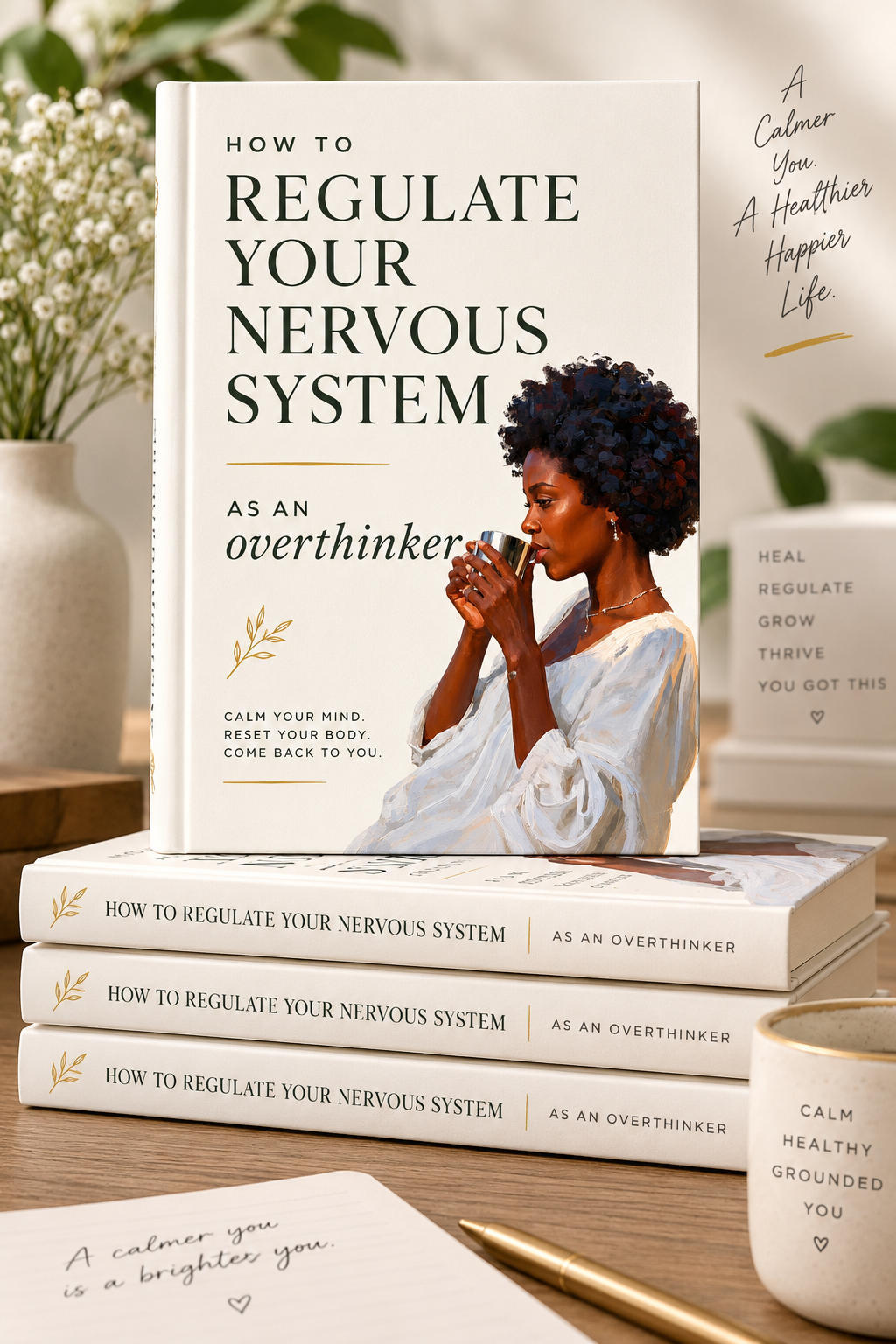
How to regulate your nervous system as an Overthinker

Absolutely. For a 120-page book, I’d position it as a practical, reassuring guide for people whose minds are constantly analyzing, anticipating, replaying conversations, and imagining worst-case scenarios.
The central idea is that overthinking is not something you simply need to “think your way out of.” The book teaches readers to work with both the mind and body—using breathing, grounding, movement, awareness, relaxation, boundaries, sleep, routines, and healthier thought patterns. Relaxation practices such as breathing, progressive muscle relaxation, visualization, and meditation are commonly recommended for managing stress.
Book Description
20 Ways to Regulate Your Nervous System as an Overthinker
A practical guide to calming racing thoughts, reducing overwhelm, and feeling safe in your own body
What if the answer to overthinking isn't another hour of analyzing the problem?
For many overthinkers, the mind rarely seems to switch off. You replay conversations, worry about tomorrow, question your decisions, imagine everything that could go wrong, and search endlessly for certainty. Even when nothing is happening, your body may still feel tense, restless, alert, or exhausted.
20 Ways to Regulate Your Nervous System as an Overthinker is a practical 120-page guide designed to help you understand the connection between your thoughts, emotions, body, and stress response.
Instead of telling you to simply “stop thinking,” this book teaches you how to gently create moments of safety and calm—so you can respond to your thoughts rather than automatically getting pulled into them.
Inside, you'll discover 20 simple regulation practices that can be incorporated into everyday life, including:
Conscious breathing and longer exhales
Grounding yourself in the present moment
Releasing physical tension
Progressive muscle relaxation
Gentle movement and walking
Creating a calming environment
Learning to notice your body's stress signals
Breaking the cycle of rumination
Challenging unhelpful thought patterns
Setting boundaries with your time and attention
Creating healthier morning and evening routines
Using rest without feeling guilty
Improving sleep habits
Practicing mindfulness without forcing your mind to be quiet
Connecting with supportive people
Using sensory experiences to return to the present
Creating small moments of safety throughout the day
Developing emotional awareness
Replacing perfectionism with self-compassion
Building a personal “overthinking emergency plan”
The book emphasizes that regulation is a skill that develops through practice, not a state you have to achieve perfectly. Different techniques work for different people and situations, so the goal is to build a flexible toolkit rather than depend on one method.
What the 120 pages could look like
Introduction — Understanding the Overthinking Mind
Why your brain keeps searching for answers, certainty, and control.
Part 1: Understand Your Nervous System
1. What nervous-system regulation actually means
2. Why overthinking can feel impossible to switch off
3. Recognizing your personal stress signals
4. The difference between thinking and rumination
Part 2: 20 Ways to Regulate 5–24. One detailed chapter for each regulation technique, with explanations, exercises, reflection questions, and real-life examples.
Part 3: Applying Regulation to Everyday Life 25. What to do when you wake up overthinking
26. What to do when your thoughts spiral at night
27. What to do during an overwhelming day
28. How to handle uncertainty
29. How to stop constantly seeking reassurance
30. Building your personal daily regulation routine
Final Chapter: You Don't Have to Control Every Thought
The book ends with a simple 7-day nervous-system reset plan, a daily tracking page, reflection prompts, and a personalized “When I Start Overthinking…” action plan.
The tone
The book should feel calm, warm, practical, and non-judgmental—almost like a supportive conversation with someone who understands what it feels like to have a mind that won't stop.
Rather than promising to eliminate anxiety or overthinking completely, it teaches readers how to develop more flexibility and recover from stress more effectively. The goal isn't “never overthink again.”
It's:
> “I can notice what's happening, help my body feel safer, and choose what to do next.”
This concept would work especially well as a 120-page workbook-style self-help book, with short chapters, exercises, journal prompts, checklists, and “try this now” boxes.