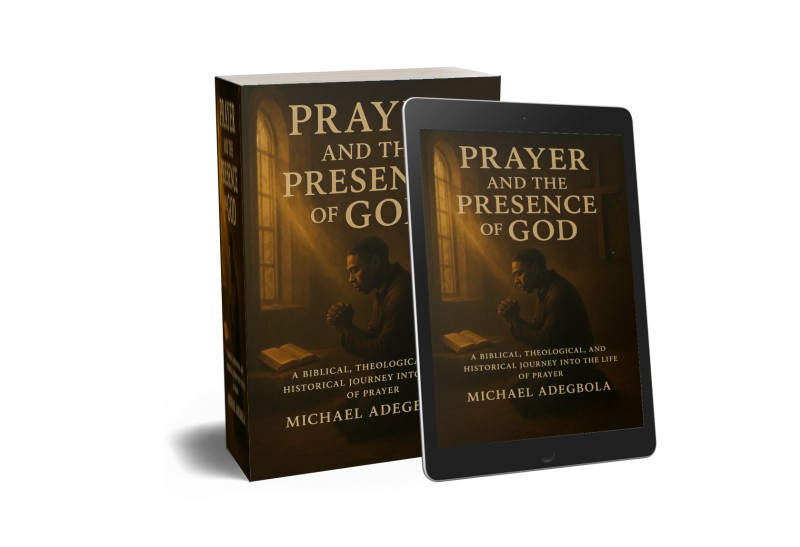
Prayer and the Presence of God: A Biblical, Theological, and Historical Journey into a Life of Prayer

INTRODUCTION
595 Pages
Prayer stands at the very heart of Christian faith and practice. From the earliest pages of Scripture to the present day, the life of prayer marks the rhythm of the believer’s communion with God, the Church’s intercession for the world, and the ongoing outworking of God’s kingdom purposes. Despite its vital importance, prayer often remains misunderstood, undervalued, or marginalized amid the complexities and busyness of contemporary Christian life. This volume, Prayer and the Presence of God: A Biblical, Theological, and Historical Journey into the Life of Prayer, seeks to recover, clarify, and deepen the evangelical understanding and practice of prayer by providing a rich, comprehensive study that bridges biblical theology, historical insight, and pastoral application.
Purpose and Scope
The central aim of this book is to explore prayer as a dynamic and indispensable dimension of the Christian life—rooted firmly in the presence of God revealed in Scripture, shaped by theological reflection, and enlivened by historical experience within the Church. The task is both scholarly and pastoral. Academically, it provides sound exegetical and theological analysis of prayer’s biblical foundations, especially through the person and work of Jesus Christ and the life of the early Church. Historically, it traces how prayer has been understood and practiced through various epochs—from the patristic writers and medieval mystics to Reformation leaders and modern movements. Practically, it offers guidance on cultivating a vibrant prayer life, addressing obstacles, and encouraging perseverance in ministry contexts.
By weaving together these strands, the book invites readers to see prayer not as a static devotional routine but as a living encounter with the triune God who invites, empowers, and transforms His people. This comprehensive scope also makes it especially valuable for pastors, theologians, and lay leaders who seek to foster a robust prayer culture within the local church and to disciple believers into deeper dependence on God.
Theological Framework and Commitments
This work is unapologetically evangelical in its theological commitments. It embraces the authority and sufficiency of Scripture as the ultimate guide for prayer and faith. It affirms the triune nature of God, grounding prayer in the person of the Father, Son, and Holy Spirit, and recognizing the vital roles each Person plays in the life of prayer. It holds to the sovereignty of God in all things, including prayer, while affirming genuine human responsibility in responding to God’s invitation to commune with Him.
Central to this framework is the recognition that prayer is not a human achievement or technique but a gracious gift and calling from God. Prayer’s primary purpose is relational: It is the outworking of a covenantal relationship with God who is both transcendent and immanent. This volume emphasizes the transformational nature of prayer, where the one who prays is changed by aligning his will with God’s, rather than merely seeking to manipulate divine action.
Furthermore, the work pays close attention to the historical diversity within evangelicalism regarding prayer—acknowledging the best insights of the charismatic renewal and spiritual warfare emphases alongside more classical devotional traditions—while maintaining fidelity to orthodox doctrine and biblical clarity.
Methodology
The approach taken in this book is interdisciplinary yet integrated, combining biblical theology, historical theology, and practical theology. Each part is grounded first in careful exegetical study of key biblical texts, particularly focusing on Old Testament patterns of prayer, the life and teaching of Jesus, and the practice of the early Church as recorded in the New Testament.
The historical section surveys key developments in the Church’s prayer life, drawing on primary writings from influential theologians and movements while engaging critically and constructively with their insights and limitations. This historical-theological dialogue seeks to recover wisdom from the past to inform present and future practice.
The practical chapters synthesize these biblical and historical insights with contemporary pastoral concerns, offering tools and encouragement for cultivating persistent, faithful prayer amidst the pressures and distractions of modern ministry and daily life.
Throughout, the writing balances academic precision with pastoral accessibility, aiming to serve the diverse needs of its readers—from scholars requiring thorough theological reflection to pastors and lay leaders desiring applicable guidance.
Historical Overview and Context
Prayer has always been central to God’s people, beginning with the patriarchs and continuing through Israel’s history. The Psalms, the prophetic prayers, and the worship of the temple reveal a rich tapestry of corporate and personal prayer life, deeply embedded in covenant faithfulness.
In the New Testament, Jesus’ example revolutionizes the understanding of prayer, portraying it as intimate fellowship with the Father, empowered by the Spirit, and directed toward the fulfillment of God’s redemptive mission. The early Church carries forward this dynamic, incorporating prayer as a vital means of grace, spiritual empowerment, and mission.
The post-apostolic Church witnessed further developments in prayer, with the early fathers providing theological foundations and spiritual disciplines that would shape centuries of Christian devotion. The medieval and Reformation eras introduced new emphases and challenges, including the recovery of biblical prayer amid ritualistic and institutional pressures.
In modern times, prayer movements and revivals—from the Puritans to the Great Awakenings, the Pentecostal and Charismatic renewals, and contemporary global expressions—have demonstrated prayer’s continuing power to renew and reshape the Church. This volume highlights these streams not simply as historical curiosities but as living wells of spiritual vitality and theological insight.
Practical Aims for the Reader
Beyond theory and history, this book is a call to action. It aims to equip readers with a deeper understanding of prayer that fosters a passionate, sustained prayer life, both personally and corporately. In an age marked by distraction, busyness, and spiritual challenges, Christians need robust teaching and encouragement to persevere in prayer.
Pastors and Church leaders will find practical guidance for nurturing a culture of prayer within congregations—integrating prayer into ministry, worship, and discipleship. The book also addresses common obstacles such as discouragement, unanswered prayer, and spiritual dryness, offering biblical counsel and spiritual encouragement.
Ultimately, this work invites all readers into a richer experience of the presence of God—a presence that transforms, empowers, and sustains the life of faith and service.
Audience and Significance
While scholarly in its scope and depth, the volume is designed to be accessible and useful to a broad evangelical readership. Seminary professors, students, pastors, and lay leaders alike will benefit from its careful exegesis, theological clarity, historical breadth, and pastoral wisdom.
Theologically grounded yet practically oriented, this book seeks to bridge the sometimes artificial divide between academic theology and everyday Christian living. It aims to inspire renewed commitment to prayer as a central mark of evangelical identity and mission.
As the Church faces new challenges and opportunities in the twenty-first century, recovering a vibrant life of prayer rooted in the presence of God is not merely desirable but essential. This book endeavors to serve that vital task—to deepen the Church’s understanding, enrich its prayer practice, and empower its witness to the world.
Conclusion
Prayer and the Presence of God invites readers to embark on a comprehensive journey into the life of prayer—a journey that moves from Scripture to theology, through history, and into daily practice. It is my prayer that this work will serve as a faithful companion for those seeking to know God more deeply, pray more fervently, and serve more effectively in His kingdom.
May the Holy Spirit guide and empower all who engage with these pages, that they may be drawn ever closer into the presence of the triune God, the source and strength of all prayer.