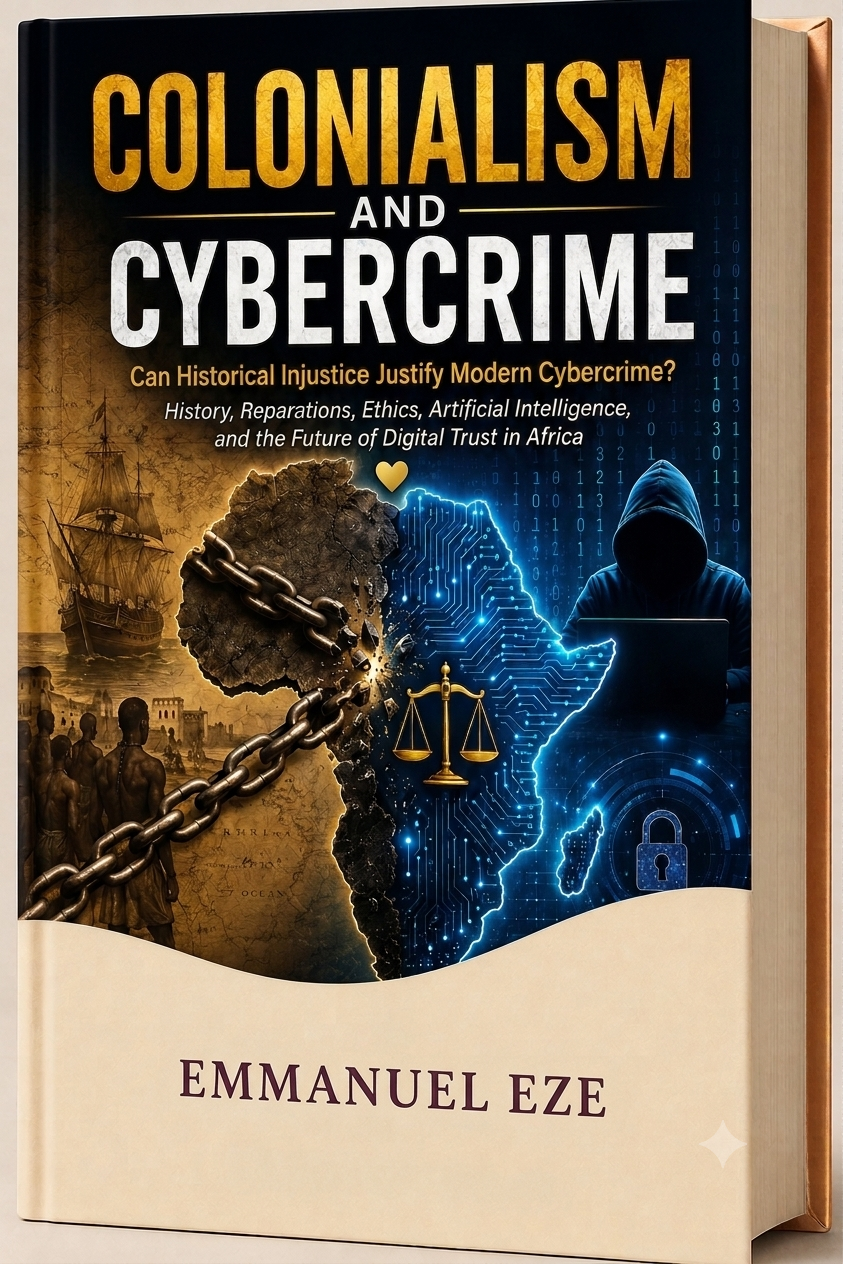
Colonialism and Cybercrime

Can historical injustice justify modern cybercrime?
Colonialism and Cybercrime explores one of the most difficult questions at the intersection of African history, technology, ethics, and the modern digital world.
The book examines the enduring effects of colonialism and asks how historical exploitation, inequality, reparations, and contemporary economic realities intersect with the rise of cybercrime in Africa.
It explores the ethical tension between understanding the historical circumstances that shaped African societies and holding individuals accountable for harmful actions committed in the digital age.
The book also considers the changing role of artificial intelligence, digital identity, online deception, cybersecurity, and digital trust, while looking toward Africa's place in the future of technology.
Rather than simply labeling cybercrime as a problem, this book invites readers to examine the history, motivations, consequences, and moral questions surrounding it.
Inside the book, you'll explore:
- The historical foundations and consequences of colonialism
- Questions surrounding reparations and historical injustice
- The emergence and evolution of cybercrime
- The ethical debate surrounding cybercriminal activity
- Digital deception and the changing nature of online identity
- Artificial intelligence and its implications for cybercrime
- The importance of cybersecurity and digital responsibility
- The future of digital trust in Africa
- Whether historical grievances can ever justify modern wrongdoing
A thought-provoking book for readers interested in African history, politics, technology, cybersecurity, ethics, and the future of Africa in the digital age.
Get your copy and join the conversation.