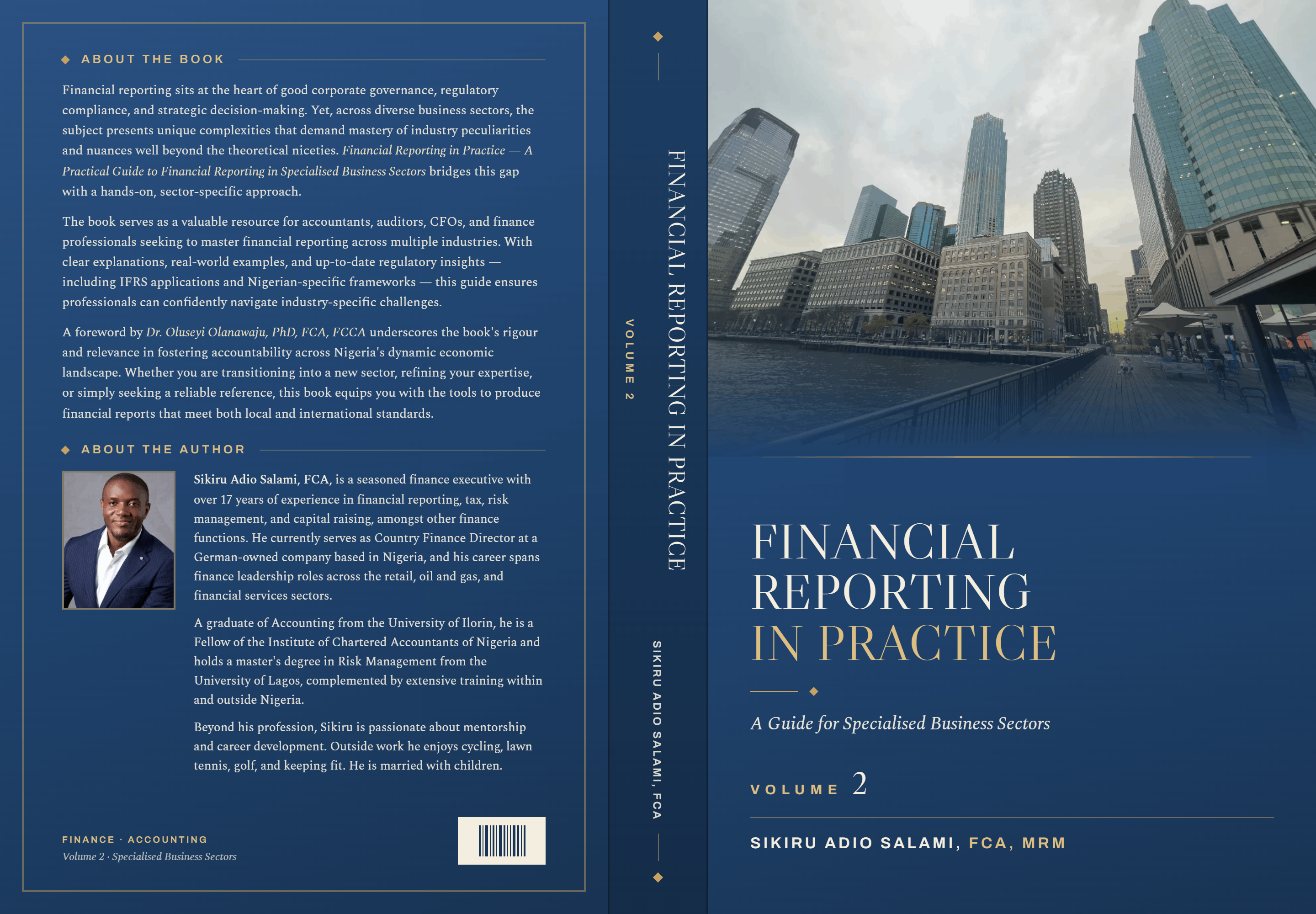
Financial Reporting in Practice (Volume 2): Chapter 2: Financial Reporting by Sector — Professional Services: Law, Audit, Engineering and Consulting

Chapter 2: Financial Reporting by Sector – Professional Services
Professional service firms do not sell products. They sell expertise, time, judgement and professional relationships. That makes their financial reporting fundamentally different from businesses built around physical goods, inventory or heavy assets.
In this chapter, I take you on a practical journey into how law firms, audit and accounting firms, engineering and technical consultancies, and management consulting firms account for their businesses. You will understand how these firms are structured, how they make money, how partners are compensated, and how measures such as utilisation, realisation, leverage and work-in-progress affect profitability.
You will also gain insight into areas that are often overlooked in financial reporting, including partner capital and compensation, client money, regulatory requirements, professional indemnity risk, transfer pricing and intercompany charges in international networks, billing and collection, cybersecurity, data protection, ethics and internal controls.
Most importantly, the chapter connects the accounting numbers to the economics of the business. It shows why a professional firm can have strong revenue but weak cash flow, why unbilled WIP can become a serious financial risk, and how the structure of a firm's partnership and compensation model can influence its financial reporting.
What to look out for in this chapter:
• How professional service firms make money
• The economics of the leverage pyramid
• Utilisation, realisation and profitability
• Partnership structures and partner compensation models
• Revenue recognition under IFRS 15
• WIP, contract assets and contract liabilities
• Retainers, advance payments and success fees
• Reimbursable expenses and principal-versus-agent considerations
• Receivables and expected credit losses under IFRS 9
• Leases and intangible assets
• Client money and professional liabilities
• Transfer pricing and charges within international networks
• Regulatory and tax considerations in Nigeria
• Internal controls and financial reporting risks
• Practical financial statement examples and illustrations
Whether you are a finance professional, auditor, accountant, partner, lawyer, engineer, consultant, business owner, regulator or an accounting student, this chapter will help you understand the numbers behind professional service firms and the accounting judgements that shape them.