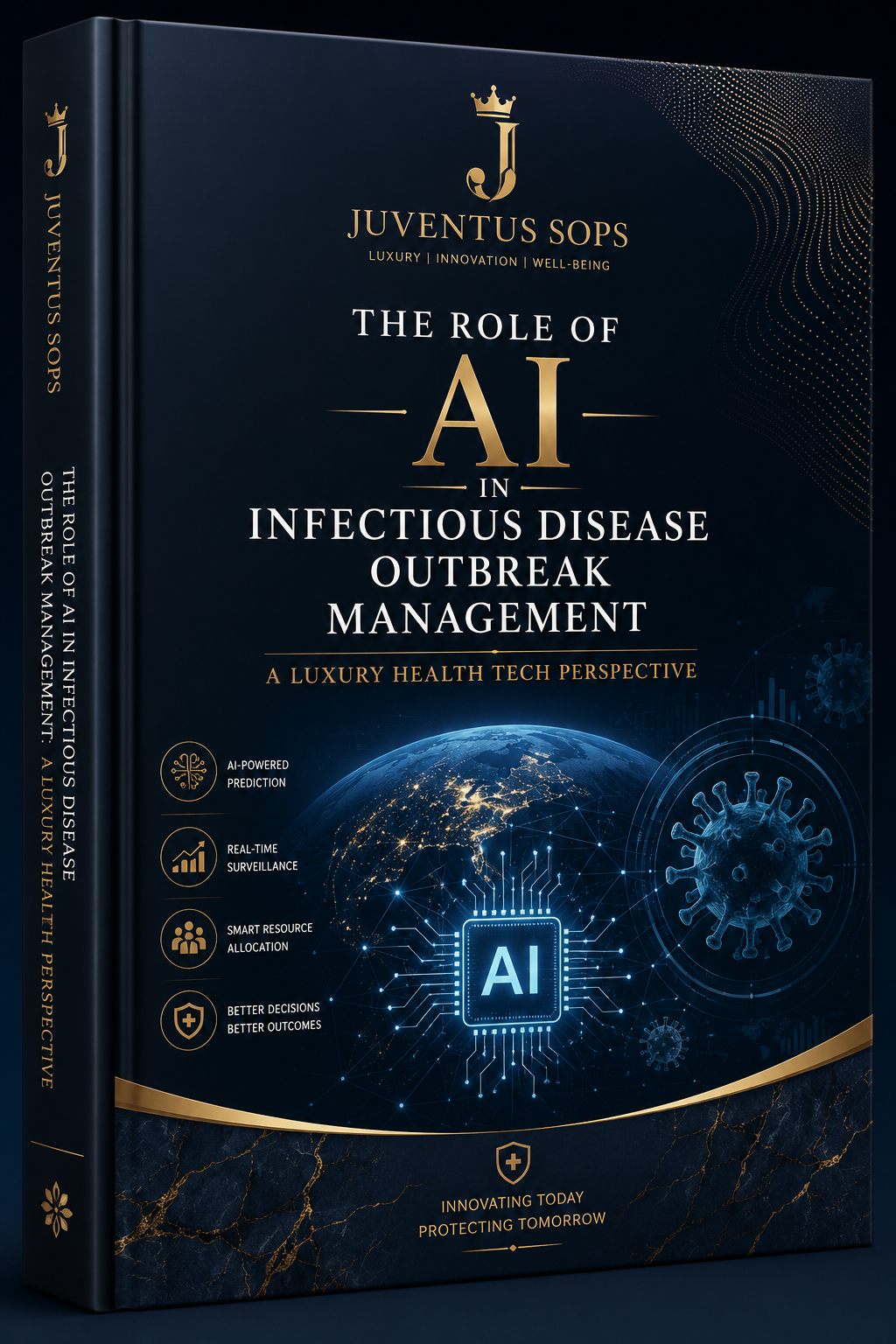
The Role of AI in Infectious Disease Outbreak Management: A Luxury Health Tech Perspective

Infectious disease outbreaks have always tested the strength of healthcare systems, the speed of medical response, and the resilience of humanity itself. In moments where uncertainty spreads as quickly as illness, the ability to detect threats early, respond intelligently, and protect lives becomes more important than ever. Today, artificial intelligence is emerging as one of the most powerful tools in that fight.
The Role of AI in Infectious Disease Outbreak Management explores how intelligent technologies are transforming the way healthcare systems predict, monitor, and respond to outbreaks across the world. From real time data analysis and predictive modeling to AI assisted diagnostics and smart surveillance systems, this ebook reveals how modern health technology is helping healthcare leaders act faster and more effectively during critical public health emergencies.
Through a luxury health tech perspective, the book also examines how premium healthcare systems and advanced medical institutions are using AI to create more responsive, connected, and patient centered approaches to outbreak management. It shows how intelligent platforms can track disease patterns, optimize hospital resources, support remote patient care, and deliver faster clinical insights when every second matters.
But beyond the technology lies a deeply human story. It is about protecting families during uncertain times. It is about helping healthcare professionals make critical decisions under pressure. It is about creating systems that are not only technologically advanced, but compassionate, prepared, and focused on preserving human life.
Written in a clear and engaging tone, this ebook makes complex healthcare innovation accessible for healthcare professionals, students, entrepreneurs, policymakers, and readers interested in the future of intelligent medicine and public health.
The future of outbreak management is no longer based only on reaction. It is becoming predictive, data driven, and globally connected. As AI continues to evolve, it is helping healthcare move toward a future where diseases can be identified earlier, responses can become smarter, and lives can be protected with greater precision and care than ever before.