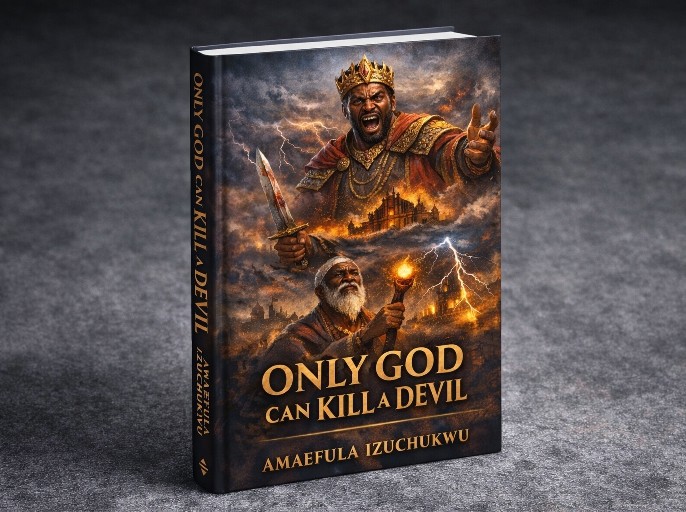
ONLY GOD CAN KILL A DEVIL by Amaefula Izuchukwu

Abstract
Only God Can Kill a Devil is a gripping tale of tyranny, divine justice, and human resilience set in the ancient city of Ilu-Ayan. The story follows King Akanmu, a ruler whose arrogance and cruelty plunge the city into fear, oppression, and suffering. Despite the elders’ warnings and the pleas of the people, Akanmu continues his reign of terror, believing himself untouchable.
As the citizens’ cries reach the heavens, divine intervention manifests through natural signs, storms, and a spiritual guide, Olatunji, who prepares the people for redemption. Through a climactic confrontation, Akanmu’s tyranny is shattered, and the city is freed from fear.
The novel chronicles the rebirth of Ilu-Ayan, highlighting the collective efforts of its people to rebuild homes, heal emotional scars, and restore justice. Through the formation of the Council of Unity, mentorship from elders, and teachings for future generations, the city learns that vigilance, courage, and wisdom are the true safeguards against tyranny.
With rich symbolism, African cultural elements, and spiritual undertones, the novel emphasizes that while only God can destroy ultimate evil, the courage and unity of the righteous ensure that tyranny can never rise again. It is a story of justice, hope, and the enduring power of community, leaving readers with a timeless message: even in the darkest times, light, courage, and faith can restore a kingdom.