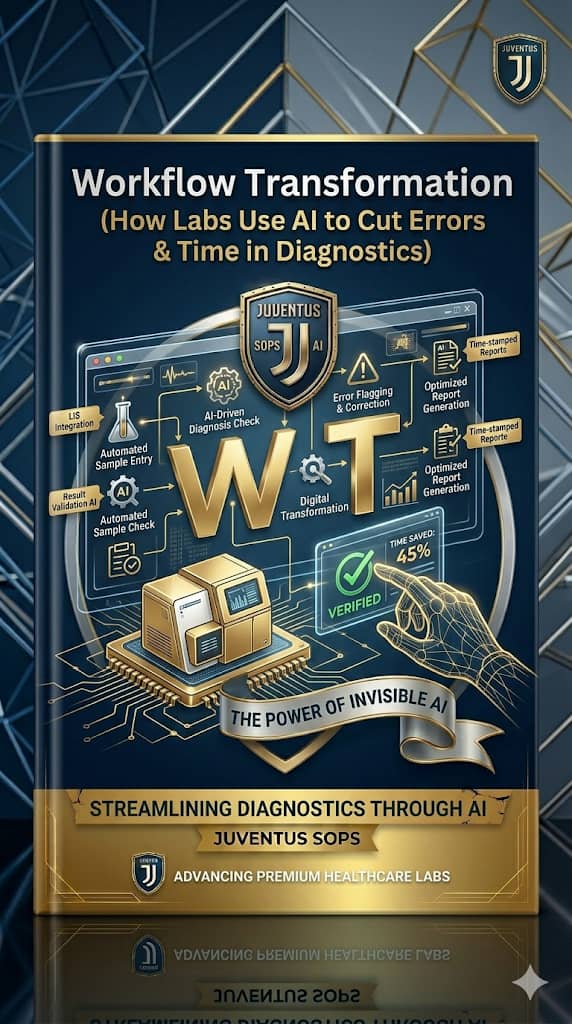
Workflow Transformation (How Labs Use AI to Cut Errors & Time in Diagnostics)

In modern healthcare laboratories, every second matters and every detail counts. A single error in diagnostics can delay treatment, misguide clinical decisions, and deeply affect patient outcomes. For decades, lab workflows have relied heavily on manual processes, human interpretation, and fragmented systems that often create bottlenecks in speed and accuracy.
Workflow Transformation explores how artificial intelligence is reshaping laboratory medicine by reducing errors, improving efficiency, and accelerating diagnostic turnaround times in ways that were once unimaginable.
This ebook takes readers inside the evolving world of AI powered laboratories where intelligent systems assist in sample tracking, automate repetitive tasks, flag inconsistencies, and support precise analysis of diagnostic data. From blood work and pathology slides to imaging results and molecular testing, AI is helping labs operate with greater accuracy, consistency, and speed.
But beyond the technology, this transformation carries a deeply human impact. It is about reducing the pressure on laboratory professionals who work behind the scenes to deliver critical results. It is about ensuring that patients receive answers faster, doctors make decisions with confidence, and healthcare systems operate with fewer delays and fewer preventable mistakes.
Through clear and engaging storytelling, this guide explains how automation and intelligent algorithms are not replacing laboratory expertise but enhancing it. By removing repetitive workload and minimizing human error, AI allows skilled professionals to focus on what truly requires judgment, interpretation, and experience.
Written for healthcare professionals, lab technicians, students, innovators, and anyone interested in the future of diagnostics, this ebook simplifies complex technological changes into practical and meaningful insights.
The future of laboratory medicine is becoming faster, smarter, and more reliable. With AI driven workflow transformation, diagnostics is no longer just about processing samples. It is about delivering accurate answers at the speed of need, ultimately improving care for every patient who depends on it.