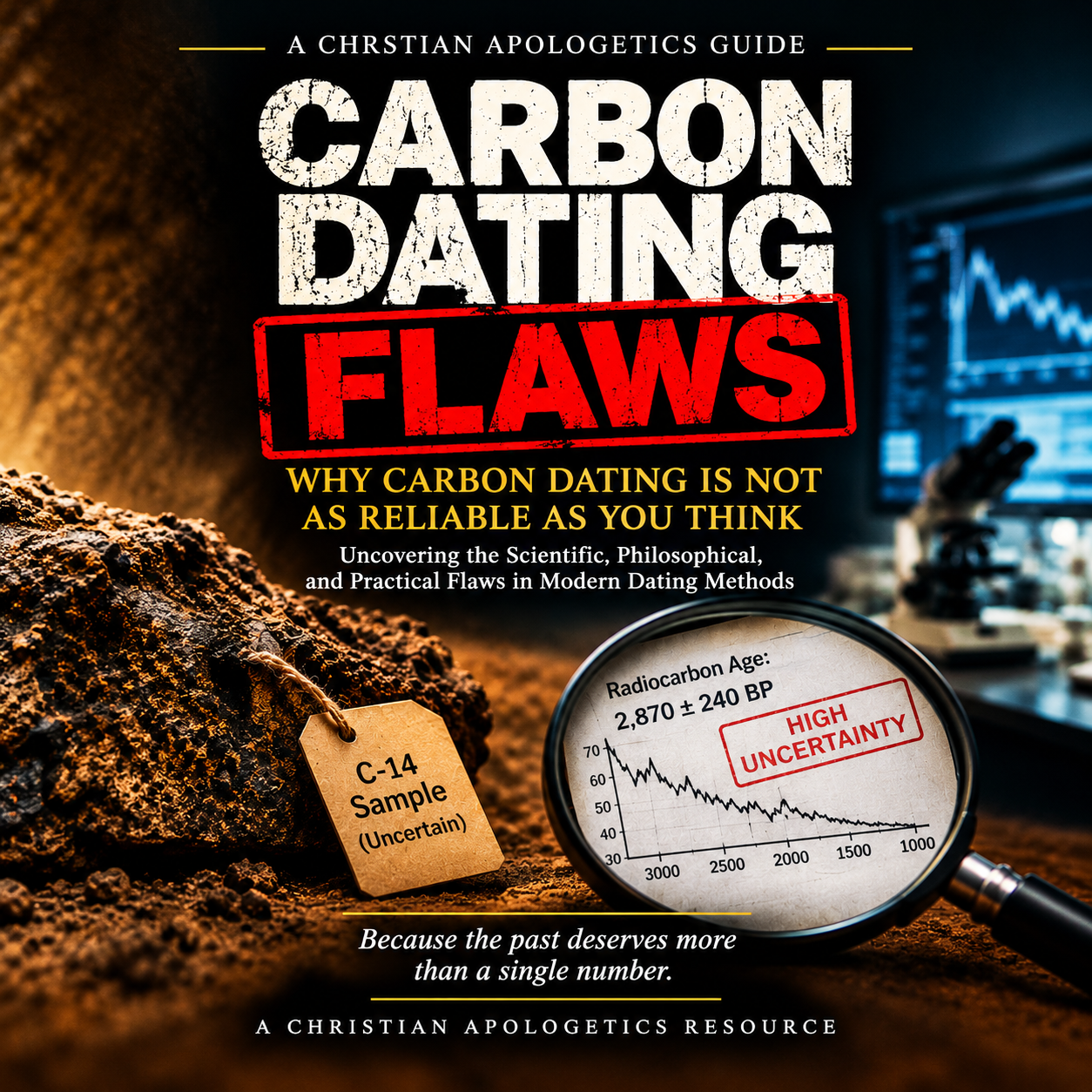
Scientific dating Flaws

🧬 CARBON DATING FLAWS
Why Carbon Dating May Not Be as Straightforward as You Think
Can a laboratory test really tell us exactly how old something is?
Carbon-14 dating is often presented as one of the strongest scientific tools for determining the age of ancient materials. But what happens when we examine the assumptions, limitations, calibration methods, contamination issues, and interpretation behind the numbers?
In Carbon Dating Flaws, you'll take a closer look at the methodology behind radiocarbon dating and examine questions that are rarely discussed in popular explanations.
🔎 Inside This Book, You'll Discover:
✅ How Carbon-14 dating actually works
✅ The major assumptions behind radiocarbon dating
✅ How contamination can affect dating results
✅ Why scientists use calibration curves
✅ What factors can create uncertainty in radiocarbon measurements
✅ The difference between a laboratory result and the interpretation of that result
✅ Common arguments surrounding carbon dating and biblical chronology
✅ How Christians can critically evaluate scientific claims without abandoning sound science
✅ Important questions every Christian should ask when confronted with claims about the age of the earth and ancient artifacts
✝️ Written for Christians Who Want to Think Deeper
This isn't simply an attack on science.
It is an invitation to examine the evidence, question assumptions, understand the methodology, and think critically from a Christian apologetics perspective.
If you've ever wondered whether carbon dating is as conclusive as it is sometimes portrayed, this book will give you important questions to investigate.
🔥 ARE YOU READY TO EXAMINE THE EVIDENCE?
Whether you're a Christian, Bible teacher, student, apologist, or simply someone interested in the debate surrounding science, history, and biblical chronology, Carbon Dating Flaws will challenge you to look beyond the headline numbers.
Get your copy today and start examining the evidence for yourself.
Because the past deserves more than a single number.
GET YOUR COPY NOW.