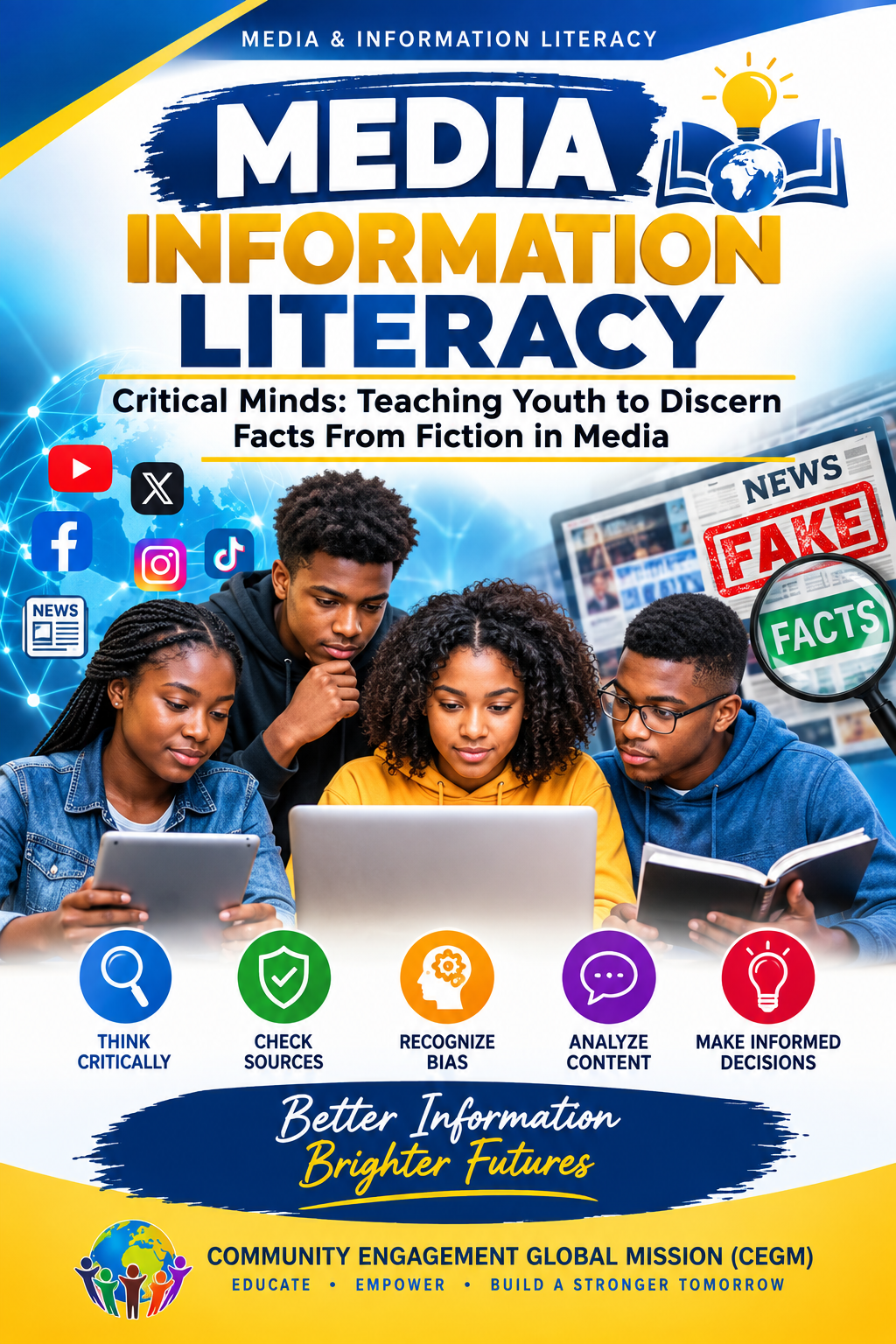
MEDIA INFOMATION LITERACY
Critical Minds: Teaching Youth to Discern Fact from Fiction in Media
Introduction
We live in a world where information is available at our fingertips. Every day, young people encounter thousands of posts, videos, articles, advertisements, and messages through social media and other digital platforms. However, not everything we see online is true or reliable.
Misinformation and fake news can influence people’s opinions, decisions, and behavior. This is why Media and Information Literacy is important. It teaches us how to think critically, evaluate information, identify trustworthy sources, and recognize false or misleading content.
The goal of “Critical Minds” is to help young people become careful and responsible consumers and creators of media.
What Is Media and Information Literacy?
Media and Information Literacy, or MIL, is the ability to access, analyze, evaluate, create, and communicate information responsibly.
It helps people understand:
- Where information comes from
- Who created it and why
- Whether the source is credible
- How information may be biased or manipulated
- How to verify claims before sharing them
Fact vs. Fiction
A fact is information that can be supported by reliable evidence and verified through trustworthy sources.
Fiction or false information, on the other hand, may be invented, manipulated, exaggerated, or presented without sufficient evidence.
For example, a social media post may claim that a certain event happened. Instead of immediately believing or sharing it, a critical thinker asks:
“Who said this?”
“What evidence supports the claim?”
“Can I find the same information from other reliable sources?”
Why Are Young People Vulnerable to Misinformation?
Young people spend significant amounts of time online, where information spreads quickly. Algorithms can also recommend content similar to what users have already viewed, potentially creating an echo chamber where people repeatedly encounter similar opinions.
Other factors include:
- Eye-catching headlines and clickbait
- Edited or manipulated images and videos
- Influencers and viral posts
- Emotional or shocking content
- Lack of source verification
- Pressure to share information quickly
How Can We Identify Fake or Misleading Information?
Young people can use several simple strategies:
1. Check the Source
Ask whether the information comes from a credible organization, expert, journalist, or established publication.
2. Check the Author
Look for the author's name, expertise, and other published work.
3. Examine the Evidence
Reliable claims should have evidence that can be checked.
4. Compare Multiple Sources
Do not depend on a single post or website. Compare the claim with information from other trustworthy sources.
5. Check the Date
Old information can sometimes be presented as if it were current.
6. Watch for Emotional Language
Posts designed to make people extremely angry, afraid, or excited may be trying to influence them rather than simply inform them.
7. Think Before Sharing
Before clicking “share,” stop and ask:
“Is it true? Is it trustworthy? Is it helpful?”
The Role of Critical Thinking
Critical thinking is one of the most important skills in Media and Information Literacy.
Being a critical thinker does not mean automatically rejecting everything we see online. Instead, it means asking questions, examining evidence, considering different perspectives, and reaching conclusions based on reliable information.
A critical mind does not simply ask, “Do I agree with this?”
It asks:
“Is this supported by evidence?”
Why Media Literacy Matters
Media literacy helps young people:
- Make informed decisions
- Avoid spreading misinformation
- Recognize manipulation and bias
- Protect themselves from online scams
- Participate responsibly in society
- Communicate more effectively
- Become responsible digital citizens
Conclusion
In the digital age, being informed is not simply about having access to information. It is about knowing how to evaluate that information.
Young people have the power to shape the future of the digital world. By developing strong media and information literacy skills, they can become critical thinkers who question before believing, verify before sharing, and think before reacting.
Critical minds create a more informed and responsible society.