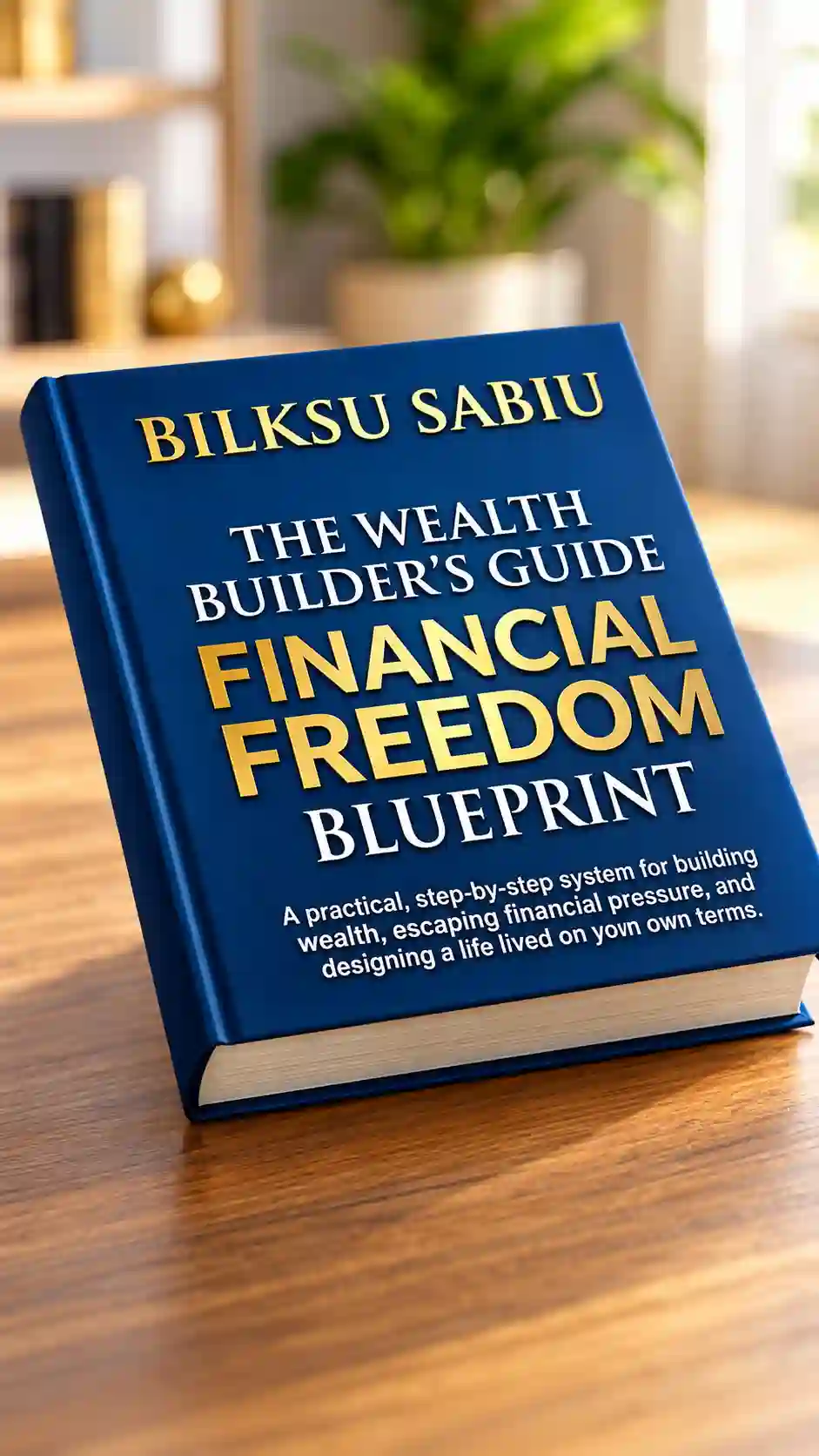
The Financial Freedom Blueprint

The Blueprint Begins Here
Most people are not broke because they earn too little. They are stuck because they have never been given a system — a simple, repeatable set of decisions that turns income into ownership.
Financial freedom is not a lottery win, and it is not reserved for people who were born wealthy, inherited a business, or happened to buy the right stock at the right time. It is the outcome of a handful of unglamorous habits, applied consistently over a long enough period that the mathematics finally begins to work in your favour. This book is that system, written plainly and arranged in the order you should actually implement it.
If you have ever looked at your bank balance at the end of the month and wondered where the money went, you are in the right place. If you earn a reasonable income but still feel only one emergency away from disaster, you
are in the right place. If you have started investing, stopped, started again, and never quite built momentum, you are in the right place. None of those situations mean you are bad with money. They mean you have been managing money without a blueprint.
A blueprint changes the question. Instead of asking "How much money do I have left?" you begin asking "Is my
money doing the job I assigned it?" Instead of reacting to bills as they arrive, you direct money toward specific
destinations the moment it enters your hands. Freedom, in the financial sense, is simply the gap between your
obligations and your options — and every chapter in this book widens that gap.
What financial freedom actually means
People picture financial freedom as a beach, a sports car, or never working again. That image is unhelpful, because it makes the goal feel impossibly distant and vaguely frivolous. A more useful definition is this: financial
freedom is the point at which your assets and income streams generate enough to cover your living costs, so that work becomes a choice rather than a compulsion.
By that definition there are stages, not a single finish line. The first stage is stability — you can cover an unexpected expense without borrowing. The second is control — you are debt-free (or nearly so) and your money is allocated on purpose. The third is momentum — your investments and side income grow faster than your expenses.
The final stage is independence — your assets pay your bills. You do not need to reach the last stage to benefit;
each stage makes your life measurably calmer.
Buy More @
General Store link
https://selar.com/m/bilkisusabiu