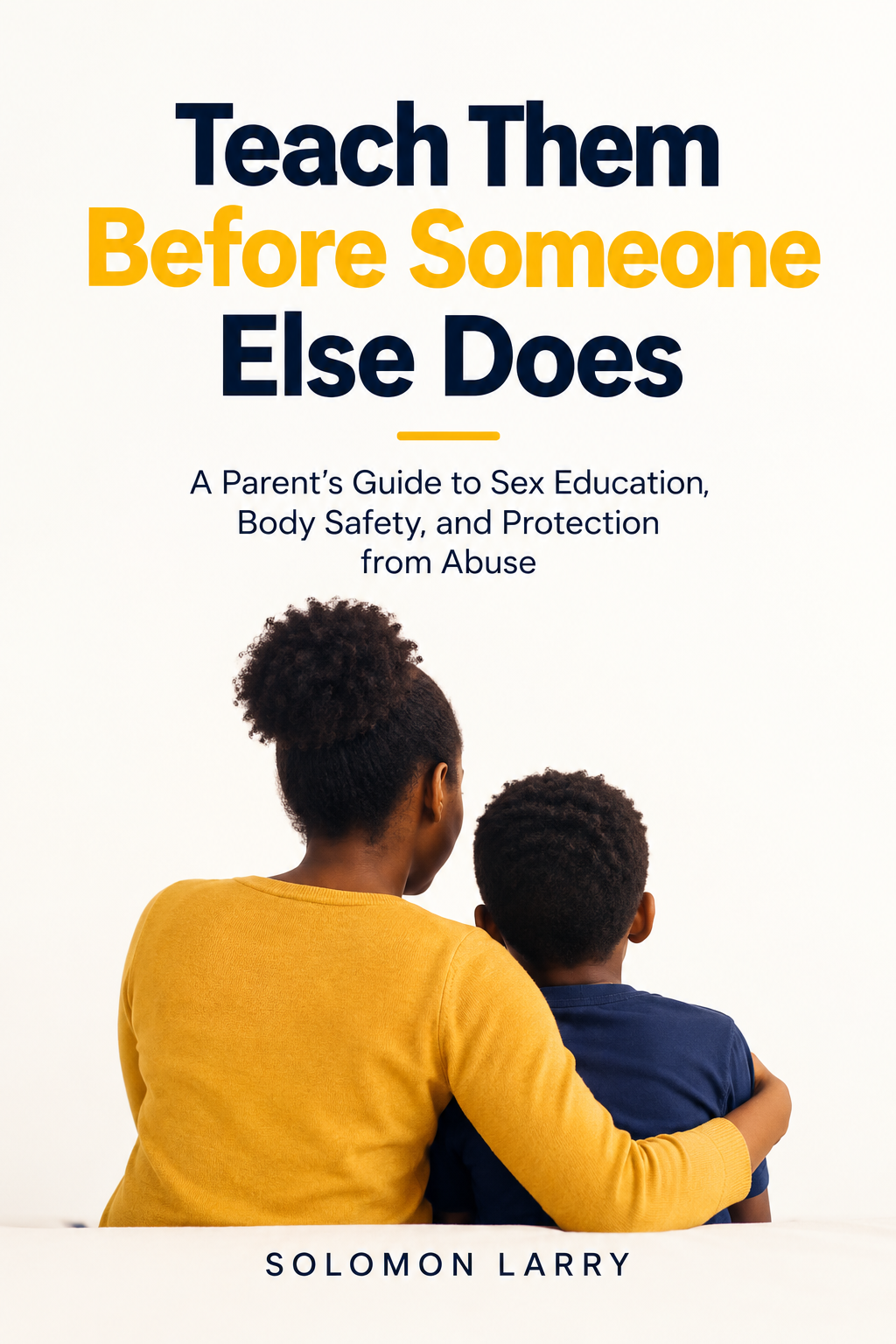
Teach Them Before Someone Else Does

TEACH THEM BEFORE SOMEONE ELSE DOES
A Parent’s Guide to Sex Education, Body Safety, Healthy Boundaries, and Protecting Children from Sexual Abuse
Children are growing up in a world where they can be exposed to information, conversations, images, and situations they may not understand. Unfortunately, when parents avoid talking to their children about their bodies, sexuality, boundaries, and safety, someone else may eventually do it—and not always with good intentions.
Teach Them Before Someone Else Does is a simple, practical, and honest guide for parents, guardians, and caregivers who want to prepare their children to recognize inappropriate behavior, speak up when something feels wrong, protect their personal boundaries, and seek help when necessary.
This book explains why age-appropriate sex education should begin at home and how parents can have these conversations without creating unnecessary fear, shame, or confusion.
Inside this book, you will learn how to:
- Talk to children about their bodies in age-appropriate ways
- Teach children the correct names for private body parts
- Help children understand good touch, bad touch, and uncomfortable situations
- Teach healthy boundaries and personal space
- Help children recognize grooming and manipulation
- Teach children that secrets involving their bodies should never be kept
- Respond when a child says someone has made them uncomfortable
- Create an environment where children feel safe reporting abuse
- Teach children how to say “No,” “Stop,” and “Tell a trusted adult”
- Protect children from risks both offline and online
- Avoid common parenting mistakes that can leave children vulnerable
- Build trust so your child knows they can come to you without fear of punishment or embarrassment
Through practical examples and relatable stories, this book helps parents understand that protecting children is not only about watching where they go or who they meet. It is also about giving them the knowledge and confidence to recognize danger and speak up.
You may not be able to control everyone your child encounters.
But you can make sure your child is not uninformed, afraid, or silent.
Teach them before someone else does.
Because the conversation you avoid today may be the knowledge they desperately need tomorrow.