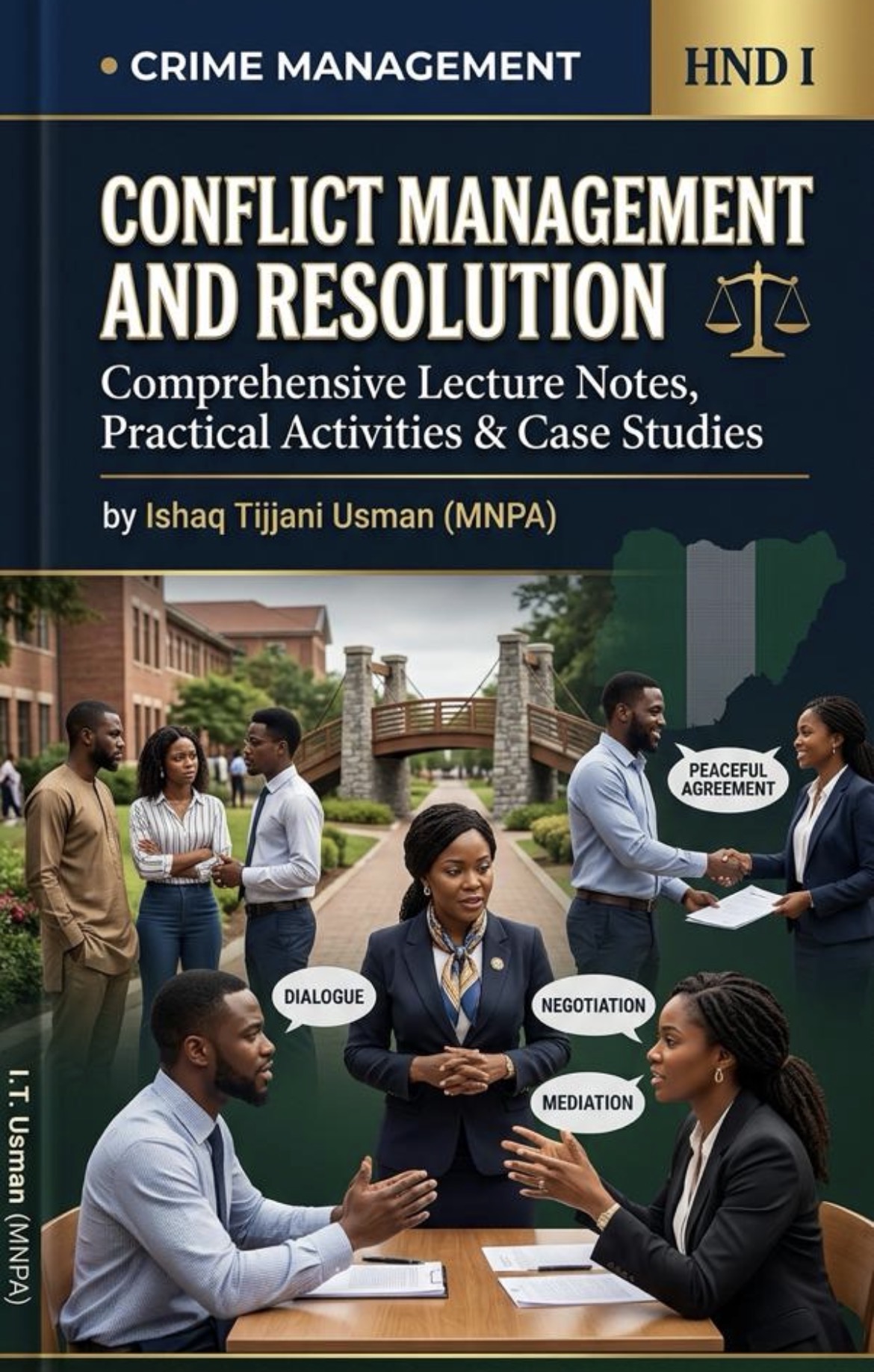
Conflict Management and Resolution ⚖️🇳🇬👮🏼👑👳♂️🤺🥷

DESCRIPTION
Conflict is a common feature of human interaction and may occur within families, communities, organisations and states. Conflict does not necessarily mean violence. It may involve differences in interests, goals, values, expectations or perceptions and can sometimes provide opportunities for communication, adjustment and constructive change when appropriately managed (Coleman et al., 2014; Deutsch, 1973).
Conflict becomes particularly problematic when disagreements are accompanied by destructive behaviour, breakdown of communication, hostility, coercion or violence. Consequently, conflict management seeks not merely to suppress disagreement but to understand the causes and dynamics of conflict and develop appropriate mechanisms for managing destructive consequences (Miall et al., 2011; Ramsbotham et al., 2016).
This course introduces students to the nature, causes, dynamics and consequences of conflict and provides knowledge of methods for preventing, managing and resolving conflicts. The course is consistent with the broader objectives of Crime Management education, including the development of students’ ability to understand and apply techniques for managing and resolving conflict (National Board for Technical Education [NBTE], 2020).
Particular attention is given to:
- interpersonal conflict;
- community conflict;
- ethnic and communal conflict;
- religious conflict;
- resource conflict;
- workplace conflict;
- political conflict;
- farmer–herder conflict;
- boundary disputes;
- conflict prevention;
- negotiation;
- mediation;
- arbitration;
- reconciliation;
- peacebuilding;
- early-warning systems; and
- the role of law-enforcement and community institutions.
COURSE OBJECTIVES
By the end of the course, you should be able to:
- Define conflict and explain its major characteristics.
- Distinguish conflict from violence.
- Identify major causes and sources of conflict.
- Explain different types and levels of conflict.
- Discuss major theories of conflict.
- Explain the stages and dynamics of conflict.
- Identify early-warning signs of escalating conflict.
- Explain conflict prevention and management.
- Describe negotiation, mediation and arbitration.
- Explain the role of reconciliation and peacebuilding.
- Apply conflict-resolution techniques to practical situations.
- Analyse Nigerian and Nasarawa conflict cases.
- Explain the role of law-enforcement agencies in conflict management.
- Develop basic conflict-resolution strategies.
- Demonstrate appropriate communication and negotiation skills.
These objectives emphasise both theoretical knowledge and practical skills because contemporary conflict management involves analysis, communication, negotiation, third-party intervention, prevention and longer-term peacebuilding (Coleman et al., 2014; Moore, 2014; Ramsbotham et al., 2016).