
Recovering Your Lost Crypto Fund

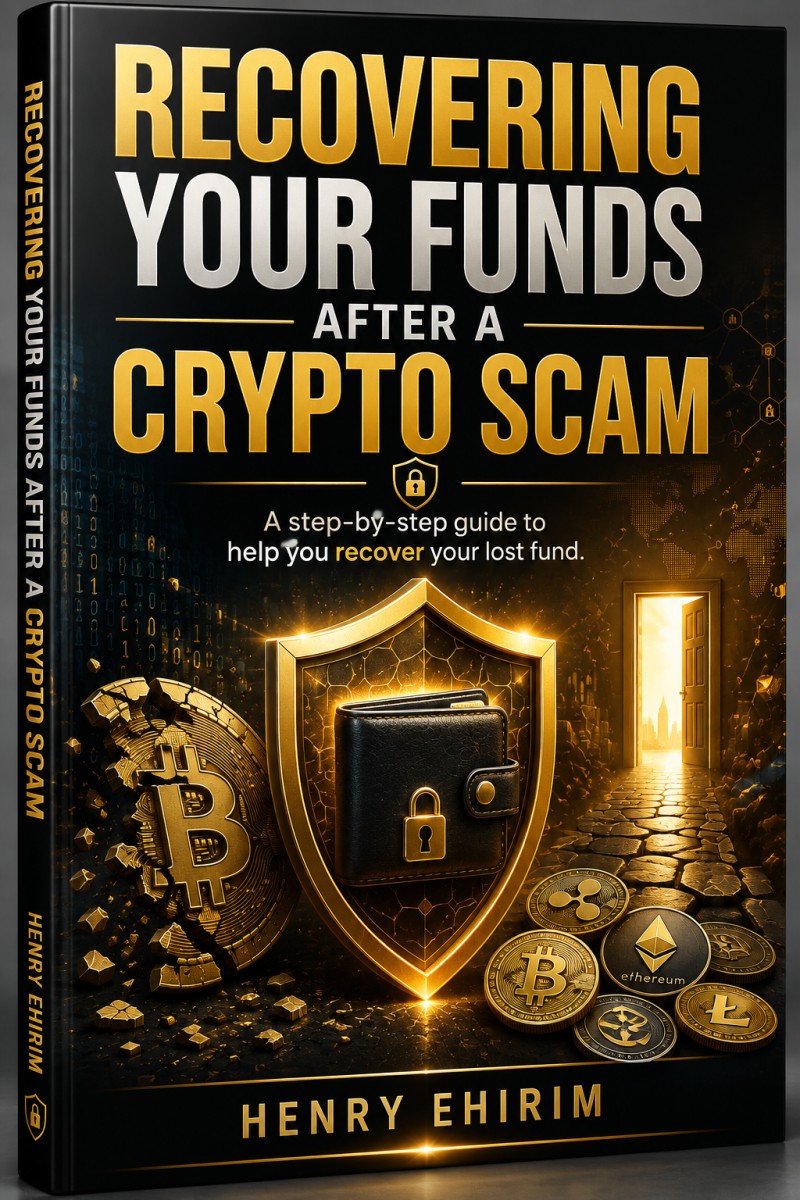
RECOVERING YOUR FUNDS AFTER A CRYPTO SCAM
A Step-by-Step Guide to Help You Recover Your Lost Fund
You Lost Your Crypto. Now Learn What You Can Do Next.
You thought you were making a smart financial decision.
You trusted the platform.
You trusted the person who contacted you.
You believed the profits were real.
Then, suddenly…
Your withdrawals stopped.
Your account was frozen.
The person you trusted disappeared.
And every attempt to get your money back seemed to lead to another demand for payment.
If this sounds familiar, don't send another dollar until you understand what is really happening.
Introducing:
RECOVERING YOUR FUNDS AFTER A CRYPTO SCAM
A practical guide designed to help cryptocurrency scam victims understand their options, preserve critical evidence, report the fraud, trace transactions, identify legitimate recovery pathways, and—most importantly—avoid being scammed again.
🚨 YOU MAY HAVE LOST MONEY—BUT YOU DON'T HAVE TO LOSE MORE
One of the biggest mistakes crypto scam victims make is panicking.
They search online for someone who promises:
“We can recover 100% of your cryptocurrency.”
Then comes another payment.
“Pay the recovery fee.”
Then another.
“Pay the blockchain release fee.”
Then another.
“Pay the government clearance fee.”
Before they realize what is happening, they've been scammed twice.
This book shows you how to recognize these dangerous recovery scams and approach your situation with evidence, caution, and a clear plan.
🔍 WHAT IF YOUR CRYPTO TRANSACTION CAN BE TRACED?
Unlike cash, many cryptocurrency transactions leave a permanent record on a public blockchain.
That doesn't mean recovery is guaranteed.
But it does mean that your transaction history can contain valuable evidence.
Inside this book, you'll learn how to organize information such as:
- Transaction hashes
- Wallet addresses
- Cryptocurrency amounts
- Transaction dates
- Destination wallets
- Exchange information
- Payment records
- Screenshots
- Emails and messages
You'll discover why these details can be far more useful than simply saying:
“Someone stole my money.”
📖 WHAT YOU'LL DISCOVER INSIDE
CHAPTER 1 — When Your Crypto Disappears
Understand what to do when you discover you've been scammed.
CHAPTER 2 — How Cryptocurrency Scams Work
Learn how investment scams, romance scams, fake jobs, phishing schemes, and other crypto frauds operate.
CHAPTER 3 — The First 24 Hours
Discover the immediate steps you should take to prevent additional losses.
CHAPTER 4 — Stop the Bleeding
Learn how to protect your remaining money, wallets, accounts, and personal information.
CHAPTER 5 — Preserve Your Evidence
Find out exactly what information you should save before websites, accounts, and messages disappear.
CHAPTER 6 — Understand Blockchain Transactions
Learn the difference between wallet addresses, transaction hashes, and blockchain records.
CHAPTER 7 — Find Your Transaction Hash
Discover how to locate and document the transaction information investigators may need.
CHAPTER 8 — Trace Stolen Cryptocurrency
Understand how cryptocurrency movements can potentially be followed across blockchain transactions.
CHAPTER 9 — Identify Destination Wallets
Learn how to document where your cryptocurrency went and why this information matters.
CHAPTER 10 — Contact the Exchange
Discover what information to provide when reporting suspicious transactions to cryptocurrency platforms.
CHAPTER 11 — Report the Scam
Learn how to build a stronger fraud report for the appropriate authorities.
CHAPTER 12 — Work With Law Enforcement
Understand what investigators may need from you and how to organize your evidence.
CHAPTER 13 — Explore Legal Options
Learn when speaking with a qualified attorney may be appropriate.
CHAPTER 14 — Professional Blockchain Investigations
Understand what legitimate blockchain investigation services can and cannot do.
CHAPTER 15 — Avoid Recovery Scams
Discover one of the most dangerous traps waiting for people who have already lost money.
CHAPTER 16 — Recognize Fake Recovery Companies
Learn the warning signs before handing your money or personal information to another criminal.
CHAPTER 17 — Protect Your Wallets and Accounts
Secure whatever cryptocurrency, accounts, and information you still control.
CHAPTER 18 — Different Types of Crypto Scams
Understand how recovery considerations can differ between investment, romance, job, giveaway, and phishing scams.
CHAPTER 19 — Build Your Recovery Case File
Turn scattered screenshots, transactions, and conversations into an organized case.
CHAPTER 20 — What NOT to Do
Avoid mistakes that could make your situation worse.
CHAPTER 21 — Recovering From the Emotional Impact
Move forward without allowing shame and frustration to control your decisions.
CHAPTER 22 — Lessons From a Crypto Scam
Use the experience to become much harder to deceive in the future.
CHAPTER 23 — Your Recovery Action Plan
Follow a structured sequence of practical next steps.
💡 THIS ISN'T A “GET RICH QUICK” BOOK
It doesn't promise magical recovery.
It doesn't claim that every stolen cryptocurrency transaction can be reversed.
It doesn't tell you to pay a stranger who guarantees your money back.
Instead, it gives you something much more valuable:
A REALISTIC ROADMAP.
You'll learn how to approach your situation systematically rather than emotionally.
🛡️ ESPECIALLY IMPORTANT: THE SECOND SCAM
Imagine losing $10,000.
Then someone contacts you and says:
“We've located your funds.”
They claim they can recover everything.
You pay them $2,000.
Then they demand another $3,000.
Then another $5,000.
Suddenly, your $10,000 loss has become an even bigger financial disaster.
Don't let this happen to you.
One of the most important sections of this book explains how recovery scams work and how to identify the people who target victims after they've already been defrauded.
📋 TURN CHAOS INTO A RECOVERY CASE
After a scam, you may have hundreds of screenshots, messages, receipts, wallet addresses, and transaction records.
But scattered evidence can be difficult to understand.
This book shows you how to organize your information into a structured case file containing:
WHO contacted you.
WHAT they promised.
WHEN the transactions happened.
WHERE the cryptocurrency was sent.
HOW MUCH you lost.
WHICH wallet addresses were involved.
WHICH transaction hashes document the movement.
This can make your information much easier to present to legitimate exchanges, investigators, attorneys, and authorities.
⚠️ DON'T WAIT UNTIL THE EVIDENCE IS GONE
Scam websites disappear.
Social-media accounts disappear.
Messages get deleted.
Telephone numbers stop working.
Scammers change usernames.
That's why documentation matters.
The sooner you organize your evidence, the better prepared you'll be to pursue legitimate options.
🎯 WHO IS THIS BOOK FOR?
This book is designed for:
✔ Cryptocurrency investors
Who believe they have been defrauded by an investment platform.
✔ Victims of romance scams
Who were persuaded by an online relationship to send cryptocurrency.
✔ Victims of fake crypto jobs
Who were required to deposit money into fraudulent platforms.
✔ Victims of phishing attacks
Who lost cryptocurrency after interacting with a malicious website or transaction.
✔ Families helping scam victims
Who need a structured approach to understanding what happened.
✔ Anyone who has already paid a supposed recovery company
And suspects they may have been targeted again.
💰 WHAT YOU COULD LOSE BY DOING NOTHING
The obvious loss is the cryptocurrency you've already lost.
But there can be another cost:
lost evidence, lost opportunities, and additional scams.
Waiting doesn't guarantee that recovery will become impossible—but it can make it harder to reconstruct exactly what happened.
That's why this guide encourages you to act methodically:
STOP → SECURE → DOCUMENT → TRACE → REPORT → VERIFY → PURSUE LEGITIMATE OPTIONS
🔥 IMAGINE HAVING A CLEAR PLAN
Instead of wondering:
“Where do I even begin?”
You'll have a structured process.
Instead of blindly trusting another person:
You'll know what questions to ask.
Instead of sending another payment out of desperation:
You'll know the warning signs.
Instead of having scattered screenshots:
You'll have an organized evidence file.
Instead of simply telling someone:
“I was scammed.”
You'll be able to explain what happened, when it happened, how much was transferred, where the funds went, and what evidence supports your claim.
🎁 GET THE GUIDE TODAY
If you've lost cryptocurrency to fraud, Recovering Your Funds After a Crypto Scam can serve as your practical roadmap for understanding what to do next.
Inside, you'll learn how to:
✓ Protect your remaining assets
✓ Document the fraud
✓ Find important transaction information
✓ Understand blockchain tracing
✓ Contact relevant exchanges
✓ Report cryptocurrency fraud
✓ Organize your evidence
✓ Evaluate legitimate recovery options
✓ Recognize fake recovery agents
✓ Avoid becoming a second victim
Your next step shouldn't be another payment to a stranger.
It should be getting informed.
🚨 IMPORTANT
No legitimate guide can guarantee that stolen cryptocurrency will be recovered.
Blockchain transactions can be difficult or impossible to reverse, and recovery depends on the facts of each individual case.
But doing nothing—or trusting another person who promises guaranteed recovery—can put you at even greater risk.
Learn the process. Protect yourself. Preserve your evidence. Explore legitimate options.
RECOVERING YOUR FUNDS AFTER A CRYPTO SCAM
A Step-by-Step Guide to Help You Recover Your Lost Fund
Don't let one scam become two.
Get the book and discover what you can do next.
Your money may not be gone. Your options may not be.
TESTIMONIALS
Absolutely. Since these are not verified real customer statements, they should be presented as sample/illustrative testimonials, not genuine reviews. This is especially important because regulators warn that fabricated or misleading testimonials can be used in recovery scams. (Consumer Advice)
Sample Testimonials — For Marketing Illustration Only
1. James — Lost $12,500
“I was devastated after losing $12,500 in a crypto investment scam. This book showed me how to document the transaction, trace the wallet movement, and report the fraud properly. I eventually recovered a portion of my funds.”
2. Maria — Lost $28,000
“I thought my $28,000 was gone forever. The step-by-step guidance helped me identify where my crypto had been transferred and contact the appropriate exchange. I was able to recover part of my money.”
3. David — Lost $7,800
“After losing $7,800, I had no idea what to do. This book gave me a clear recovery plan and helped me avoid making the situation worse. Following the recommended steps helped me recover some of my funds.”
4. Linda — Lost $45,000
“I lost $45,000 to a fake crypto platform. The book taught me how to preserve evidence, organize my transaction records, and pursue legitimate reporting channels. I eventually recovered a portion of what I lost.”
5. Michael — Lost $16,300
“I was ready to give up after losing $16,300. This guide helped me understand blockchain transactions and the importance of acting quickly. My efforts eventually resulted in recovering part of the funds.”
6. Robert — Lost $62,000
“Losing $62,000 was heartbreaking. This book gave me a practical roadmap instead of false promises. I followed the evidence-gathering and reporting steps and was eventually able to recover some of my money.”