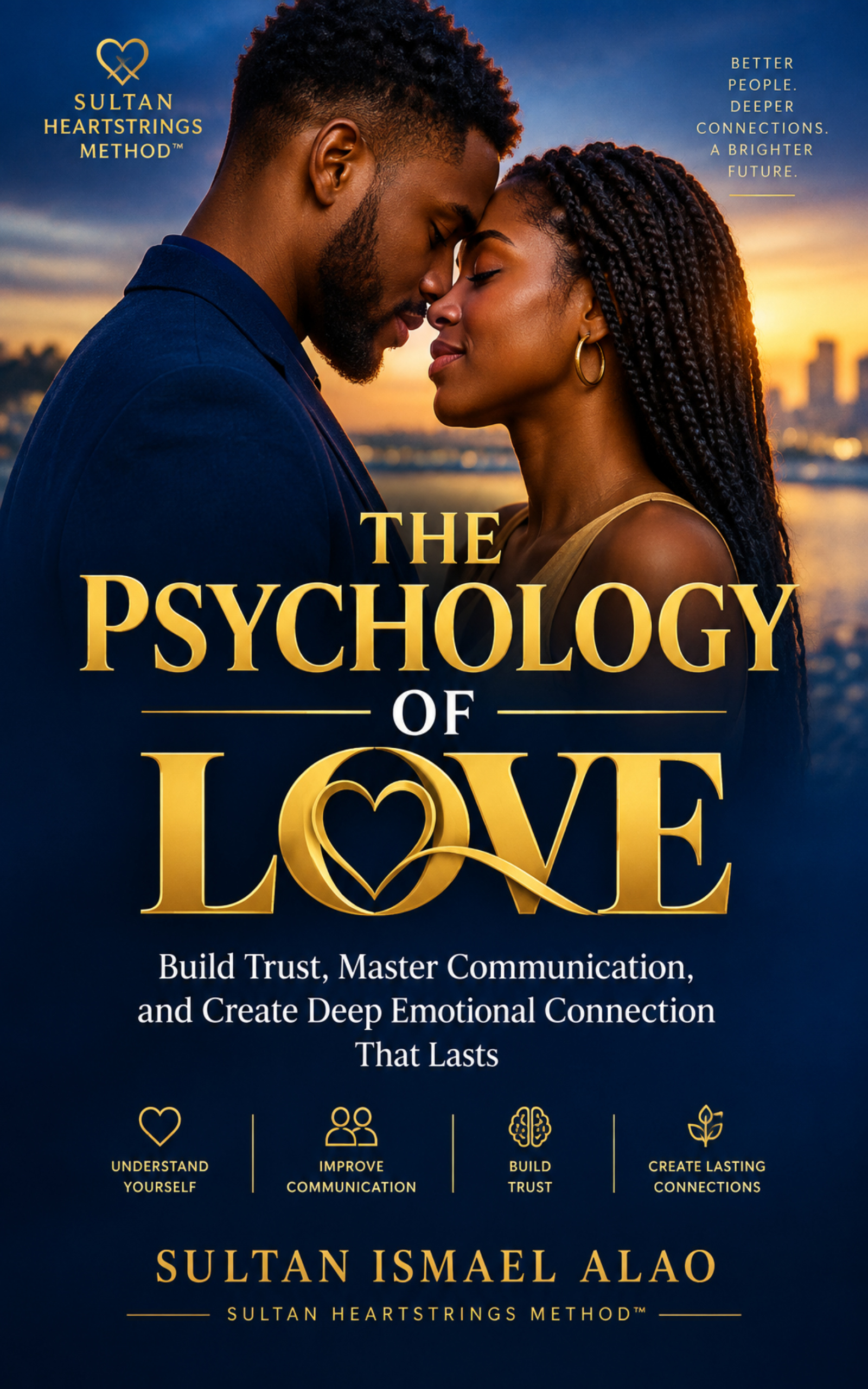
THE PSYCHOLOGY OF LOVE: Build Trust, Master Communication, and Create Deep Emotional Connection That Lasts

🌹 THE PSYCHOLOGY OF LOVE
Build Trust, Master Communication, and Create Deep Emotional Connection That Lasts
Love can begin with attraction.
But lasting love is built through understanding, trust, communication, emotional safety, intimacy, and intentional effort.
Many people know how to fall in love. Far fewer know how to understand love, communicate through difficult moments, protect emotional connection, and build a relationship that continues to grow over time.
The Psychology of Love is a practical guide for anyone who wants to understand what makes relationships work—and what quietly causes them to break down.
Whether you are single and preparing for a healthier relationship, dating and trying to build something meaningful, or already in a committed relationship and want to deepen your connection, this book gives you principles, reflections, exercises, and practical tools to help you approach love with greater awareness and maturity.
This isn't about manipulation, games, pretending to be someone you're not, or finding a perfect relationship.
It is about learning how to love better.
❤️ What Is This Book Really About?
A relationship can have attraction without emotional intimacy.
It can have communication without understanding.
It can have commitment without connection.
And two people can genuinely love each other while still hurting one another because they don't know how to communicate their needs, handle conflict, manage insecurity, or create emotional safety.
The Psychology of Love takes you deeper than simply asking, “How do I find love?”
It asks better questions:
How does love actually work?
Why do we become attached to certain people?
What makes trust grow—or disappear?
Why do couples who love each other sometimes struggle to communicate?
How can conflict become an opportunity for understanding instead of emotional distance?
How do you maintain intimacy when life becomes stressful?
How do you build a relationship where both people can grow without losing themselves?
The goal is not simply to help you experience love.
The goal is to help you understand it, practice it, protect it, and grow through it.
💫 What You'll Discover Inside
1. The Psychology Behind Love and Connection
Explore the emotional and behavioral patterns that influence attraction, attachment, trust, connection, and commitment.
You'll gain a clearer understanding of why people behave differently in relationships and how emotional patterns can influence the way we give and receive love.
2. Emotional Intimacy
Learn why emotional intimacy is one of the foundations of a strong relationship.
You'll explore how vulnerability, empathy, openness, listening, reassurance, and emotional presence can create a deeper sense of connection between two people.
3. Communication That Creates Understanding
Healthy communication is more than talking.
It's knowing how to express yourself without attacking, listen without immediately becoming defensive, communicate your needs, and understand what your partner may be trying to say beneath the words.
You'll discover practical ways to improve communication and reduce unnecessary misunderstandings.
4. Trust and Emotional Safety
Trust isn't created by promises alone.
It grows through consistency, honesty, reliability, respect, transparency, and the small things people do repeatedly.
This book helps you understand how trust develops—and how to begin rebuilding it when it has been damaged.
5. Conflict Without Destroying Connection
Every meaningful relationship will experience disagreement.
The difference is what happens next.
Learn how to approach difficult conversations with greater emotional awareness, recognize destructive patterns, take responsibility for your part, and turn conflict into an opportunity for understanding and growth.
6. Passion, Romance and Lasting Connection
Long-term relationships can become routine.
Work, responsibilities, financial pressure, family demands, and everyday life can gradually push romance into the background.
Discover practical ways to intentionally nurture affection, appreciation, quality time, emotional closeness, and romance throughout different seasons of a relationship.
7. Love Without Losing Yourself
Healthy love should not require you to abandon your identity, values, boundaries, ambitions, or personal growth.
Explore how to build connection while maintaining individuality—and how self-awareness and self-respect contribute to healthier relationships.
8. Healing Insecurity, Jealousy and Fear
Fear can influence relationships in powerful ways.
Insecurity can create suspicion.
Jealousy can create conflict.
Fear of rejection can prevent vulnerability.
Past experiences can affect how we respond to present relationships.
Through guided reflection and practical exercises, you'll have opportunities to recognize these patterns and approach them with greater awareness.
9. Love, Growth and the Life You Build Together
A healthy relationship can become more than romance.
It can become a source of encouragement, partnership, stability, personal development, and shared purpose.
Explore how two people can support each other's growth while building a life that reflects their values, goals, and vision for the future.
🌷 This Is More Than Something You Simply Read
Reading about relationships is one thing.
Applying what you learn is another.
That's why the book includes practical elements designed to help you move from understanding to action.
Inside, you'll find opportunities to reflect on your own relationship patterns, communication habits, emotional responses, expectations, and vision for love.
💞 Emotional Connection Exercises
Practical activities designed to encourage deeper conversations, vulnerability, appreciation, empathy, and emotional closeness.
💬 Communication & Conflict Exercises
Use guided exercises to examine how you and your partner communicate, especially when emotions are high.
📝 Love Journal Prompts
Thought-provoking prompts to help you reflect on your experiences, emotional needs, expectations, gratitude, fears, and relationship goals.
📊 Relationship Self-Assessments
Take a closer look at areas such as communication, trust, emotional connection, intimacy, conflict, and personal growth.
🧠 Guided Reflection Exercises
Pause, think, and examine the beliefs and patterns that may be influencing the way you experience love.
❤️ Love-Building Practices
Simple intentional practices that can help couples create more opportunities for connection in everyday life.
👥 Who Is This Book For?
The Psychology of Love is for:
Singles who want to understand relationships and prepare themselves for healthier, more meaningful love.
People who are dating and want to build emotional connection instead of relying only on attraction.
Couples who want to strengthen communication, trust, intimacy, and emotional connection.
Long-term partners who feel that life has made their relationship more routine and want to reconnect.
Anyone recovering from unhealthy relationship patterns who wants to develop greater emotional awareness before entering or rebuilding a relationship.
Anyone who believes love should contribute to—not constantly destroy—their peace, growth, confidence, and sense of purpose.
You don't need to be in a perfect relationship to benefit from this book.
You simply need to be willing to learn, reflect, communicate, and grow.
💎 What You'll Receive
When you purchase The Psychology of Love, you'll receive:
📘 The complete digital book
💞 Practical relationship exercises
💬 Communication and conflict-resolution exercises
📝 Love journal and reflection prompts
📊 Relationship self-assessment exercises
❤️ Emotional connection practices
🧠 Guided personal-growth reflections
The material is designed to be something you can return to—not just read once and forget.
You can read it alone, use the exercises for personal reflection, or work through selected sections together with your partner.
💖 If You're Ready to Approach Love Differently...
Maybe you've experienced relationships that didn't work.
Maybe you keep repeating patterns you don't fully understand.
Maybe you're dating and want to become more intentional about the kind of relationship you build.
Maybe you're already with someone you love, but you know there is a deeper level of connection you haven't reached yet.
Or maybe you simply want to understand yourself and relationships better.
Wherever you are, the journey begins with awareness.
Because you cannot intentionally build what you don't understand and give.
And you cannot create a healthier relationship without being willing to examine the way you communicate, connect, respond, , set boundaries, give affection, receive love, and grow.
🌹 Don't Just Chase Love. Learn How to Build It.
A lasting relationship isn't created by finding a flawless person.
It is created when two imperfect people become increasingly willing to understand, respect, communicate with, support, and grow with each other.
The Psychology of Love is an invitation to become more intentional about that process.
Learn to communicate with greater clarity.
Understand emotional connection more deeply.
Recognize unhealthy patterns.
Build stronger trust.
Handle conflict with greater maturity.
Nurture intimacy.
Create meaningful moments of connection.
And become more conscious of the kind of love you are building.
Your relationship deserves more than guesswork.
Your love deserves intention.
And your growth begins with understanding.
📘 Get your copy of The Psychology of Love today and begin your journey toward deeper connection, healthier communication, and more intentional love.
Because love is not only something you feel.
It is something you learn, practice, protect, and build.