























A Smart Hustle Initiative by Selar · 2026

Understanding
Fraud Culture
in Nigeria

The systems and infrastructure that drive cybercrime in Nigeria.

This report examines the history, networks and social and economic conditions sustaining cybercrime in Nigeria and what it will take to make legitimate success a more attainable path.

Retro computer illustration

SMART_HUSTLE.EXE

▍

SCROLL

The scale of the problem

Fraud is no longer happening at the margins.

It has become part of everyday life for many Nigerians. From phishing links and fake investment schemes to romance scams and account takeovers, cybercrime affects individuals, businesses and institutions.

The numbers tell a bigger story.

The problem isn't only financial.

Behind these figures are people losing savings, businesses dealing with fraudulent transactions, and young people being drawn into an economy built on deception.

The problem starts earlier than we think

Children as young as 12 are being drawn into fraud networks.

For many young Nigerians, the introduction to fraud happens earlier than we might think. It comes through someone they already know: a friend, an older sibling, a neighbour or a relative.

first

12 years old

Children can be introduced to informal fraud networks and training communities.

then

Trusted relationships

Friends, older siblings and neighbourhood contacts can become entry points.

later

By 16 years old

Some young people have already begun to see fraud as part of their identity.

The report found that children as young as 12 are being recruited into informal fraud training communities. By 16, some already identify with the fraud economy.

What young Nigerians know about fraud

Fraud is already part of the conversation in many communities.

Fraud isn’t a distant issue for many young Nigerians. It is something they hear about at home, see online, encounter in their neighbourhoods and discuss with their peers.

In a survey of secondary school students across Lagos State, we found that awareness of online fraud was already widespread.

97%

Know that significant fraud happens online

Survey of secondary school students in Lagos State. The 16% figure represents awareness/recognition, not participation in fraud.

Fraud is also one of the money-making options students know about.

When asked which online money-making methods they were familiar with, 16% of students named Yahoo Yahoo, alongside legitimate options such as selling digital products, offering tech services and social media influencing.

✓selling digital products
✓offering tech services
✓social media influencing
✗Yahoo Yahoo16%

Inside the fraud economy

Halftone portrait used for Rasaq's story

Rasaq

He was 15 when he got into fraud.

1

Rasaq was introduced to computers by an older family member. What began as an early interest in technology became something else when he was drawn into online fraud.

2

His first scam was a romance scam. He later joined a Hustle Kingdom, an informal network where experienced fraudsters train younger recruits. There, he saw how money, belonging and status were tied to participation.

3

The money eventually stopped. Depression and drug use followed, and with time, Rasaq began to recognise that the skills he had used to scam people could have taken him in a different direction.


“

I wish I had learned tech earlier. It's still computer-related. I just pointed the thing in the wrong direction.”

— Rasaq

Rasaq's story is one of several case studies in the report, offering a look at fraud through the experiences of people who have lived inside or around the system.

Fraud has its own apprenticeship system called Hustle Kingdom

Hustle Kingdoms are informal training academies where experienced fraudsters teach younger recruits how to operate, often providing food, housing and tools in exchange for a cut of their earnings.

Some of these networks have been operating for over a decade, with children as young as 12 being recruited.

The report goes inside these networks to examine how they recruit, train and keep young people in the fraud economy.

The scams have evolved

Different methods. The same human cost.

Online fraud has moved far beyond the emails and advance-fee schemes that first made Nigeria's cybercrime problem internationally notorious.

Today’s schemes are more specialised, more personal and increasingly difficult for victims to identify. From romance scams and sextortion to business email compromise and fake investment platforms, fraud takes many forms.

Also covered in the report

Mail illustration

Business email compromise

Investment chart illustration

Fake investment platforms

Chain link illustration

Phishing links

Account profile illustration

Account takeovers

Payment illustration

Advance-fee schemes

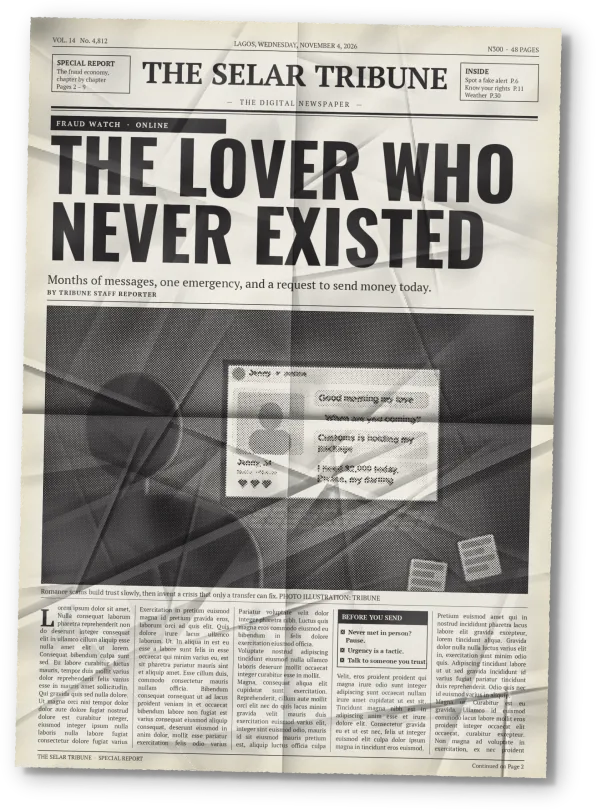
Newspaper front page headlined The lover who never existed

Romance scams

Fraudsters create fake online identities, build emotional relationships with victims and use that trust to extract money.

$1bn+

Money lost to romance scams

Americans reported losses in 2023; more than 64,000 people reported losses.

Study of 50 convicted Nigerian romance fraud offenders.

Offenders under 2681.7%
Offenders enrolled in university74%
Victims in the United States56%
Facebook as primary targeting platform46%
Presented as white American menNearly 50%
Posed as military personnel12%
Private photo with padlock illustration

Sextortion

Sextortion involves threatening to share intimate images or videos unless a victim sends money or more explicit content. Financially motivated sextortion has become a serious child protection concern, with boys aged 14–17 particularly affected.

The rise in reported financial sextortion cases involving minors:

1392021139 NCMEC reports
10,731202210,731 NCMEC reports
26,718202326,718 NCMEC reports
36,000+202436,000+ NCMEC reports
50,000+202550,000+ NCMEC reports
FBI / HSI investigation periodOctober 2021–March 2023
More than 13,000reports involving minors
Approximately 12,600Victims
At least 20Confirmed suicides

The harm goes far beyond money. Victims can experience shame, fear, isolation and devastating psychological consequences.

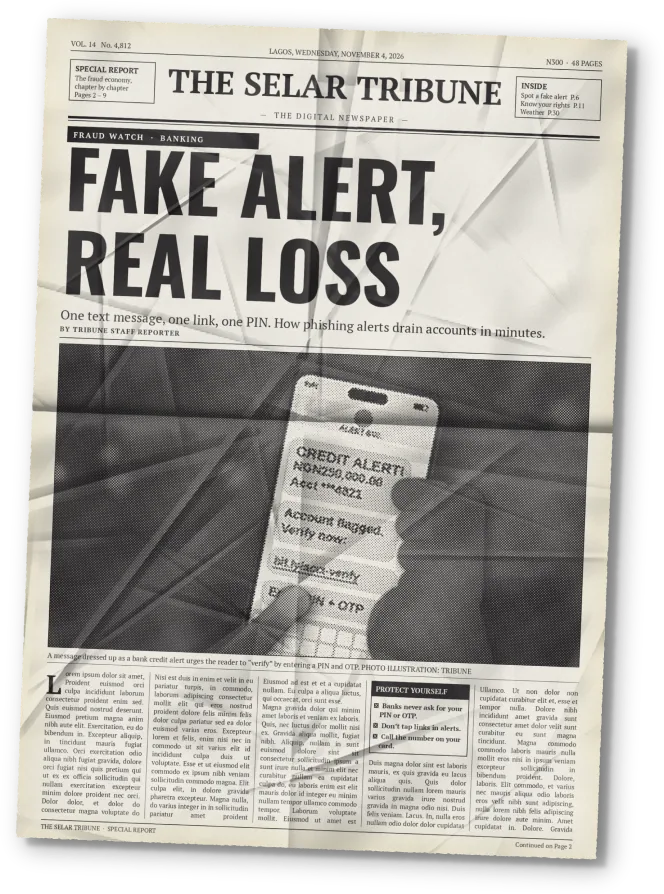
Newspaper front page headlined Fake alert, real loss

Fraud is coming closer to home

Nigerians are increasingly becoming targets, too.

For years, much of the conversation around Nigerian cybercrime focused on fraudsters targeting people overseas. But as digital payments and online services become a bigger part of everyday life, domestic fraud is growing.

Nigerians are now dealing with scams that target bank accounts, mobile numbers, digital identities and local businesses.

Domestic fraud losses

₦52.26bn

Losses reported by Nigerian financial institutions in 2024; 195.8% increase from 2023.

Weekly attempted cyber intrusions per organisation in Nigeria

Nigeria4,200
African average3,153

Compared with the African average of 3,153.

Identity fraud rate

5.91%

Nigeria’s identity fraud rate in 2024, as cited in the report.

Peak fraud attempts in digital bank verifications

35%

Peak figure for biometric and document verifications, as cited in the report.

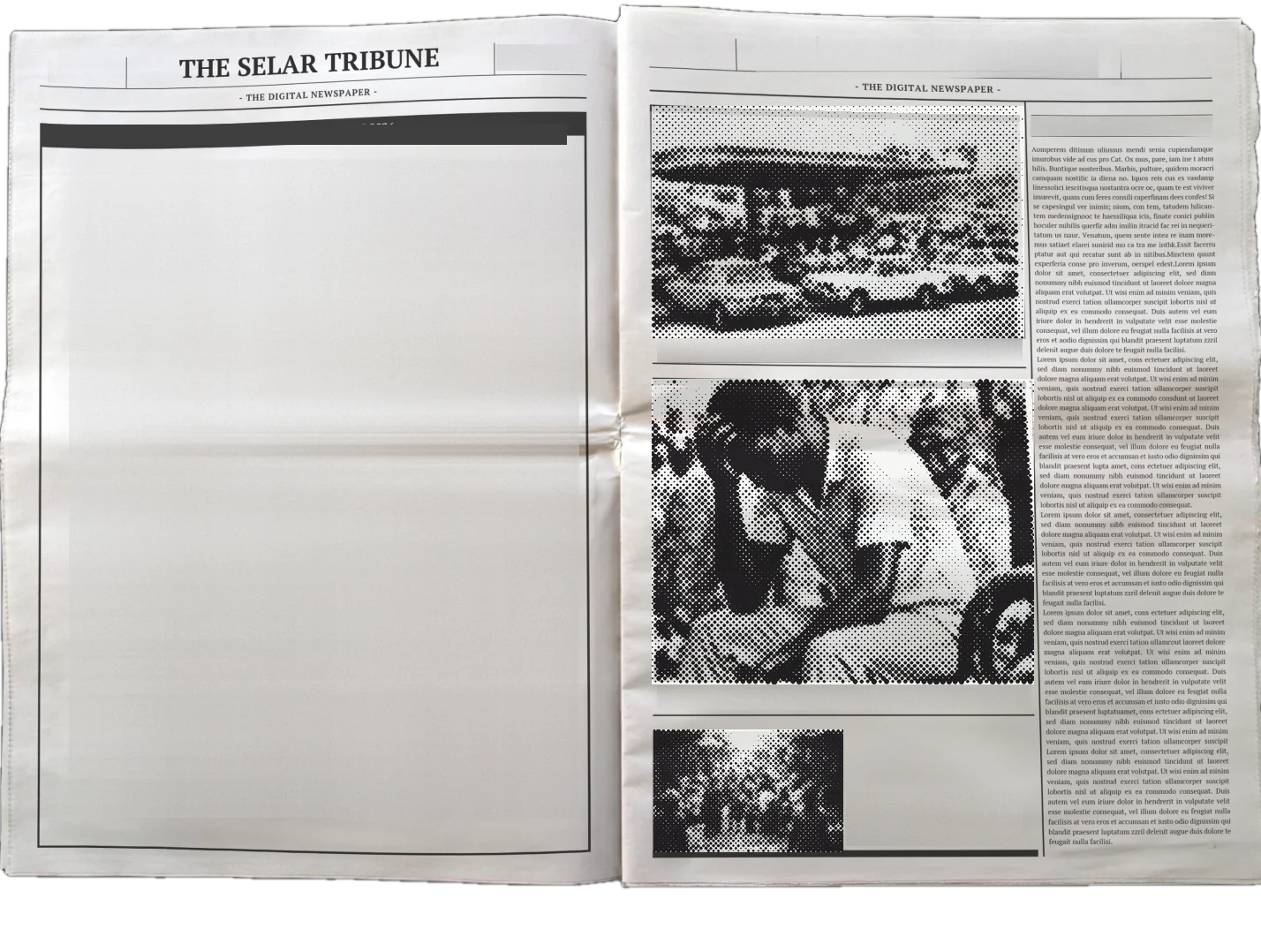
Newspaper spread reporting the MMM collapse

MMM collapse estimate

THE SELAR TRIBUNE

A fraud economy that also targets Nigerians

Estimate3 millionNigerians affected
Estimate₦18 billionEstimated losses

The report also highlights the collapse of MMM in 2016, which left an estimated three million Nigerians with losses approaching ₦18 billion.

2016

Estimates as cited in the report.

Why warnings alone aren’t enough

Young people need more than reasons not to commit fraud.

They need reasons to choose something else.

The report argues that cybercrime cannot be addressed through arrests and warnings alone. When legitimate opportunities feel out of reach, the promise of quick money can be difficult to ignore.

Young people need access to skills, guidance, financial support and visible examples of legitimate success.

What needs to change?

We cannot arrest our way out of a belief system.

Nigeria's fraud problem is bigger than individual decisions. It is tied to the opportunities young people can access, the people they look up to, the communities they grow up in and the systems they believe will reward their efforts.

Changing that requires more than enforcement.

It requires a different set of possibilities.

Make legitimate careers visible.

Give young people access to practical skills, career guidance, mentorship and examples of people earning honestly.

Strengthen families and communities.

Parents, teachers and community leaders play a role in shaping what young people consider acceptable and achievable.

Create real economic opportunities.

Talent needs somewhere to go. Young people need access to the tools, support and opportunities to turn their abilities into legitimate income.

Build safer digital spaces.

Platforms, financial institutions, government and communities must work together to make it harder for fraud to thrive.

Swipe to see all four →

Download the report

Read the report.
Start the conversation.

Understanding fraud culture is the first step towards changing it.

Read the research, the stories, the data and the ideas behind the Smart Hustle Initiative. Share it with a parent, teacher, policymaker, young person or anyone interested in building a better future for Nigeria.

Selar