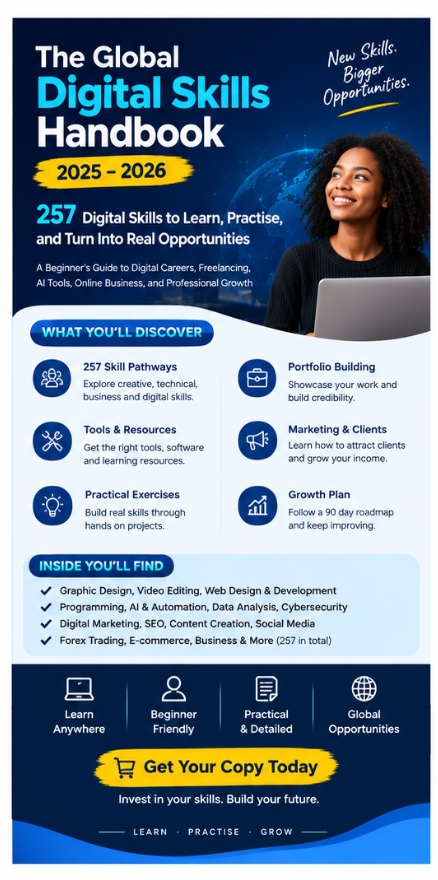
THE GLOBAL DIGITAL SKILLS HANDBOOK

THE GLOBAL DIGITAL SKILLS HANDBOOK
257 Digital Skills to Learn, Practise, and Turn Into Real Opportunities
Are you interested in the digital world but unsure which skill to learn? Have you considered graphic design, video editing, web development, programming, digital marketing, artificial intelligence, forex trading, or freelancing, but struggled to decide where to begin?
The Global Digital Skills Handbook is a practical educational guide designed to help you explore the digital economy, understand different skill pathways, and make more informed decisions about your learning and professional development.
Rather than focusing on just one digital skill, this handbook introduces 257 digital skill pathways across creative media, design, web and software development, data and artificial intelligence, marketing, business operations, and other areas of digital work.
Whether you are a complete beginner, student, aspiring freelancer, career changer, content creator, or someone looking to expand your professional abilities, this guide provides a structured starting point for discovering what you can learn and how to begin practising it.
WHAT YOU WILL DISCOVER
1. Explore 257 Digital Skill Pathways
Discover a wide range of skills, including graphic design, video editing, web design, programming, mobile app development, cybersecurity, data analysis, AI automation, social media management, SEO, email marketing, content creation, and many more.
2. Understand How Different Skills Work
Each skill follows a practical learning framework that explains what the skill involves, how the work is performed, common deliverables, and the foundations you need to understand before progressing.
3. Discover Tools and Equipment
Explore tools and resources associated with different digital disciplines. Learn how to evaluate software, equipment requirements, free learning resources, pricing, licensing, and accessibility before committing your time or money.
4. Practise Through Beginner Projects
Move beyond simply reading about a skill. Each pathway includes a practical exercise designed to help you apply what you learn, identify mistakes, and develop your abilities through experience.
5. Build a Credible Portfolio
Learn how to present your work, document your process, demonstrate your abilities, and create portfolio samples that potential clients or employers can evaluate. You will also learn why honesty and genuine evidence matter when presenting your experience.
6. Understand Marketing and Client Acquisition
Discover ways to present your services, identify potential customers, communicate your value, explore outreach opportunities, and begin building professional relationships. The handbook also explains why learning a skill is only one part of developing a sustainable service business.
7. Recognise Challenges and Professional Risks
Understand common learning obstacles, quality standards, professional boundaries, ethical considerations, and potential risks. Special attention is given to responsible AI use, privacy, copyright, cybersecurity authorisation, misleading income claims, and the risks associated with speculative trading.
8. Learn How to Measure Progress
Explore ways to evaluate your work, identify weaknesses, use feedback constructively, and improve your results instead of relying solely on tutorials or the number of tools you know.
BONUS LEARNING RESOURCES AND ACTION PLANS
The handbook goes beyond the skill directory by including practical resources to help you move from exploration to action.
Inside, you will find:
• A framework for comparing skills and choosing a suitable starting point.
• A skill selection worksheet to help you evaluate your interests, resources, learning requirements, and potential opportunities.
• Guidance on combining complementary skills to develop more useful service offerings
• Practical advice on portfolio development, service packaging, professional communication, and ethical marketing.
• A structured 90 day learning roadmap covering skill exploration, foundational learning, portfolio development, market testing, and continuous improvement.
• Research references and learning resources to support further study.
WHO IS THIS HANDBOOK FOR?
This handbook is suitable for:
• Beginners who do not yet know which digital skill to learn.
• Students looking to develop practical and professionally relevant abilities.
• Aspiring freelancers who want to explore possible services to offer.
• Career changers researching alternative professional pathways.
• Content creators and online entrepreneurs looking to expand their capabilities.
• Professionals interested in understanding emerging AI related skills and established digital disciplines.
• Anyone who wants a structured way to explore digital learning opportunities before committing to a particular path.
WHY THIS GUIDE IS DIFFERENT
Many learning resources focus on teaching one tool or skill. This handbook takes a broader approach by helping you compare different pathways and understand what learning and applying each skill may involve.
It encourages practical work, independent learning, honest portfolio development, responsible use of technology, and evidence based decision making.
It also draws on 2025 and 2026 research to provide context about changing workplace expectations and freelance marketplace activity, while recognising that opportunities vary by location, experience, industry, and customer demand.
YOUR NEXT STEP STARTS WITH A DECISION
You do not need to learn all 257 skills. You need to discover which ones fit your interests, available resources, learning goals, and the problems you want to solve.
Use this handbook to explore your options, shortlist promising pathways, practise deliberately, build evidence of your abilities, and take informed steps towards your professional goals.
The digital world offers many paths. This handbook helps you explore them and choose where to begin.
Important note: This is an educational resource, not a guarantee of employment, clients, income, search rankings, or business success. Readers should verify current tools, platform requirements, licensing rules, market conditions, and any professional qualifications required for their chosen field.