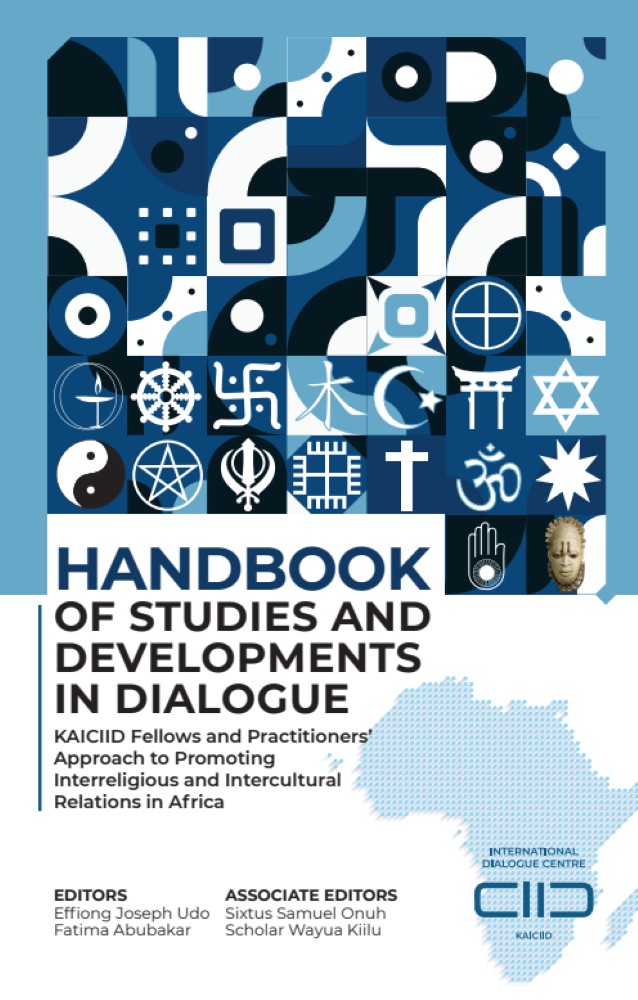
HANDBOOK OF STUDIES AND DEVELOPMENTS IN DIALOGUE KAICIID: Fellows and Practitioners' Approach to Promoting Interreligious and Intercultural Relations in Africa
The Handbook of Studies and Developments in Dialogue: KAICIID Fellows and Practitioners' Approach to Promoting Interreligious and Intercultural Relations in Africa is a definitive, multidisciplinary volume that bridges the gap between deep academic theory and field-tested, community-driven practice. Bringing together insights from leading scholars, religious practitioners, and peacebuilders, this handbook offers an unparalleled exploration of how dialogue can heal divisions and drive structural change in contemporary Africa.
Inside this Volume, You Will Explore:
- Indigenous Frameworks for Peace: Dive deep into traditional African philosophies, exploring how the principles of Ubuntu, the West African palaver system, and the Lekgotla system serve as foundational blueprints for modern negotiation, identity, and conflict resolution.
- Institutional & Educational Innovations: Examine the role of academic curricula, campus interfaith peacebuilding models (such as the ReligionNext model), and the strategic use of religious sites to foster experiential learning and dismantle deep-seated misconceptions.
- The Digital Frontier: Analyze modern pathways for engagement, including the deployment of Artificial Intelligence (AI) for predictive conflict resolution, the dynamics of social media engagement during crucial political cycles, and tactical approaches to countering online religious intolerance.
- Applied Case Studies: Review empirical, real-world applications of dialogue, ranging from women-led mediation frameworks in Akwa Ibom and interfaith responses to gender-based violence in Kenya, to data-driven solutions for climate-induced migration in the Horn of Africa and the cooperative power of Islamic finance.
About the Editors and Contributors
This monumental volume is produced under the expert editorial leadership of Effiong Joseph Udo and Fatima Abubakar, with valuable support from associate editors Sixtus Samuel Onuh and Scholar Wayua Kiilu. Together, they have curated a diverse and powerful collection of insights from a distinguished, international cohort of African scholars and peace practitioners.
The critical research and foundational chapters within this book are contributed by a dedicated group of experts, including Aishatu Abubakar Kumo, Aishatu Usman Muhammad, Ali Samaila, Aliyu Alhaji Rabiu, Aminu Dau, and Anwaar Kaitaia. The volume further benefits from the distinct academic and field perspectives of Ayo-Obiremi Ifekristi T’olulola, Basil Osayin Daudu, Bature Darma Dikko, Boniface Pius Nkum, Cosmas Ebo Sarbah, and Dorcas Aniefiok James.
Rounding out this exceptional collaborative effort are vital contributions from Edward Obukokwo Nnanna, Emmanual Londi, Fatima Babayo, Hassan Saleh, Josephine Bweyale, Julian Chukwuemeka Ibe, Nduka Udeagha, Silas Oghenemaro Emovwodo, and Terwase Akuya. Each author brings unique regional, institutional, and grassroots authority to the text, making it a truly comprehensive resource for continental transformation.
Why This Book is Essential
Whether you are a policymaker, a student of African studies, a religious leader, or an international development practitioner, this handbook provides the critical tools, ethical frameworks, and localized insights necessary to navigate complex intercultural dynamics. It is more than an academic text—it is an actionable guide to building a cohesive, self-determined, and peaceful Africa