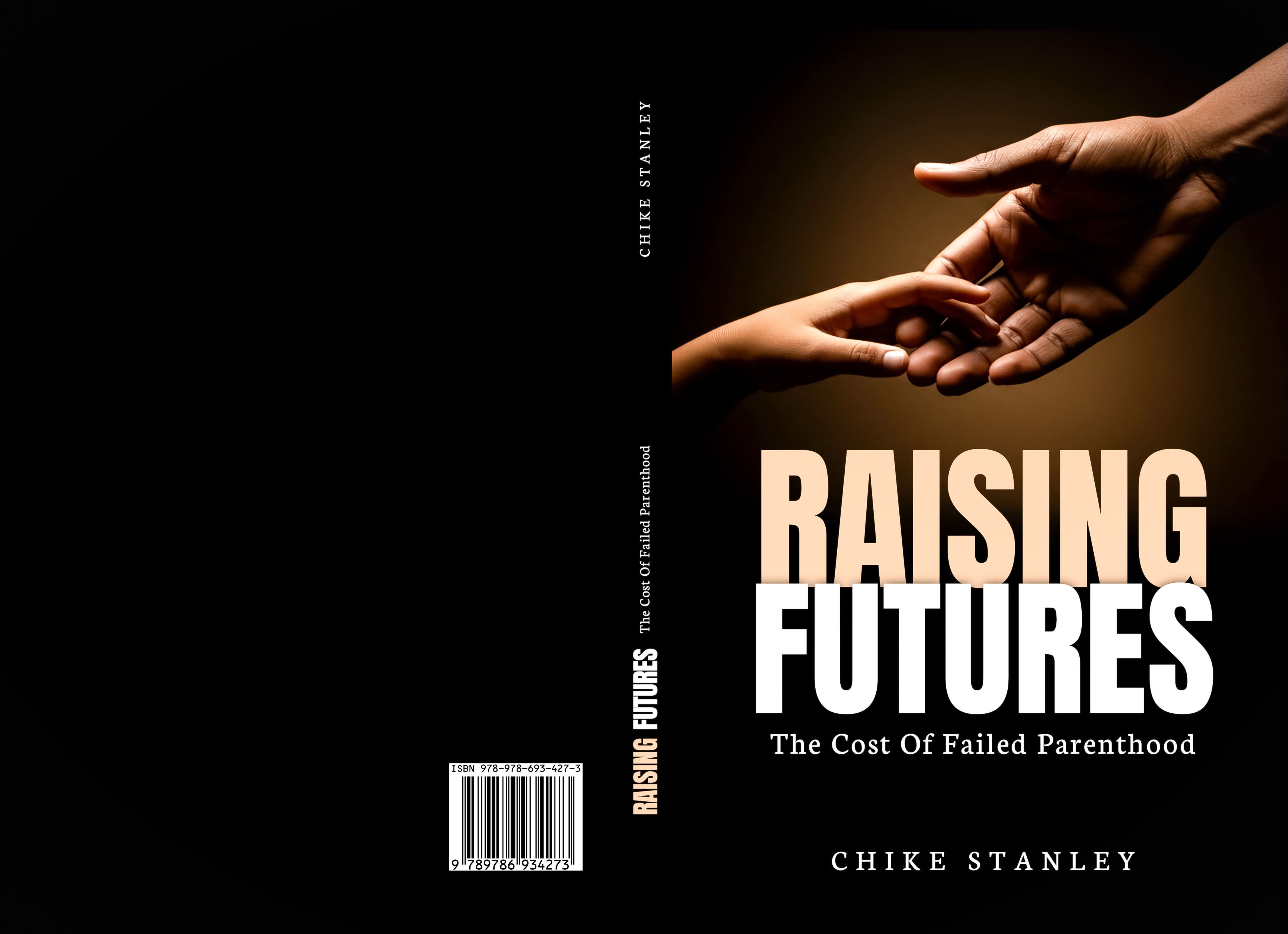
RAISING FUTURES; The Cost of Failed Parenthood.

RAISING FUTURES : The Cost of Failed Parenthood examines how weak parenting practices contribute to many of the social problems seen in modern society. The author argues that while economic hardship and societal pressure play a role, the core responsibility for shaping the next generation lies primarily with parents. When parents neglect this responsibility—through absence, lack of discipline, poor values, or emotional neglect—the consequences are seen in broken families, struggling youth, and unstable communities.
The book begins by exposing the visible symptoms of failed parenthood in society. These include youth involvement in crime, cultism, prostitution, drug abuse, and the pursuit of quick wealth. According to the author, these issues are not isolated moral failures but often the result of children growing up without guidance, structure, and moral direction at home. Many young people are forced to navigate life alone, making decisions without the wisdom and mentorship that responsible parenting should provide.
A central idea in the book is that parenting failure often begins with the mindset of the parents themselves. Parents who make excuses, shift blame to society, or refuse to invest time, energy, attention, and financial resources into their children create environments where children struggle to develop confidence, discipline, and self-worth. The author highlights how generational patterns of poor parenting can produce children who grow up with insecurity, resentment, and unrealistic expectations about life.
The book also explores the conflict between society and parents, questioning who is truly responsible for the current state of many young people. While society contributes to pressure through economic hardship, peer influence, and social media, the author maintains that parents remain the primary architects of a child’s moral foundation. When parents fail to teach values such as responsibility, integrity, hard work, and emotional intelligence, society becomes a difficult environment for their children to navigate.
Another theme addressed in the book is the cycle of dysfunction where immature or unprepared young adults become parents themselves. Without healing from their own upbringing, they unintentionally pass down the same mistakes to their children. This cycle creates generations of young people who lack stability, mentorship, and direction.
Despite highlighting these challenges, the book ultimately offers hope and practical solutions. The author calls for a return to intentional parenting, where parents actively invest in their children’s development through guidance, discipline, love, and consistent presence. He stresses the importance of education, mentorship, moral values, and personal accountability. Parents must stop pretending problems do not exist and instead confront reality, break destructive cycles, and build healthier family structures.
The book concludes with a strong message: the future of any society depends on the quality of parenting in the present generation. When parents take responsibility for raising disciplined, morally grounded, and purposeful children, communities become stronger and more stable. But when parenting fails, the consequences extend far beyond the family and affect the entire society.
Ultimately, Raising Futures is both a warning and a call to action, urging parents, communities, and leaders to recognize the vital role of family in shaping a better future for the next generation.